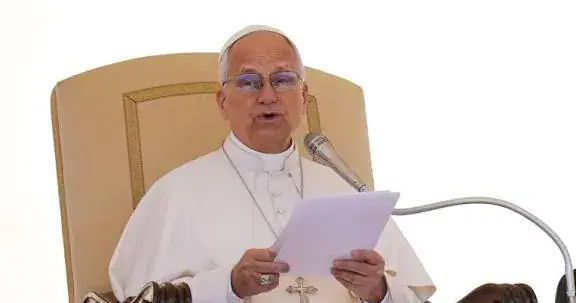
Pope Léon XIV, the leader of the world's 1.4 billion Catholics, has spoken out about the pressing issues facing the Amazonie region, calling for urgent attention to the "cries" of the land and its impoverished inhabitants. During a visit to Pucallpa, in eastern Peru, the Pope denounced the exploitation of the region's resources, highlighting the devastating impact of deforestation, illegal mining, and oil pollution. He emphasized that protecting the Amazonie forest is inextricably linked to the well-being of its indigenous peoples.
The Pope's visit to the Amazonie region comes as a significant challenge, particularly given his recent health issues, including a cancer operation. At 71 years old, Léon XIV has undertaken a demanding 12-day tour of South America, which will conclude in Lima on Monday. His stop in Cusco, at an altitude of 3,400 meters, was followed by a journey to the humid Amazonie region, where he met with missionaries and representatives of indigenous communities. The Pope's message was clear: the pursuit of profit must not come at the expense of the environment and the people who depend on it.
Léon XIV specifically highlighted the dire situation faced by indigenous communities, who are often denied access to basic rights such as healthcare and education. He cited the alarming rate of deforestation in Peru, where 3.2 million hectares of Amazonie forest have been lost between 2001 and 2024, an area equivalent to the size of Belgium. The Pope also condemned the killing of indigenous leaders who have been murdered for defending their territories, calling for justice and an end to the violence.
The Pope's words resonated deeply with indigenous leaders and community members, who expressed their hopes for a better future. Fernando Carteiro, a 53-year-old indigenous leader, shared his desire for his children to be able to breathe clean air, echoing the sentiments of many who feel that their way of life is under threat. Lissete Mendoza, a 41-year-old nurse, welcomed the Pope's attention to the plight of indigenous peoples, who she said are often marginalized and humiliated.
The Pope's visit to the Amazonie region was marked by moments of great emotion and symbolism. He was greeted by thousands of faithful in Cusco, who welcomed him with traditional clothing and music. In Pucallpa, he was accompanied by the sounds of flutes and the dances of participants in traditional costumes. The Pope also blessed a shihuahuaco tree, an emblem of the Amazonie, and attended a mass before returning to Lima.
The Amazonie crisis is a pressing concern for the international community, with far-reaching implications for the environment, indigenous peoples, and global stability. The Pope's call to action highlights the need for urgent and collective action to address the exploitation and degradation of the Amazonie region. As the world grapples with the challenges of climate change, deforestation, and social injustice, Léon XIV's message serves as a powerful reminder of the importance of protecting the planet and its most vulnerable inhabitants.
The Pope's visit to Peru and his address to the Amazonie crisis have sparked widespread attention and debate. As he concludes his tour of South America, Léon XIV's words are likely to resonate across the continent and beyond, inspiring reflection and action on the critical issues facing the Amazonie region and its people. With his message of hope and solidarity, the Pope has shone a spotlight on the urgent need for change and the importance of working together to protect the planet and its inhabitants.
Key points
- The Pope calls for action on Amazonie crisis, criticizing market-driven exploitation and highlighting the plight of indigenous peoples.