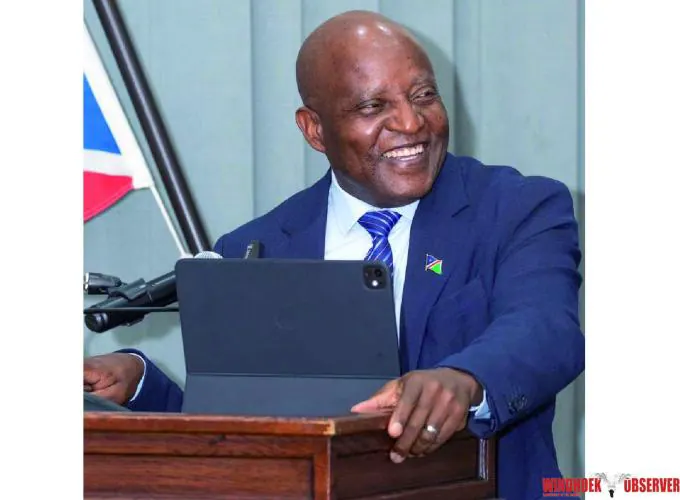
Poor waste management in Windhoek, Namibia, is attracting baboons into residential areas, posing a risk to residents, particularly vulnerable individuals such as children and the elderly. President Netumbo Nandi-Ndaitwah, speaking through Prime Minister Elijah Ngurare, emphasized that exposed food waste is creating conditions for wildlife to enter close contact with residents. This warning was delivered during the commemoration of World Cleanup Day and the relaunch of the National Cleanup Namibia Campaign in Windhoek.
The President identified areas such as Goreangab and Havana as places where the problem has become noticeable. Careless disposal of waste and exposed food can attract baboons and other animals. Nandi-Ndaitwah stressed that when waste is carelessly discarded or food waste is left exposed, it can attract baboons and other animals, which can become accustomed to human settlements and begin searching for food among households and public spaces.
The growing presence of baboons in residential areas demonstrates that poor waste management is no longer simply an issue of litter and untidy surroundings but can have wider consequences for communities. Nandi-Ndaitwah warned that baboons may appear harmless when seen from a distance, but when they become accustomed to human settlements, they can become a serious nuisance and, in some circumstances, a danger to society.
The President also highlighted that children, older people, and other vulnerable members of communities could be particularly exposed to the risks associated with wildlife entering residential areas. The government's relaunch of the Cleanup Namibia Campaign aims to address littering, illegal dumping, and poor waste management through public awareness, community participation, and behavioral change.
Nandi-Ndaitwah emphasized that legislation and municipal services alone will not solve the problem; a change in behavior is necessary. She encouraged Namibians to view waste as a potential economic resource rather than simply rubbish and challenged young people, innovators, entrepreneurs, students, and researchers to develop businesses around plastic, glass, paper, metals, and organic waste.
The renewed campaign will focus on three main objectives: raising public awareness about proper waste management and responsible disposal, mobilizing communities and other stakeholders to participate in coordinated clean-up activities, and encouraging behavioral change through waste reduction, reuse, and recycling. Windhoek's waste buy-back centre was cited as an example of how recyclable materials can be turned into economic opportunities while helping keep communities clean.
The President ultimately declared the 2026 National Cleanup Namibia Campaign officially relaunched, calling on Namibians to change their behavior and restore cleanliness across the country. She also connected sanitation to the broader cleanliness campaign, directing that access to sanitation and housing be prioritized under disaster risk management, including access to decent and adequate toilet facilities in both urban and rural areas.
Key points
- Poor waste management in Windhoek is attracting baboons into residential areas, posing a risk to residents.
- The government has relaunched the Cleanup Namibia Campaign to address littering, illegal dumping, and poor waste management.
- The President emphasized the need for behavioral change and encouraged Namibians to view waste as a potential economic resource.