The Institute of Statistical, Social and Economic Research (ISSER) of the University of Ghana has revealed that Ghana incurs significant economic losses due to poor sanitation and waste management. According to ISSER, the country loses more than GH¢6.2 billion every year through healthcare costs and lost productivity associated with poor waste management and sanitation. This substantial economic burden highlights the urgent need for effective waste management strategies.
The Ghanaian government has introduced several initiatives to tackle plastic waste, starting with a ban on plastic production and imports in 2008. In 2011, a Plastic Waste Recycling Fund was established, and a 10% Environmental Excise Tax was levied on imported plastics to support recycling and waste management programs. Furthermore, the government introduced the National Plastics Management Policy in 2020, aiming to manage plastic waste across its entire lifecycle and promote a circular economy for plastics.
Despite these efforts, proper plastic waste disposal remains a significant challenge in Ghana. Low awareness regarding safe and sustainable disposal practices such as segregation, recycling, and controlled incineration exacerbates the issue. Ghana generates an estimated 840,000 tonnes of plastic waste each year, with only about 9.5% undergoing recycling. The majority of plastic waste is indiscriminately disposed of, posing severe environmental concerns.
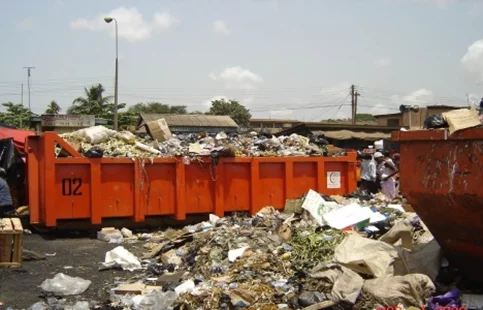
A recent visit to two rivers in Accra, the Odaw River near the Agbogbloshie market and the Chemu Lagoon in the Ablekuma South Municipality, revealed a bleak picture of the sanitation crisis. The absence of waste bins and weak enforcement of disposal laws have turned these water bodies into dumping grounds. Residents cited insufficient infrastructure and security as reasons for dumping waste directly into the waterway, highlighting the need for improved waste management infrastructure.
To address the growing crisis, the government plans to phase out the use of small motorised tricycles for household waste collection. Instead, a regulated waste collection system using purpose-built vehicles and electronic payment systems will be introduced. Minister for Local Government, Mahama Ayariga, disclosed that waste operators will be charged based on the amount of waste discharged, which will be weighed at transfer stations.
The government also plans to construct transfer stations within a maximum distance of five kilometres from communities to make waste collection faster, more efficient, and better organised, especially in major cities. Additionally, the slum along the Korle Lagoon in Accra is set to undergo redevelopment into multi-storey homes made from converted shipping containers. The project aims to provide a more liveable space for residents and address the sanitation challenges in the area.
The Korle Lagoon, once a vital fishing and flood-control basin, is now infamous as one of the most polluted lagoons in West Africa due to urban waste, industrial effluents, and e-waste contamination. The redevelopment project is expected to bring relief to residents and help mitigate the environmental impact of the lagoon's pollution. Minister Mahama Ayariga assured that the government will treat the residents with compassion and work to provide them with better living conditions.
Key points
- Ghana loses over GH¢6.2 billion yearly due to poor sanitation and waste management.
- The government has introduced several initiatives to tackle plastic waste, including a ban on plastic production and imports, a Plastic Waste Recycling Fund, and the National Plastics Management Policy.
- Only about 9.5% of Ghana's estimated 840,000 tonnes of plastic waste undergoes recycling annually.