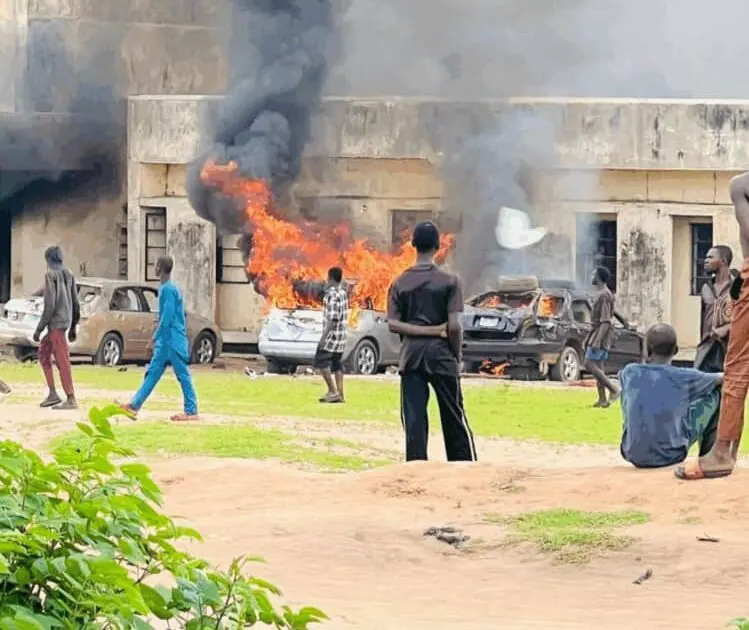
Political instability and insecurity in Nigeria are exposing gaps in the insurance protection available to businesses. The recent crisis in Rivers State, where a breakdown in relations between the executive and legislature led to a state of emergency, is a prime example. The crisis disrupted governance, led to attacks on critical oil infrastructure, and prompted the Federal Government to intervene. President Bola Tinubu declared a state of emergency on March 18, 2025, suspending the governor, his deputy, and the state House of Assembly.
The Rivers crisis showed how quickly political uncertainty can affect economic activity. Before the emergency rule was lifted, reports indicated that the political confrontation had stalled governance and raised concerns among investors and businesses operating in the state. ActionAid Nigeria warned in March 2025 that the crisis was affecting investment and economic activity in Rivers. The state's importance to the oil industry meant that the disruption had implications beyond Rivers, particularly because attacks on oil infrastructure could affect crude production and exports.
Businesses in Nigeria face significant operational pressures, including insecurity, inflation, high financing costs, and infrastructure challenges. Political risks can add another layer of uncertainty, leaving companies vulnerable to losses. A company may have adequate fire, theft, or accident insurance but still face substantial uninsured losses if its operations are disrupted by civil unrest, political violence, or government action. Business interruption cover may provide some protection against loss of income, but the extent of coverage depends on the policy and the event that caused the interruption.
Insurance industry sources say that conventional business policies may not automatically cover losses arising from political violence, civil unrest, terrorism, government intervention, or other politically driven disruptions. Such risks often require specific extensions or specialized political risk insurance, depending on the nature of the business and the terms of the policy. Companies need to review their policies regularly and identify exclusions that could leave them exposed.
According to an Abuja-based economist, Nonso Iheoma, companies with large investments in oil and gas, construction, manufacturing, transport, infrastructure, and other capital-intensive sectors can face particularly significant exposure because disruptions can result in large financial losses. The situation puts pressure on insurers to develop products that address emerging risks without making premiums unaffordable for businesses.
The #EndSARS protest in Lagos in 2020 resulted in a loss of N700 billion in just 12 days due to commercial paralysis, roadblocks, and frozen activity in major cities. As the operating environment becomes more unpredictable, experts say having insurance may not be enough. Businesses need to know exactly what their policies cover, what they exclude, and how much of a loss they would have to absorb themselves when political or security events disrupt operations.
The experience in Rivers State reinforces the need for Nigerian businesses to treat political risk as part of broader corporate risk management. Companies need to assess their exposure to political risks and ensure that their insurance policies respond to the risks they are actually exposed to. By doing so, businesses can mitigate potential losses and ensure continuity of economic activities.
Key points
- Businesses in Nigeria need to review their insurance policies regularly to identify exclusions that could leave them exposed to political risks.
- Conventional business policies may not automatically cover losses arising from political violence, civil unrest, terrorism, government intervention, or other politically driven disruptions.
- Companies with large investments in capital-intensive sectors can face significant exposure to political risks, resulting in large financial losses.