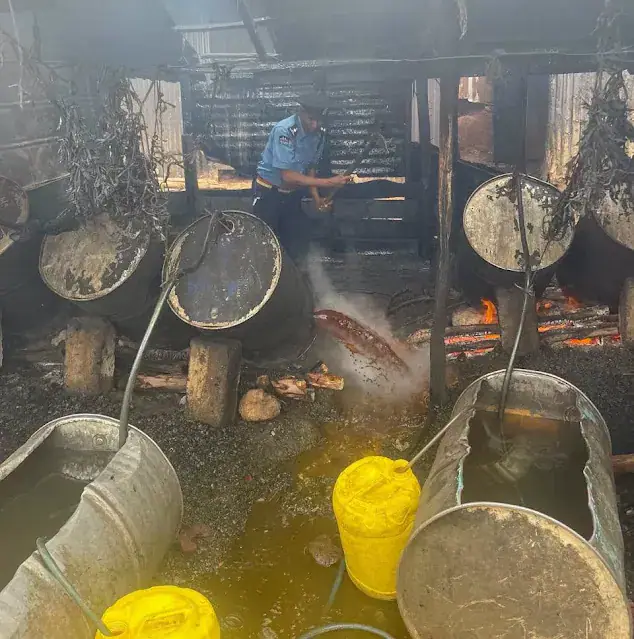
On a recent day, police in Kasarani, Kenya, conducted a raid on a chang'aa den, a type of informal, unlicensed liquor establishment common in the area. The raid resulted in the seizure of equipment and the arrest of individuals involved in the operation. Authorities have been cracking down on such establishments in recent months, citing concerns over public health and safety. The Kasarani area has seen a significant number of these raids, with police aiming to curb the proliferation of unregulated liquor outlets.
The chang'aa den, targeted in the raid, was reportedly operating without the necessary licenses and permits. Chang'aa, a potent, homemade liquor, is often sold in such establishments, posing significant health risks to consumers. Kenyan law enforcement has been working to shut down these operations, emphasizing the need for vendors to comply with regulations and obtain proper licensing. The raid in Kasarani is part of a broader effort to regulate the informal liquor industry and protect public health.
During the raid, police confiscated various items, including equipment used in the production and sale of chang'aa. The specifics of the seized items and the number of arrests made have not been disclosed. However, it is understood that the operation was part of an ongoing effort by Kenyan authorities to address issues related to unregulated liquor outlets. The Kenyan police have been working closely with local authorities to identify and shut down such establishments.
The crackdown on chang'aa dens and other unlicensed liquor establishments is part of a larger public health initiative in Kenya. The government has expressed concerns over the impact of unregulated liquor on public health, citing instances of violence, health complications, and other social issues linked to the consumption of homemade liquor. By targeting these establishments, authorities aim to reduce the availability of unregulated liquor and promote safer, licensed alternatives.
Residents of Kasarani have expressed mixed reactions to the raid, with some supporting the government's efforts to curb the proliferation of unlicensed liquor outlets. Others have expressed concerns about the impact on livelihoods, as many individuals rely on these establishments for income. The raid has sparked a broader conversation about the regulation of the informal liquor industry and the need for balanced approaches that address both public health concerns and economic realities.
The Kenyan government has been grappling with the challenges posed by the informal liquor industry, seeking to balance regulatory efforts with the need to support small businesses and entrepreneurs. The raid in Kasarani highlights the complexities of regulating this sector and the ongoing efforts by authorities to address these challenges. As the government continues to crack down on unlicensed establishments, there are calls for more comprehensive solutions that address the root causes of the issue.
The impact of the raid on the Kasarani community and the broader informal liquor industry remains to be seen. As authorities continue to enforce regulations and shut down unlicensed establishments, there are concerns about the potential for displacement of vendors and the impact on local economies. The Kenyan government's efforts to regulate the informal liquor industry are likely to continue, with a focus on promoting public health and safety while also supporting small businesses and entrepreneurs.
Key points
- The raid is part of a broader effort to regulate the informal liquor industry in Kenya.
- Authorities have been cracking down on unlicensed liquor establishments, citing concerns over public health and safety.
- The raid resulted in the seizure of equipment and the arrest of individuals involved in the operation.