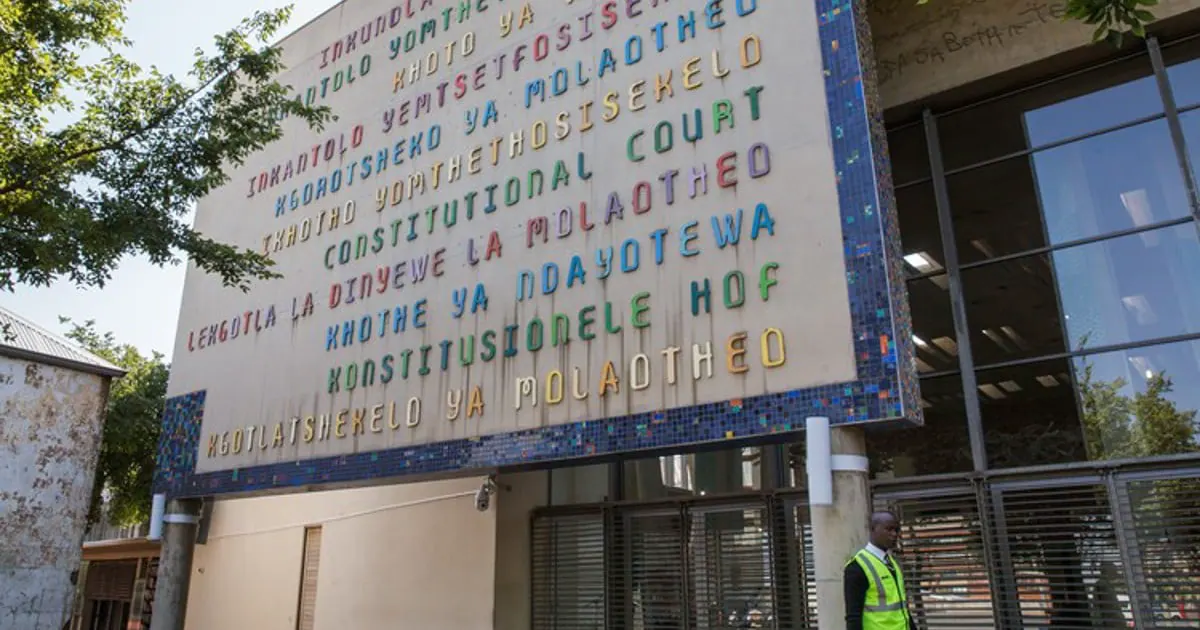
Police in Johannesburg dispersed a group of marchers in the vicinity of the Constitutional Court on Friday morning, leading to a car being set on fire, although it is unclear who was responsible for the damage. A group of men staged a sit-down protest in the apex court's precinct. The protests were part of a larger movement against illegal immigration in South Africa.
The protests coincided with a separate demonstration outside the Home Affairs office in Orlando West, Soweto, which was gaining momentum. March and March supporters, as well as ActionSA members, were protesting against illegal immigration in the area. Despite the government's attempt to quell tension by withdrawing a directive to Home Affairs on asylum seekers, protesters remained vocal.
In July, the Constitutional Court ruled that all asylum seekers may be allowed access to the application process, regardless of how they entered the country. However, the ruling does not automatically grant refugee status or permanent residence, and applicants must still undergo an assessment process. Protesters, such as Lindiwe Mojatau, a member of March and March, argued that the Constitution states that those present illegally should be arrested, not granted applications.
The protests reflect a wider discontent with immigration policies in South Africa. Many residents, like those in Soweto, are demanding economic opportunities and expressing frustration with the presence of illegal immigrants. The situation remains volatile, with further protests and demonstrations expected.
The government has attempted to address the issue, with the Department of Home Affairs withdrawing a directive that had led to an overwhelming number of asylum seeker applications. However, protesters argue that more needs to be done to address the root causes of the problem. The issue remains a contentious one, with various stakeholders holding different views.
The protests in Johannesburg and Soweto are part of a larger wave of demonstrations against illegal immigration across South Africa. Other areas, such as Durban, have also experienced violent protests, with some residents vowing to make their cities "ungovernable". The situation remains fluid, with police and security forces deployed to maintain order.
The Constitutional Court's ruling on asylum seekers has been a focal point for protesters, who argue that it undermines the rule of law and encourages illegal immigration. However, others see the ruling as a necessary step to ensure that those seeking refuge are able to access the application process. The debate is likely to continue, with the issue remaining a pressing concern for many South Africans.
Key points
- The Constitutional Court ruled in July that asylum seekers may be allowed access to the application process, regardless of how they entered the country.
- Police dispersed marchers in the Constitutional Court vicinity, leading to a car being set on fire.
- Protests against illegal immigration are taking place across South Africa, including in Johannesburg, Soweto, and Durban.