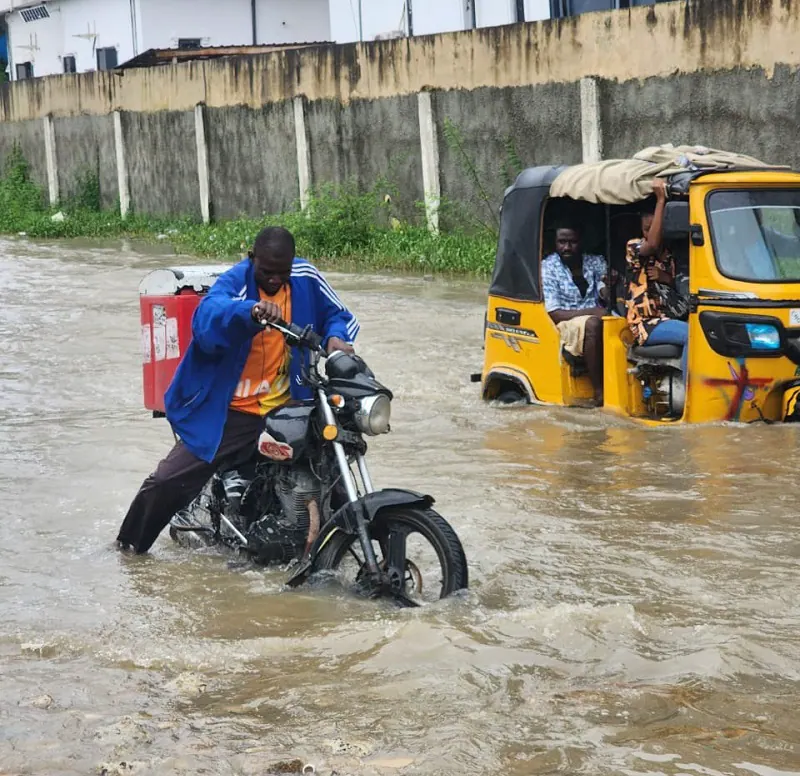
Town planners in Nigeria have urged the Lagos State Government to adopt proven international flood-management strategies to tackle the state's perennial flooding crisis. The Nigerian Institute of Town Planners (NITP), Lagos State Chapter, noted that Lagos's geographical position, with large areas close to or below sea level, makes flooding a recurring challenge. The planners suggested studying and locally adapting flood-control systems used in the Netherlands and New Orleans. This approach could substantially reduce the destructive impact of flooding in Lagos.
The planners identified the Lekki-Epe corridor as a critical area that requires attention due to its unique geographical configuration. This corridor is located between the Atlantic Ocean and the Lagos Lagoon. According to Oladele Akindele, Chairman of the Lagos NITP Chapter, drainage planning in the corridor must consider its geographical configuration. Engineering solutions should prioritize the Lagoon as a receiving water body rather than directing drainage discharge towards the Atlantic Ocean.
Blocked drainage channels have been identified as a major contributor to flooding in Lagos. The planners called for a more aggressive and sustained campaign against the practice of blocking drainage channels. They recommended continuous public enlightenment, effective monitoring of drainage channels, and strict punitive measures against individuals and businesses that obstruct waterways and drainage infrastructure. The proposal by the state government to deploy specialized sweeping machines on selected roads was welcomed.
The planners also supported the demolition of buildings erected illegally on drainage channels and other prohibited locations. They argued that public sympathy for such structures should not override planning regulations. The group noted that buildings do not spring up overnight and questioned why structures blocking drainage channels are sometimes allowed to reach completion before enforcement agencies intervene.
To prevent further environmental problems, the planners called for the strengthening of the monitoring arm of government to ensure that development activities are detected and addressed at an early stage. They proposed the effective implementation of the Certified Accreditors Programme (CAP) as a possible way of strengthening development monitoring across Lagos State. Planning enforcement must be transparent, diligent, and free from compromise.
The multi-billion-dollar Lagos-Calabar Coastal Highway project has been described as a major infrastructure asset with enormous potential to transform local, regional, and national economic activities. However, the planners maintained that the highway must be supported by comprehensive physical development planning to prevent it from becoming another source of uncoordinated development and environmental problems.
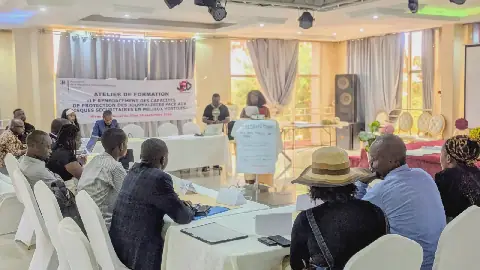
The recommendations followed the 2026 Femi Olomola Biennial Lecture organised by the Lagos State Chapter of NITP in June. The lecture, held at the Wole Soyinka Centre for Culture and Creative Arts, was titled “Lagos-Calabar Coastal Highway: Balancing National Development, Environmental Concerns and Socio-Economic Opportunities.” The Federal Government, in collaboration with states along the highway corridor, should urgently prepare a comprehensive physical development plan covering land-use activities.
Key points
- The Lagos State Government is urged to adopt international flood-management strategies used in the Netherlands and the United States.
- The Lekki-Epe corridor requires special attention due to its unique geographical configuration.
- Blocked drainage channels are a major contributor to flooding in Lagos.