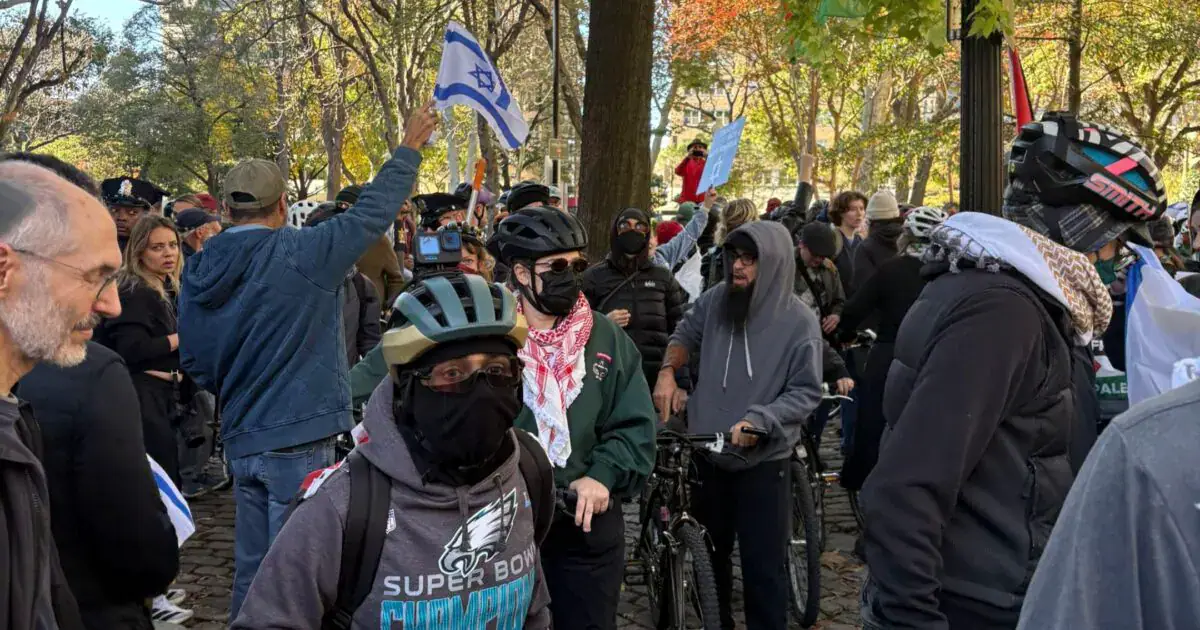
A planned "boycott bike ride" targeting six Jewish- and Israeli-owned restaurants in Philadelphia was met with a strong counter-response from the local community. On November 8, 2026, approximately 300 bikers participated in the boycott, but they were confronted by an estimated 200 counter-protesters from various Jewish, pro-Israel, and interfaith groups. The counter-protesters sang Israeli songs, effectively drowning out the boycotters' messages.
The Jewish Federation of Greater Philadelphia played a significant role in organizing the counter-protest. The federation's chief executive, Michael Balaban, expressed satisfaction with the outcome, stating that the boycott was essentially turned into a "food festival" for the targeted businesses. All six restaurants reported selling out their inventory, with some even receiving offers to buy items they didn't have for sale.
The boycott was organized by a left-wing group called Philly Bike On Your Left, which had listed the six Jewish-owned restaurants on a flyer with red "No" signs. The group's rhetoric and timing, which coincided with the 88th anniversary of Kristallnacht, drew widespread criticism. Some business owners, including Israeli restaurateur Michael Solomonov, had donated to causes like United Hatzalah, while others had simply expressed their Zionist views online.
Local authorities reported that three people were arrested and two police officers suffered minor injuries during the protest. Philadelphia District Attorney Larry Krasner, whose father was Jewish, condemned the boycott as "blatant antisemitic targeting." He was joined by Governor Josh Shapiro, who called the boycott "hate" and emphasized the community's support for the targeted businesses.
The counter-protest was not limited to the Jewish community, with local elected officials and interfaith groups showing their support. A "solidarity lunch" was organized by the Philadelphia Jewish Community Relations Council, which was attended by Governor Shapiro's wife, Lori, and state lawmakers. The event demonstrated a united front against the boycott and its antisemitic undertones.
While some groups, such as Faculty for Justice in Palestine and the local Students for Justice in Palestine chapter, supported the boycott, others criticized it for being counterproductive. The Prayers for Peace Alliance, an interfaith pro-Palestinian group, stated that the boycott did not align with the priorities of the anti-genocide and anti-occupation movement.
The counter-protest has been hailed as a success by Philadelphia Jewish leaders, who see it as a testament to the community's resilience and solidarity. Michael Balaban noted that the event had brought the community together, with many people expressing a sense of safety and gratitude. The outcome has also sparked a renewed commitment to combating antisemitism and promoting support for Jewish businesses.
Key points
- The boycott bike ride was met with a strong counter-protest from the local Jewish community and its allies.
- The counter-protest was successful in thwarting the boycott, with all targeted businesses reporting a surge in support.
- Local authorities and elected officials condemned the boycott as antisemitic and emphasized the importance of community solidarity.