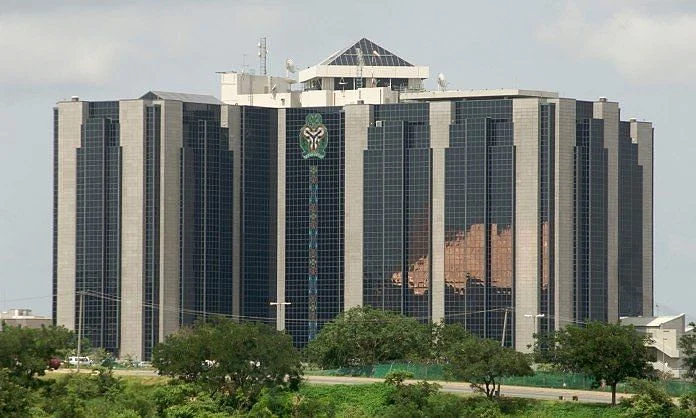
Personal loans obtained by Nigerians have risen to an estimated N2.06tn in May 2026, according to the Central Bank of Nigeria's Economic Report. This represents about 64.78 per cent of the N3.18tn total consumer credit outstanding during the month. The report highlights the growing trend of consumer credit in Nigeria, driven by personal and retail loans. The CBN's data shows that consumer credit increased by 1.60 per cent from N3.13tn in April to N3.18tn in May.
The Central Bank of Nigeria reported that consumer credit outstanding increased by 1.60 per cent to N3.18tn from N3.13tn in the preceding month. This growth was driven by a 1.98 per cent increase in personal loans and a 0.90 per cent increase in retail loans. Personal loans remained the dominant component of consumer credit, accounting for 64.78 per cent, while retail loans constituted 35.22 per cent. The CBN's report covers developments in the real, fiscal, financial, and external sectors of the economy.
The 1.98 per cent month-on-month increase in personal loans suggests that the balance rose by roughly N40bn during the period. Retail loans, which include credit tied more directly to the purchase of goods and services, recorded a slower increase of 0.90 per cent. The figures show that personal borrowing remained the main driver of Nigeria's consumer-credit market, accounting for nearly two-thirds of outstanding credit.
The increase in consumer credit came against a challenging operating environment for households and businesses. The CBN reported that economic activity remained weak in May, with its composite Purchasing Managers' Index at 49.60 points, slightly higher than 49.40 points in April but still below the 50-point threshold separating expansion from contraction. The contraction reflected subdued demand, declining new orders, and elevated production costs.
Inflation also remained elevated during the period, with headline inflation increasing to 15.93 per cent in May from 15.69 per cent in April. The CBN attributed this to persistent cost pressures and higher energy prices. However, month-on-month inflation slowed to 1.75 per cent from 2.13 per cent. The combination of rising consumer credit and weak consumer spending suggests that households were increasingly accessing credit at a time when living and operating costs remained under pressure.
A recent report by Enhancing Financial Inclusion & Advancement noted that four in every 10 Nigerians borrowing from formal financial institutions now take loans mainly for consumption and coping needs. The 2026 Access to Financial Services in Nigeria Survey revealed that 40.8 per cent of formal borrowers used loans for coping and consumption, up sharply from 31.7 per cent in 2023. This shift indicates that credit is increasingly being used for non-productive purposes.
The report warned that the rising trend of credit for consumption and coping purposes could lead to distress among borrowers. About 45.8 per cent of formal-credit users reported some or serious repayment stress, while 83.8 per cent experienced ongoing financial stress. Formal credit use increased from six per cent of adults in 2023 to 10 per cent in 2026, with about 11.9 million Nigerians borrowing from regulated providers.
Key points
- Personal loans in Nigeria have risen to N2.06tn, driven by persistent cost pressures and weak consumer spending.
- Consumer credit outstanding increased by 1.60 per cent to N3.18tn in May 2026.
- Inflation remained elevated, with headline inflation increasing to 15.93 per cent in May 2026.