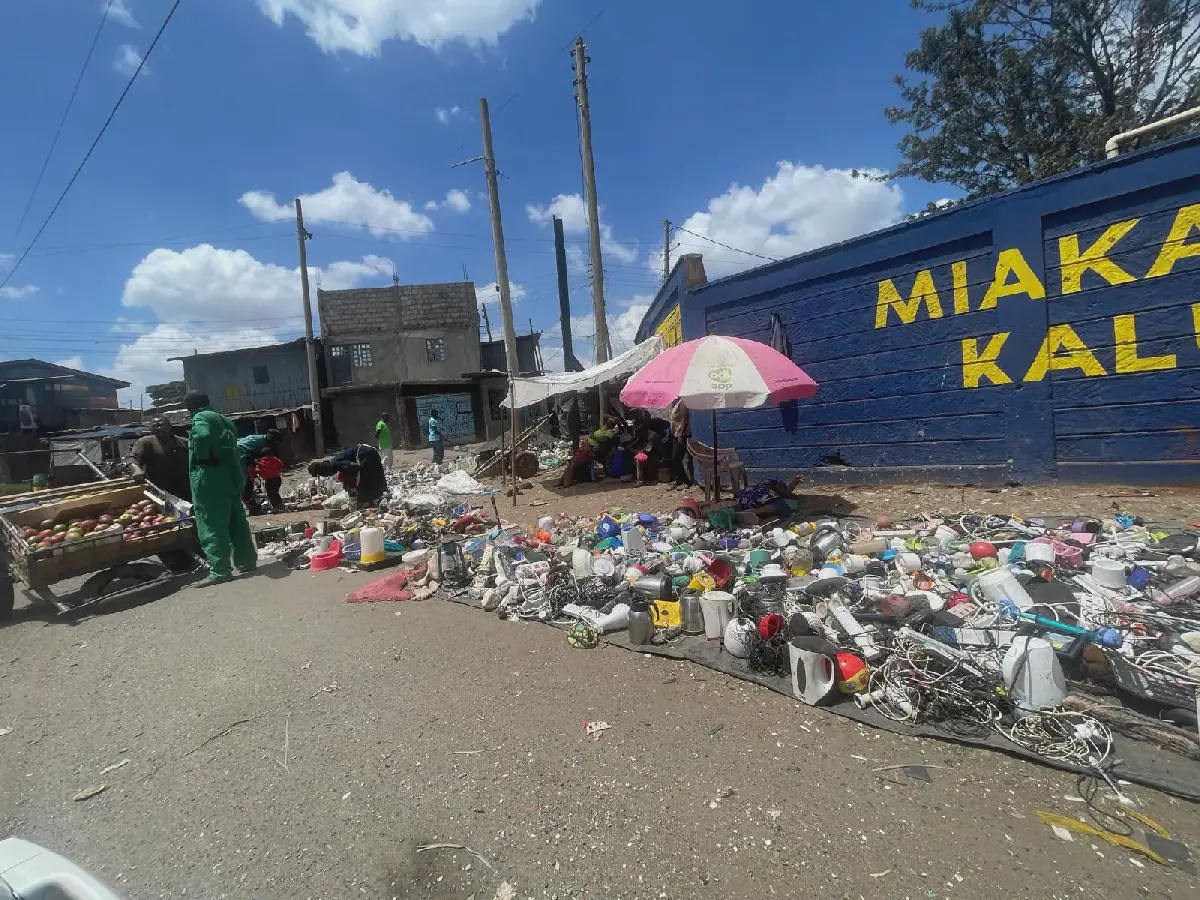
Many informal workers in Kenya face a harsh reality where earning a living means paying for the right to work. A motorbike taxi rider, hawker, or small trader may be asked for money by a police officer or county inspector, which is not a tax set by law nor a fine for an offense. This informal payment is part of the daily conditions of running a business. According to the World Bank, informal workers can lose up to 20 percent of their daily earnings this way.
The Kenya Economic Update report published on November 4, 2026, highlights the impact of weak governance on growth and job creation in Kenya. Despite a GDP growth of 5.2 percent year on year in the first half of 2026, 83.8 percent of workers are in the informal economy, where incomes are unstable and protection is thin. The report notes that corruption takes on a different meaning here, concerning the daily relationship between citizens and the state, especially when the ability to work depends on the discretion of whoever holds authority.
For a registered company, a bribe request is an extra cost or administrative obstacle, but for someone living on daily earnings, it comes directly out of the money that buys food, pays rent, or covers family expenses. The World Bank notes that frontline corruption lowers workers’ take-home earnings and makes them less predictable. These payments can be described as a parallel tax, but unlike taxes, they follow no public rules and entitle the payer to nothing.
The burden of bribery does not fall evenly, with people in the highest quartile of “lived poverty” being 14 percentage points more likely than those in the lowest to pay a bribe to the police. Afrobarometer’s 38-country report finds that across the continent, people in moderate or high lived poverty are 13 to 15 points more likely than better-off respondents to pay bribes to police, officials, and health staff. Kenya stands out in that survey, with 50 percent of those who encountered the police saying they paid a bribe to avoid a problem.
The effects of bribery extend beyond the street, with 39 percent of Kenyan firms calling corruption a major or severe constraint in 2025, up from 25 percent in 2013. Firms exposed to bribery are over 30 percent less likely to innovate and see weaker productivity and sales growth. For the state, a conservative World Bank estimate suggests that corruption and collusion have likely widened annual deficits by about two percentage points of GDP.
The report also addresses the political dimension of corruption in Kenya, noting that access to state resources remains central to managing political coalitions. Appointments in state-owned enterprises, preferential licences, non-competitive procurement, and power purchase agreements can all be used to spread benefits among influential groups. This rent-sharing and co-optation of rising leaders has contributed to relative political stability but at the cost of less competition and slower economic transformation.
The World Bank suggests that moderate anti-corruption reforms could raise GDP by 8.7 percent by 2035 compared with no reform, and stronger measures by 22.3 percent. Another passage puts the gain at around 13 percent if Kenya reached the control of corruption of Ethiopia or India. These simulations indicate that tackling corruption could have a significant impact on Kenya's economic growth and development.
Key points
- Informal workers in Kenya lose up to 20% of daily earnings to bribery.
- Corruption affects 83.8% of workers in Kenya's informal economy.
- Moderate anti-corruption reforms could raise Kenya's GDP by 8.7% by 2035.
Reporting sources
- Paying to work: bribery and the earnings of Kenya’s informal workers · African Arguments