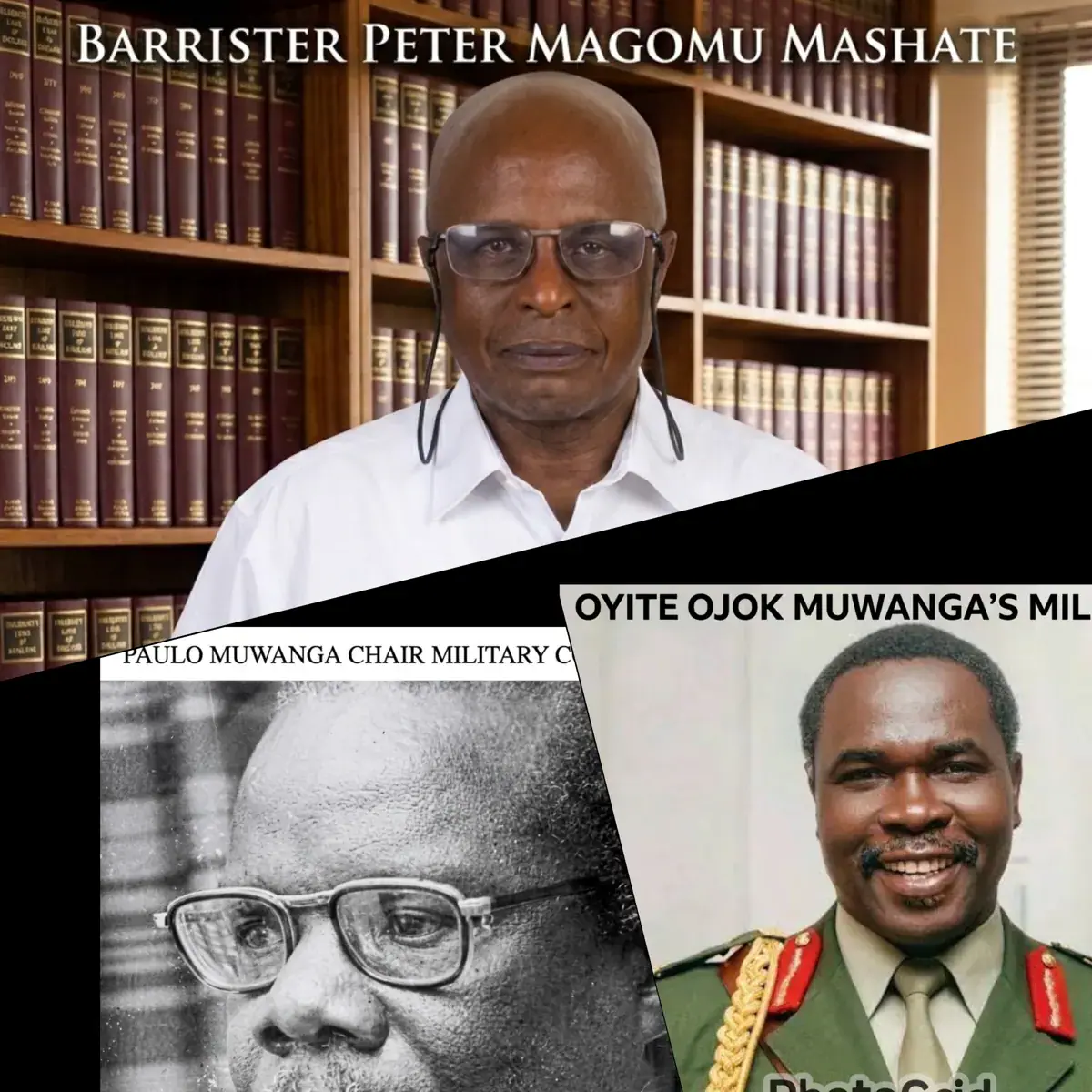
In 1980, Paulo Muwanga, as Chairman of Uganda's ruling Military Commission, made a critical assumption that a population exhausted by eight years of Idi Amin's brutality and the 1979 liberation war would passively accept any outcome imposed at gunpoint. This assumption led him to systematically dismantle civilian oversight and usurp the ballot, creating a reservoir of silent anger that would reshape Uganda's history. Muwanga's actions began in May 1980, months before a single ballot was cast, when President Godfrey Binaisa attempted to exercise his constitutional authority by dismissing Army Chief of Staff David Oyite-Ojok.
Muwanga and the military swiftly ousted the civilian government, with Muwanga assuming de facto presidential powers at the head of a six-man Military Commission and dismissing the 37-member Cabinet. This move effectively tore up the post-liberation consensus forged at the Moshi Conference. The message was clear: civilian institutions were merely decorative, and ultimate authority rested solely with the barrel of the gun. By usurping the ballot by decree, Muwanga confirmed that contempt for the popular will had reached its peak during the general election of December 10, 1980.
As early returns pointed to a decisive victory for Paul Ssemogerere's Democratic Party, Muwanga intervened with executive orders, issuing a backdated proclamation that stripped the Electoral Commission of its legal mandate and centralized all electoral authority in his own hands. Announcing election results became a criminal offense, punishable by heavy fines or imprisonment, for anyone other than Muwanga himself. This move stripped citizens and opposition parties of their right to seek legal redress, barring courts from hearing election petitions.
Returning officers were intimidated, arrested, or forced into exile, and tallies were overturned to declare Milton Obote's Uganda People's Congress the victor, even in constituencies where UPC candidates had publicly conceded defeat to their DP rivals. Despite this, Kampala remained outwardly quiet in the immediate aftermath of the declaration, with troops patrolling the streets and ordinary Ugandans refraining from mass street protests. Muwanga appeared to interpret this restraint as submission, operating as though Ugandans could be taken for granted in the face of raw military force.
However, this was Muwanga's greatest strategic miscalculation, as the quiet on the streets was not the silence of cowardice but the silence of profound disenfranchisement. Convinced that their votes meant nothing and that courts were locked, large segments of the population concluded that raw force could only be answered with force. Within two months of Muwanga's proclamation, a five-year guerrilla war erupted in the Luweero Triangle, fueled directly by the quiet fury his arrogance had stored up.
The events of 1980 serve as a humbling experience and real history lesson for Africa's generations to come. Barrister Peter Magomu Mashate, an administrative, constitutional, and human rights barrister-at-law, provides a detailed account of these events, highlighting the dangers of mistaking public exhaustion for cowardice. Mashate's analysis underscores the importance of respecting the popular will and the rule of law.
The legacy of Muwanga's actions continues to resonate in Uganda, serving as a reminder of the importance of upholding democratic principles and the rule of law. As Uganda continues to navigate its complex history, understanding the lessons of 1980 remains crucial for building a more just and equitable society. Key to this is recognizing the dangers of unchecked military power and ensuring that civilian institutions are protected and empowered.
Key points
- Muwanga's assumption that a war-weary population would passively accept his seizure of power proved to be his greatest strategic miscalculation.
- The events of 1980 led to a five-year guerrilla war in the Luweero Triangle, fueled by the popular discontent with Muwanga's actions.
- The legacy of Muwanga's actions serves as a reminder of the importance of upholding democratic principles and the rule of law in Uganda.