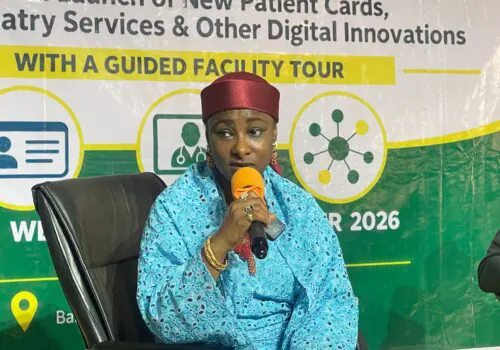
The Federal Neuropsychiatric Hospital in Kaduna, Nigeria, has introduced a telepsychiatry platform, allowing patients to access psychiatric consultations and follow-up services remotely. This development aims to reduce the burden of traveling long distances for treatment. Patients can now schedule consultations, provide consent, make payments, and receive medical attention without necessarily traveling to the hospital for every appointment. The platform is designed to make mental healthcare more accessible, particularly for patients from distant parts of the country and neighboring countries.
The Medical Director of the hospital, Prof. Aishatu Yushau Armaya’u, announced the initiative during a strategic media engagement and the official launch of the hospital’s new patient cards, telepsychiatry services, and other digital innovations in Kaduna. According to Armaya’u, the new platform allows patients to remain in their communities while accessing specialist care remotely from medical professionals at the hospital. This approach is expected to reduce the financial burden on patients and their families, who previously spent significant amounts on transportation, accommodation, and feeding.
The telepsychiatry system is designed to provide a coordinated service involving different health professionals, including doctors, nurses, pharmacists, laboratory scientists, health information managers, and administrators. This coordinated approach will enable healthcare workers to know the number of patients expected and the nature of their medical needs before consultations. The platform will also allow the hospital to coordinate patients, making it easier to manage appointments and provide care.
The initiative is part of the hospital’s broader effort to decentralize mental healthcare and integrate psychiatric services into primary healthcare facilities across Kaduna State. The objective is to ensure that patients who can be managed within their communities do not have to repeatedly travel to the specialist hospital, while the facility focuses its resources on new and complex cases. The hospital is working with relevant authorities to integrate mental healthcare into primary healthcare services across the state.
The hospital’s digital transformation is driven by the need to overcome geographical and financial barriers that prevent some people from accessing mental healthcare. Patients traveling from distant local government areas and neighboring countries often face significant costs, making treatment difficult for families with limited resources. Telepsychiatry will provide an additional channel for such patients to remain connected to their healthcare providers.
While telepsychiatry will improve access to care, patients requiring physical assessment or specialized interventions will still need to visit the hospital when necessary. The hospital has also launched new patient cards as part of its digitalization efforts, expected to improve patient identification, records management, and continuity of care. These reforms aim to build a mental healthcare system that is more accessible, affordable, and responsive to patients’ needs.
The Medical Director expressed her aspiration for the initiative to have a global impact, with patients able to access affordable and available mental healthcare from home. The hospital’s efforts to integrate mental healthcare into primary healthcare facilities and provide specialist support through telemedicine are expected to reduce pressure on the specialist facility while creating opportunities for research, training, and treatment of complex cases.
Key points
- The Federal Neuropsychiatric Hospital in Kaduna has launched a telepsychiatry platform to provide remote psychiatric consultations and follow-up services to patients.
- The initiative aims to reduce the burden of traveling long distances for treatment and make mental healthcare more accessible and affordable.
- The hospital’s digital transformation includes new patient cards and integration of mental healthcare into primary healthcare facilities across Kaduna State.