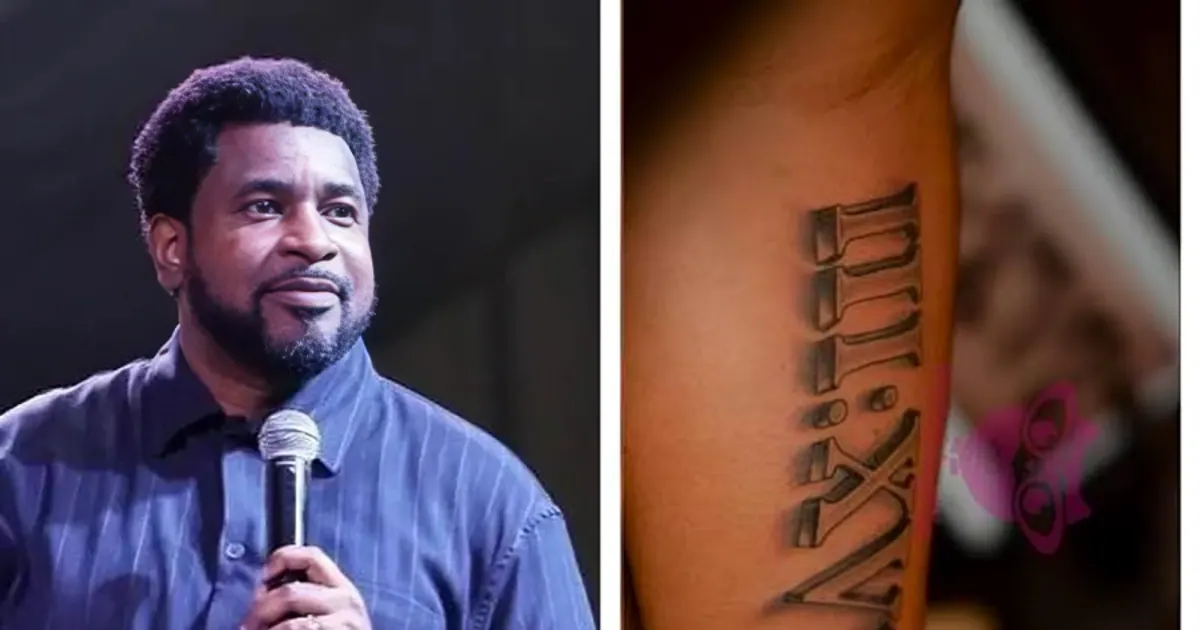
Nigerian Pastor Kingsley Okonkwo has defended his decision to get a tattoo, sparking a heated debate among Christians. The pastor, who is also the founder of the David Christian Centre, revealed a tattoo on his arm around his 50th birthday, which carries John 3:16 in Roman numerals — “III:XVI”. This move has generated significant attention and criticism from some members of the Christian community.
Pastor Okonkwo argues that having a tattoo is not a sin and points to biblical passages to support his claim. He referenced Isaiah 49:16, where God says, “I have engraved you on the palms of my hands,” and Revelation 19:16, which describes the name “King of kings and Lord of lords” written on Christ’s robe and thigh. According to the pastor, these passages show that permanent marks have been used to remember someone in biblical times.
However, some Christians cite Leviticus 19:28, which explicitly mentions tattoo marks, as a reason why tattoos are forbidden. The verse tells the Israelites not to make cuts on their bodies for the dead or put tattoo marks on themselves. Pastor Okonkwo argues that this instruction was connected to practices among the people of that time and should not automatically be treated as a rule against modern tattoos.
Tattoos and body markings have been part of Nigerian culture for centuries, long before modern tattoos became popular. Different Nigerian communities used facial and body marks to show identity, family, status, beauty, and belonging. Yoruba tribal marks, for example, could identify a person's family or community. These traditional practices were later frowned upon as Western Christianity and colonial ideas spread.
Pastor Okonkwo also questioned why some Christians apply parts of Old Testament laws selectively. He compared the debate with other things that were once considered unacceptable in some Christian communities, including women wearing trousers and makeup, wearing wigs, using perfumes, and even watching television. According to him, Christianity has changed in how believers understand some of these practices, and tattoos should be considered in the same way.
The pastor's comments have sparked a larger conversation about what the Bible actually says, what churches teach, and what Christians have simply come to regard as wrong. For Okonkwo, his tattoo is not just body art but part of a much bigger conversation. He emphasized that tattoos have always been part of human culture, not just in Nigeria, but everywhere in the world, and that there is no scripture that says getting a tattoo is a sin.
The debate is ongoing, with many Nigerian Christians weighing in on the issue. While some have criticized Pastor Okonkwo for his decision to get a tattoo, others have defended his right to express himself. As the conversation continues, it remains to be seen how Christians will interpret the Bible verse on tattoos and how it will impact their understanding of modern practices.
Key points
- Pastor Kingsley Okonkwo defends tattoos as not a sin, citing biblical passages.
- The debate on tattoos and Christianity has sparked a larger conversation on what the Bible says and what churches teach.
- Tattoos have been part of Nigerian culture for centuries, with different communities using facial and body marks to show identity and belonging.