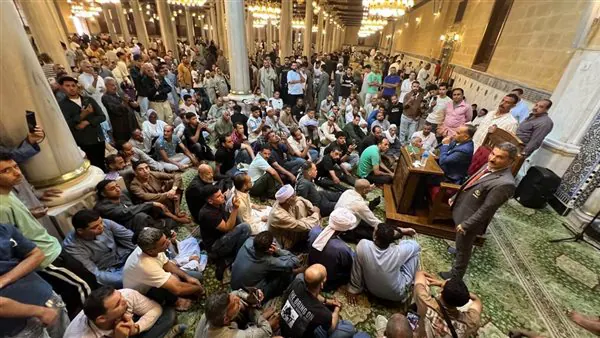
The Egyptian Ministry of Awqaf has continued its scientific and educational program following Friday prayers at major mosques, organizing a series of symposiums in Cairo, Giza, Dakahlia, and Asyut governorates. The symposiums, titled "Preserving the Homeland and its Resources," aim to promote a rational religious awareness, foster national belonging, and instill a sense of responsibility. The Ministry emphasizes that preserving the homeland and its resources is a shared responsibility and a religious, moral, and societal duty.
Participants in the symposiums stressed that the homeland is a blessing that requires gratitude and preservation. They highlighted that maintaining national security and stability, protecting public properties and resources, and conserving national institutions are essential responsibilities that every individual must undertake in their respective roles. They also emphasized that construction and development can only be achieved with a societal awareness that respects public property, preserves facilities, and values work and production.
The symposiums also touched on the Islamic perspective on preserving the homeland. Participants noted that Islam encourages the cultivation and improvement of the earth while prohibiting corruption, waste of resources, and violation of rights. They emphasized that preserving national resources not only involves protecting public properties but also includes rationalizing resource consumption, perfecting work, respecting laws and regulations, and contributing positively to societal services.
In Cairo, Dr. Mahmoud Ismail, a lecturer at the Cairo Center for Human Development, discussed the concept of national responsibility, emphasizing that preserving the homeland begins with individual awareness of one's role in protecting national resources and public properties. Dr. Adel Abd al-Hadi, a lecturer at the Cairo Governorate Training Center, added that preserving the homeland is a fundamental objective of religions and that defending it is a jihad for the sake of God.
The symposiums also addressed the importance of awareness in the digital age. Dr. Mohamed Jamal al-Sairfi, a lecturer at the Cairo Governorate Training Center, highlighted the risks threatening societal security in the digital space and stressed the need for responsible technology use and data protection. Dr. Mohamed Mohsen Ramadan, a cybersecurity consultant, emphasized that preserving national resources begins with respecting public property and facilities, and that perfecting work and rationalizing resource use are essential aspects of national responsibility.
In Giza, Dr. Anas Atia, Deputy President of the Egypt University for Science and Technology, emphasized that the progress of nations relies on the awareness of its citizens regarding the value of stability, work, and production. He noted that preserving national resources is a collective responsibility that involves the roles of state institutions, society, and individuals. Other speakers, including Sheikh Abd al-Samee Muhammad Amin and Dr. Magdy Mahmoud Rashad, discussed the importance of family roles in instilling values of belonging and responsibility in children.
The symposiums concluded with a reaffirmation that preserving the homeland and its resources is a religious, moral, and national responsibility. Participants emphasized that protecting public property, preserving facilities and institutions, rationalizing resource consumption, perfecting work, respecting laws and regulations, and contributing to construction and development are all practical expressions of national responsibility that enhance stability, preserve resources, and support the future of the nation.
Key points
- The Egyptian Ministry of Awqaf organized symposiums to promote awareness about preserving national resources and fostering national belonging.
- Participants emphasized that preserving the homeland is a shared responsibility and a religious, moral, and societal duty.
- The symposiums addressed various aspects of national responsibility, including rationalizing resource consumption, perfecting work, and respecting laws and regulations.