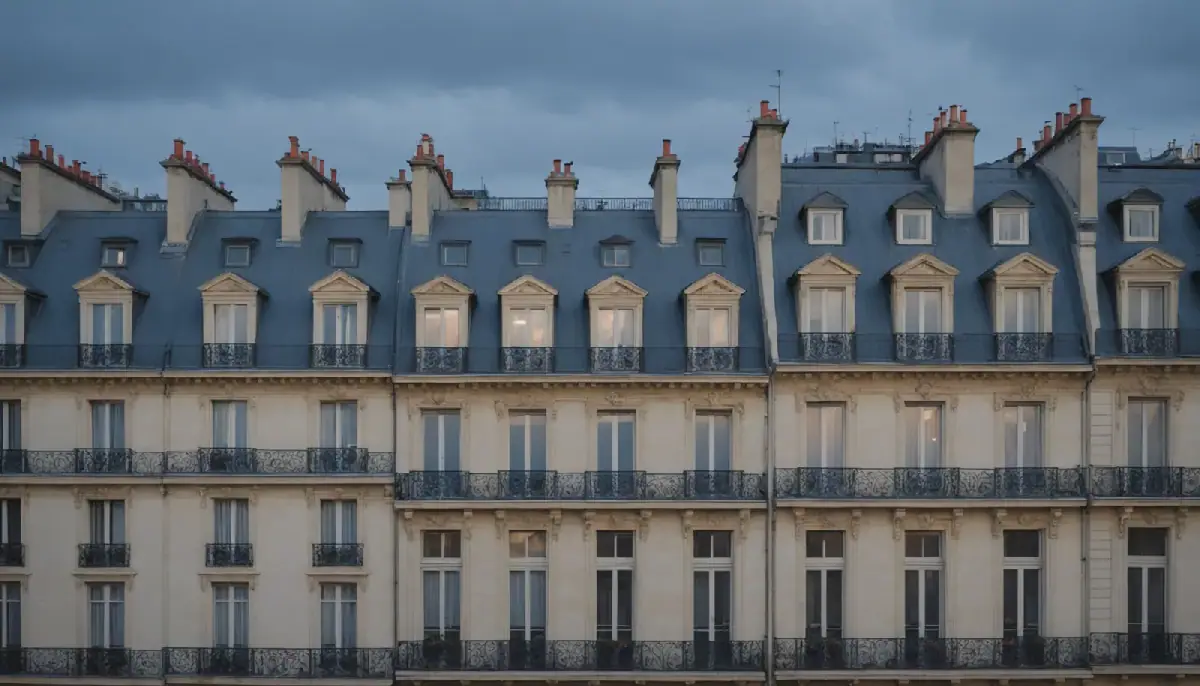
A recent study has highlighted the significant disparity in electricity consumption between Parisian households and those in rural France. In 2025, the average Parisian household consumed 2,602 kWh of electricity, compared to 5,354 kWh for a household in the Tarn-et-Garonne region, a difference of over 2,000 kWh. This disparity is not due to differences in energy efficiency or behavior, but rather to the characteristics of the buildings and households in each area.
The study, published by Comparons l'énergie on October 25, analyzed data from three public sources: Enedis, the French national electricity distributor; the National Institute for Statistics and Economic Studies (INSEE); and the Energy Regulatory Commission. The study found that Parisian households have a significantly lower electricity consumption than households in other parts of France, with an average annual bill of €711, the lowest in the country.
The study also found that the majority of Parisian households live in apartments, with 97% of households residing in multi-unit buildings. Additionally, nearly half of Parisian households live in buildings constructed before 1946, which tend to be more energy-efficient. The study also noted that 39.9% of Parisian households live in apartments smaller than 40 square meters, compared to 22.1% in the Hauts-de-Seine region.
The study found that the type of heating used in households also plays a significant role in electricity consumption. While electric heating is not uncommon in Parisian households, accounting for 34.6% of households, the consumption varies with temperature, reaching 21.4%, slightly higher than the national average of 19.9%. However, the study noted that the size of the household and the type of heating used have a more significant impact on electricity consumption than the energy source itself.
The study also analyzed data from the surrounding departments of Paris, including the Hauts-de-Seine, Val-de-Marne, and Seine-Saint-Denis. These departments have similar characteristics to Paris, with a high percentage of apartment dwellings and lower electricity consumption. The study found that the average electricity consumption in these departments was 2,867 kWh, 3,084 kWh, and 3,090 kWh, respectively.
In contrast, the study found that households in more rural areas of France, such as the Yvelines and Seine-et-Marne, have significantly higher electricity consumption, with average consumptions of 4,138 kWh and 4,701 kWh, respectively. The study noted that these areas have a higher percentage of single-family homes and a greater reliance on electric heating, which contributes to higher electricity consumption.
The study also found that the weight of electricity consumption on household budgets varies significantly depending on the department. In the Seine-Saint-Denis, electricity accounts for 3.8% of the median household income, compared to 2.3% in the Hauts-de-Seine. The study noted that this disparity is due to differences in household income, with households in the Seine-Saint-Denis having lower incomes than those in the Hauts-de-Seine.
Key points
- Parisian households consume significantly less electricity than those in rural France, with an average consumption of 2,602 kWh in 2025.
- The study found that the type of heating used and the size of the household have a more significant impact on electricity consumption than the energy source itself.
- The weight of electricity consumption on household budgets varies significantly depending on the department, with households in lower-income areas bearing a greater burden.