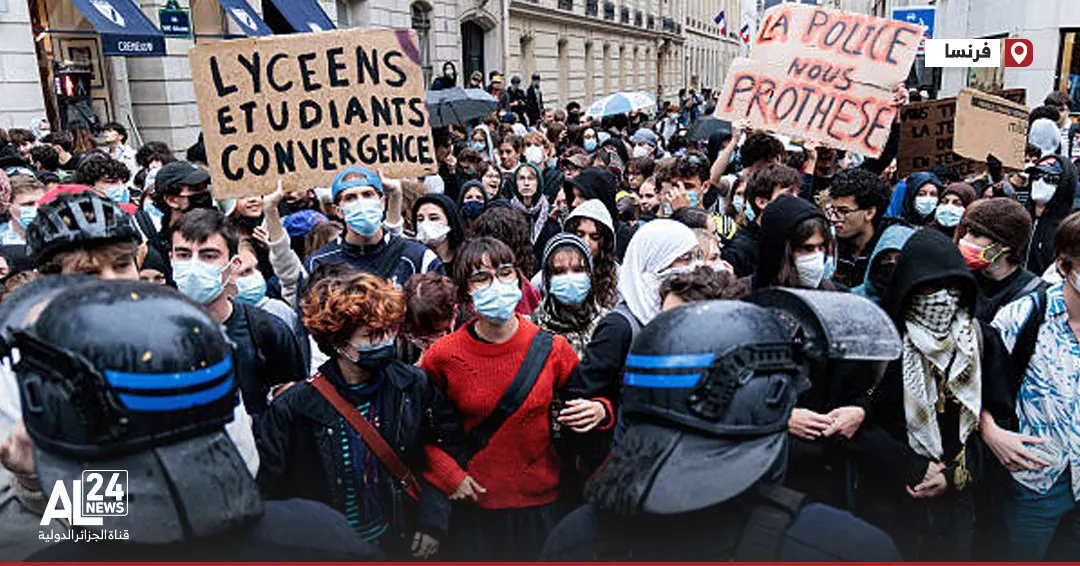
Hundreds of French schools closed their doors on Thursday as student protests over inadequate education infrastructure, teacher shortages, and resource scarcity entered their third week. The demonstrations, led by high school and university students, have sparked concerns about the country's ability to address growing discontent over living standards, wages, and public services. The protests coincide with an upcoming presidential election and a severe financial crisis.
In Paris, the city of fashion, a stark contrast has emerged between the glamour of fashion shows and the intensity of street protests. While fashion designers showcase their latest creations, students and protesters take to the streets, wearing masks to conceal their identities from surveillance cameras. The protests reflect growing frustration with the government's handling of education and social issues. Students demand better learning conditions, more teachers, and improved infrastructure.
The protests began on September 17 at the Saint-Exupéry high school in Créteil, a suburb of Paris, where teachers protested staff shortages, working conditions, and resource scarcity. The movement gained momentum, spreading to other parts of France as students joined in to express solidarity with teachers. Protesters cite overcrowded classrooms, irregular teacher replacements, and deteriorating school buildings as major concerns.
The French government, facing financial constraints, has been criticized for its response to the protests. The government has suspended the use of sonic bombs after a shocking incident in which a 15-year-old boy lost his hand. The incident sparked accusations of excessive force and police brutality against minors. The protests have also highlighted broader issues, including rising living costs, wage stagnation, and concerns about immigration and security.
As France prepares for the presidential election in April, the protests have added to the country's sense of uncertainty. The country's financial woes have pushed French bond yields to nearly 5%, sparking concerns about public debt. The government faces pressure to address the protesters' demands and find a solution to the education crisis. Students and protesters remain determined to push for change.
The protests have disrupted the education system, with many schools forced to close. The government has offered limited concessions, but protesters are demanding more significant reforms. The situation remains tense, with concerns about the potential for further escalation. The protests have also sparked a national debate about the state of education and the need for investment in public services.
As the protests continue, Paris remains a city divided. While fashion shows and luxury brands showcase the city's glamour, the streets tell a different story. The protesters' demands for better education, living standards, and social justice reflect a deeper discontent with the government's policies. The outcome of the protests and the government's response will have significant implications for France's future.
Key points
- Student protests over education woes enter third week in France
- Protests coincide with upcoming presidential election and severe financial crisis
- Government faces pressure to address protesters' demands and invest in public services