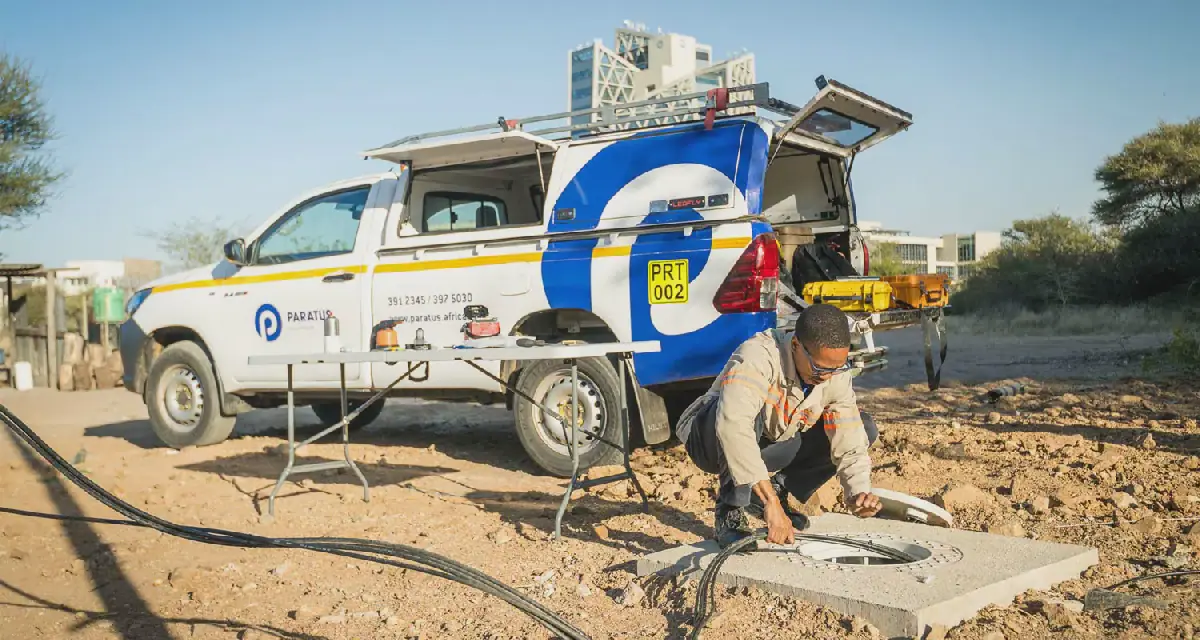
Paratus Namibia has significantly expanded its fibre network by nearly 600 kilometres over the past year, bringing its total network to over 5 000 kilometres. This expansion is part of a broader infrastructure programme aimed at increasing network capacity, improving reliability, and extending access to high-speed connectivity across Namibia. The investment reflects Paratus's commitment to enhancing the country's connectivity infrastructure.
The expansion of Paratus's fibre network is a strategic move to strengthen Namibia's telecommunications sector, which trails some Southern African Development Community (SADC) countries, including South Africa and Mauritius. However, Namibia performs above the African average in several infrastructure-related measures, according to the International Telecommunication Union's (ITU) ICT Development Index. This indicates that the country has a solid foundation for further growth and development in the sector.
Paratus's managing director, Andrew Hall, highlighted that the addition of 595 kilometres of fibre in the past year demonstrates the scale of the company's ongoing network development. Hall emphasized that a strong and resilient network requires more than just fibre, including different technologies, alternative routes, and sufficient capacity to ensure customers are not dependent on a single point of connection. This approach underscores Paratus's commitment to providing reliable and high-quality services.
One of Paratus's largest investments has been the rollout of its mobile network, representing an investment of N$600 million over the past 24 months. The network uses current-generation technology and is being expanded nationally to increase coverage and capacity, while extending Paratus services to more customers. This significant investment in mobile infrastructure is expected to enhance connectivity and access to services across the country.
Paratus's connectivity infrastructure extends beyond Namibia's borders, with access to the Equiano and West Africa Cable System (WACS) submarine cable networks along Africa's west coast. The company serves as the landing partner for Equiano in Namibia and has a Trans-Kalahari fibre route connecting Windhoek to Johannesburg, providing an alternative international route and access to submarine cable systems along Africa's east coast.
To ensure network resilience, Paratus has built redundancy into its network by using two backhaul providers to connect its points of presence. Its own infrastructure is predominantly used as the primary route, with an independent provider serving as the secondary route. This approach enables Paratus to maintain high levels of service availability and reliability, even in the event of disruptions or outages.
The next phase of Paratus's infrastructure programme will include further expansion of its national mobile network, a significant capacity upgrade to its point-to-multipoint fixed wireless network, continued fibre rollout, and the expansion of its second data hall. The company plans to invest millions of Namibian dollars over the next few years to extend its network footprint, increase capacity, and strengthen infrastructure resilience, ensuring that it remains a leading player in Namibia's telecommunications sector.
Key points
- Paratus Namibia expands fibre network by 600km with N$600 million investment.
- The expansion aims to increase network capacity, improve reliability, and extend access to high-speed connectivity.
- Paratus plans to invest further in its infrastructure programme to extend its network footprint and strengthen resilience.