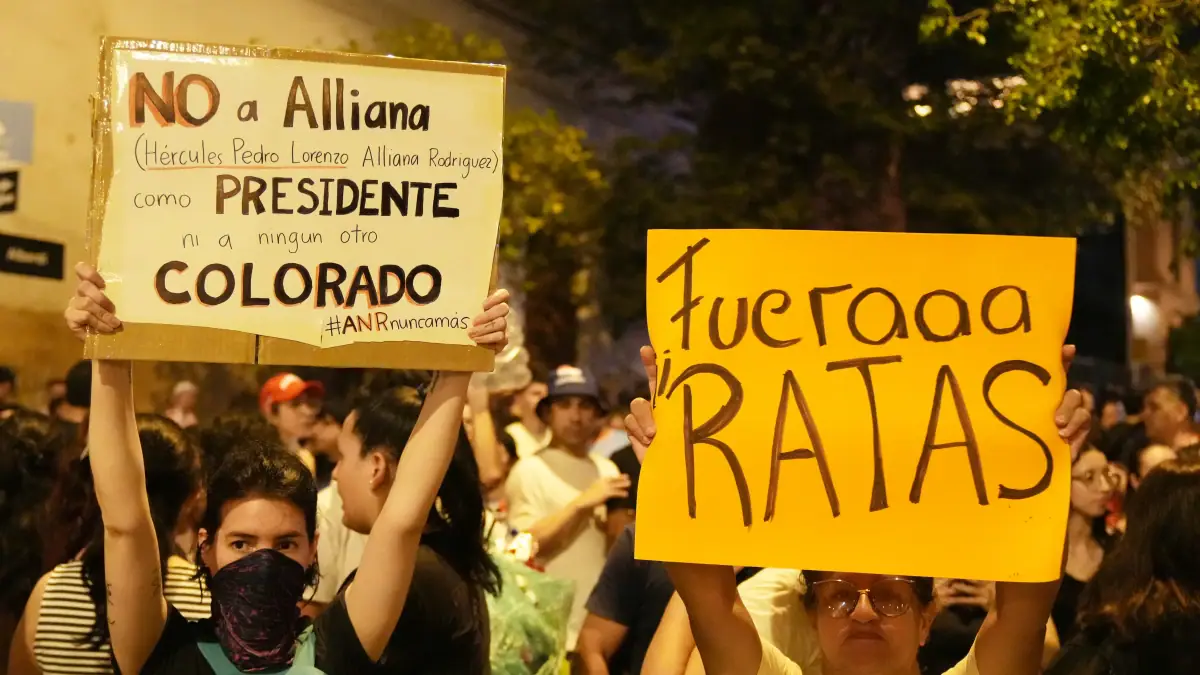
The sudden collapse of Ueno Bank in Paraguay has left millions of citizens in limbo, with the bank's services ceasing to function in the early hours of Tuesday morning. The bank's collapse had immediate consequences, with protesters gathering outside Congress to express their frustration and anger. Many citizens, including a 28-year-old barista, Elizabeth González, expressed their loss of trust in the banking system, with one customer insisting on paying in cash.
Ueno Bank had become a significant financial institution in Paraguay, with 2.9 million customers, approximately 60% of the country's adult population. The Central Bank reported that the bank had around 1.8 million depositors. By Saturday, almost 1.2 million customers had received an advance payment under the state's deposit guarantee fund, but many were still waiting. The bank's collapse also had far-reaching implications, leading to the impeachment and removal of President Santiago Peña.
The collapse of Ueno Bank exposed a power struggle within the ruling Colorado Party, with President Peña being a close ally of former US President Donald Trump. Peña's personal links to the bank's holding company, in which he held shares, raised questions about his involvement. He had also appointed Carlos Carvallo, who led Ueno Bank, to head Paraguay's Central Bank in 2023. Peña's asset declaration in 2023 listed shares in Ueno Holding, valued at around $845,000.
Prosecutors allege that Peña used his position to influence public agencies and state-owned entities to maintain deposits with Ueno Bank despite his connections to its parent group. Peña resigned and was impeached, with Pedro Alliana sworn in as president to serve out the rest of Peña's term. Peña was charged with breach of trust and administration for personal gain and was ordered held in pretrial detention. Carlos Carvallo and eight Ueno executives, including CEO Miguel Vásquez, were also arrested and charged.
The crisis has put the spotlight on Horacio Cartes, a tobacco magnate and former president of Paraguay, who wields significant influence. Cartes had handpicked Peña to lead his Honor Colorado faction into the 2023 presidential election, but their relationship had become strained. Cartes publicly distanced himself from Peña, calling for an investigation and insisting on no impunity for anyone. His faction backed Peña's impeachment, seen as a decisive withdrawal of political protection.
The scandal has sparked protests and outrage, with many citizens demanding accountability and change. For Rodrigo Piatti, an activist with the anti-corruption campaign group Comisión Escrache Ciudadano, the scandal is about more than a bank collapse – it's a reckoning with Paraguay's political establishment. Piatti believes that real change will only occur if the political establishment, including Cartes, is challenged.
The Ueno Bank collapse has raised fundamental questions about the bank's management of its assets, with economist and former finance minister Manuel Ferreira pointing out that the bank's principal asset was its loan portfolio, but many loans had gone to companies linked to the bank's controlling owners. The Social Security Institute had around $355 million invested in Ueno, roughly 9% of its portfolio. The crisis has significant implications for Paraguay's economy and politics.
Key points
- President Santiago Peña impeached and removed from office amid Ueno Bank collapse crisis.
- Ueno Bank collapse affects millions of citizens, with 2.9 million customers and 1.8 million depositors.
- Crisis exposes power struggle within ruling Colorado Party and raises questions about accountability and corruption.