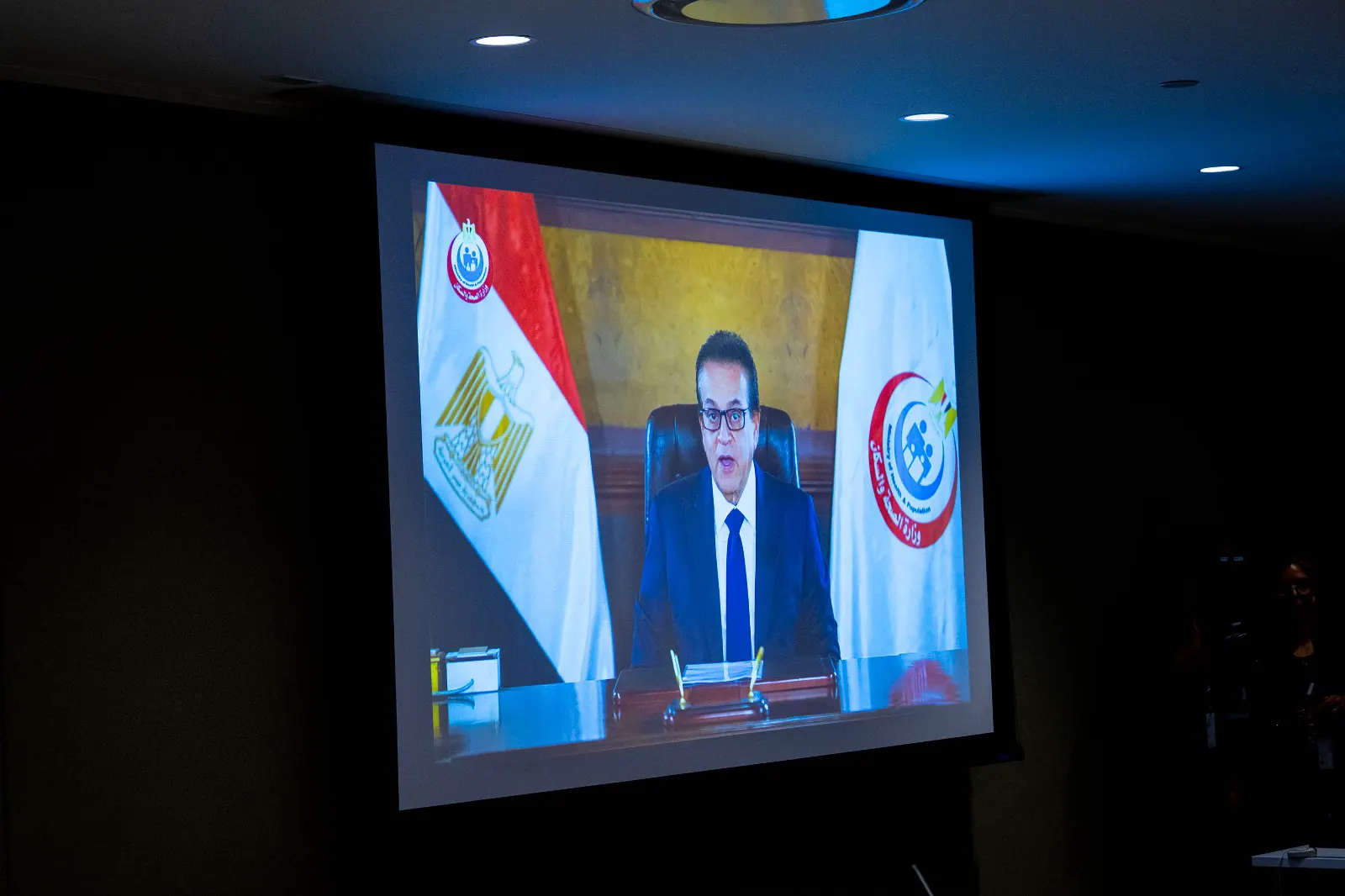
Egyptian Health Minister Khaled Abdel Ghaffar recently highlighted the importance of building resilient health systems in pandemic preparedness. He made these remarks in a recorded address to a high-level international dialogue at the United Nations headquarters in New York. The dialogue, titled "Preparedness that Protects: Advancing Pandemic Preparedness through Resilient Health Systems and Continuity of Essential Health Services," was hosted by Egypt's Health Ministry, Spain's Health Ministry, and the International Federation of Red Cross and Red Crescent Societies.
Abdel Ghaffar emphasized that pandemic preparedness should go beyond responding to emergencies and focus on building resilient health systems. He noted that the consequences of the COVID-19 pandemic and other global health crises have shown that health threats are persistent, interconnected, and unpredictable. Therefore, the strength of a health system should be measured not only by its capacity to detect and contain an outbreak but also by its ability to maintain routine healthcare services during an emergency.
The Egyptian Health Minister stressed that essential healthcare services, including vaccination programs, maternal and child healthcare, treatment of non-communicable diseases, mental healthcare, cancer treatment, and palliative care, must be maintained during an emergency. Additionally, health workers must be protected during outbreaks. Abdel Ghaffar called for sustained investment in primary healthcare, disease surveillance, immunization, the health workforce, supply chains, and community systems.
Abdel Ghaffar also highlighted the need to strengthen early detection capabilities, healthcare infrastructure, workforce protection, community engagement, and continued access to medical services. He emphasized that pandemic preparedness and health-system resilience are two sides of the same responsibility: protecting lives before, during, and after a health emergency. Preparedness must be centered on people, particularly those most in need, including children, older people, people with chronic diseases or disabilities, migrants, refugees, and displaced populations.
The Minister argued that no one should have to choose between protection from a health emergency and access to routine care. He called for international discussions on pandemic prevention, preparedness, and response to move from lessons learned to stronger systems, from commitments to implementation, and from fragmented efforts to genuine international solidarity. Equity should remain at the center of pandemic preparedness, with access to preparedness capabilities not depending on a country's geography, income level, or negotiating power.
Abdel Ghaffar emphasized that all countries should be able to detect health threats early, protect healthcare workers, maintain essential services, access medical countermeasures, and recover rapidly following a crisis. He concluded that resilience is built long before an emergency begins and tested when a crisis strikes. A resilient health system is one that can respond to an outbreak while continuing essential healthcare, preserving previous health gains, and emerging better prepared for future threats.
The high-level international dialogue was attended by ministers and officials from the United Arab Emirates, Norway, and Spain, as well as representatives of international, health, and humanitarian organizations. The discussion aimed to advance pandemic preparedness through resilient health systems and continuity of essential health services. Key stakeholders are now working towards implementing these strategies to protect lives and maintain essential healthcare services during crises.
Key points
- Egyptian Health Minister Khaled Abdel Ghaffar emphasizes building resilient health systems to maintain essential services during crises.
- Pandemic preparedness should go beyond responding to emergencies and focus on building resilient health systems.
- Equity should remain at the center of pandemic preparedness, with access to preparedness capabilities not depending on a country's geography, income level, or negotiating power.