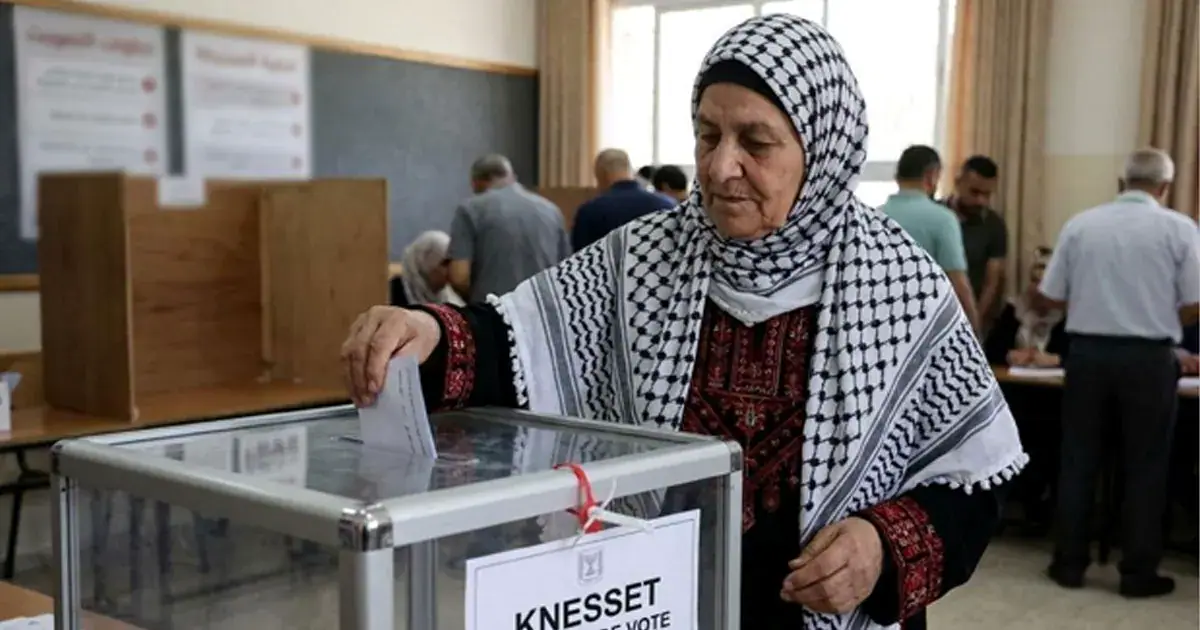
In a historic turn of events, Palestinian parties in Israel have secured 19 seats in the Knesset, the Israeli parliament, out of a total of 120 seats. This development marks a significant milestone, with a voter turnout of nearly 80% in Arab localities, up from just over 50% four years prior. The increased participation and representation have been hailed as a major political statement, with many viewing it as an affirmation of existence and a challenge to the status quo.
Historically, Palestinians in Israel have faced significant challenges, including discriminatory laws and policies. The 1950 law on absentee property, for instance, created a category of "present-absent" Palestinians who, despite being citizens, were denied legal rights to their land and properties. This election has been seen as a major challenge to such policies, with many Palestinians exercising their right to vote and demand greater recognition.
The election results have sparked a mixed reaction from the Israeli government, with the Likud party crying foul and alleging widespread fraud and corruption. However, the police have found no evidence to support these claims, and the only reported irregularities were isolated incidents of vote-buying. Critics argue that the government's reaction reflects a deeper unease with the growing assertiveness of Palestinian citizens.
The significance of this election cannot be understood in isolation from the broader regional context. The ongoing conflict in Gaza and the West Bank has created a sense of existential threat among Palestinians, who feel their very existence is under challenge. The vote has been seen as a form of resistance, with many Palestinians exercising their democratic rights to push back against policies of erasure and marginalization.
The implications of this election are also significant for the Israeli opposition, which has long struggled to form a cohesive coalition. With the Likud party reduced to 53 seats, and the opposition bloc holding 48 seats, the Palestinian parties hold the key to forming a majority coalition. However, many in the opposition have expressed reluctance to work with Palestinian parties, citing concerns about legitimacy.
Despite such concerns, Palestinian parties have demonstrated a high level of political maturity and diversity. The Ra'am party, led by Mansour Abbas, has shown a willingness to work with Jewish partners, while the Joint List brings together communists, Jews, and Arab nationalists. This diversity has been seen as a strength, reflecting a nuanced understanding of the complexities of Israeli politics.
Ultimately, the election has sent a powerful message to the Israeli government and the world at large: Palestinians will no longer be ignored or erased. They have asserted their right to exist, to be heard, and to participate in the democratic process. As one analyst noted, "a people that votes cannot be effaced."
Key points
- Palestinians in Israel have secured a record 19 seats in the Knesset, marking a significant milestone in their struggle for recognition and equality.