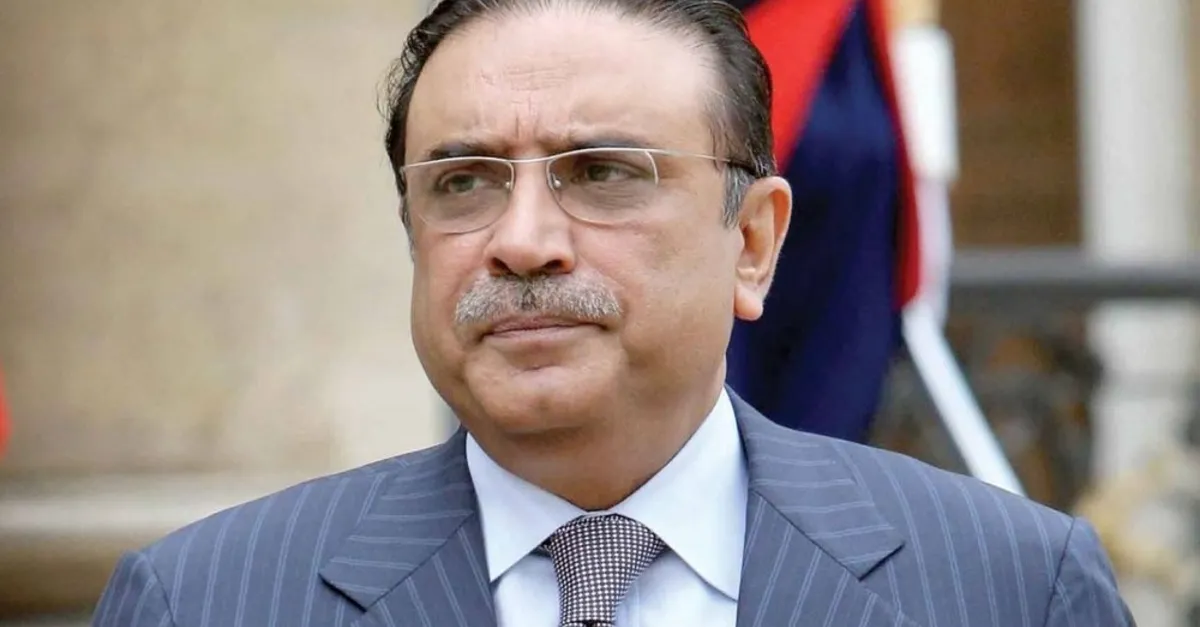
Pakistani President Asif Ali Zardari announced on Sunday the imposition of emergency in Khyber Pakhtunkhwa province, located in the northwestern part of the country. The province is governed by the Pakistan Tehreek-e-Insaf (PTI) party, led by former Prime Minister Imran Khan, who is currently incarcerated. According to the President's office, the decision was made on the advice of Prime Minister Shehbaz Sharif, following a federal cabinet meeting.
The emergency declaration effectively suspends the provincial government, stripping its elected administration of powers. This move is seen as an escalation in the ongoing confrontation between the federal government, led by Prime Minister Sharif, and the PTI party. Khan's party has been mobilizing support in recent days, pressing the government to release their leader, and has threatened to march on the capital, Islamabad, in the coming days.
The President's office stated that the decision to impose emergency was made in response to the provincial government's alleged failure to combat Islamic extremism. The PTI party has described the move as a "sophisticated" attempt to undermine the province's elected government. Zafar Ali Shah, a senior PTI leader, vowed that the party would not back down, saying that the people of Khyber Pakhtunkhwa would resist the federal government's attempts to take control of the province.
According to Pakistan's constitution, the federal government has the authority to assume some or all functions of a provincial government during a state of emergency. However, the President's office did not provide details on how the province would be administered. The move has raised concerns about the potential for further instability and violence in the region.
PTI spokesperson and close aide to Khan, Zafqyar Bukhari, denounced the decision, saying that Khyber Pakhtunkhwa has the "only legitimately elected government" in the country. Bukhari warned that the move would lead to more bloodshed, instability, and collateral damage, adding that there was always room for negotiations, but the government's decision showed that talks were never a genuine intention.
The imposition of emergency in Khyber Pakhtunkhwa province has sparked widespread concern among politicians, analysts, and citizens. The development has significant implications for the country's fragile politics and raises questions about the federal government's commitment to democratic norms. The situation remains volatile, with many stakeholders closely watching the unfolding events.
As the situation in Khyber Pakhtunkhwa continues to unfold, Khan's PTI party has vowed to resist the federal government's move, while the government has yet to provide a clear plan for the province's administration. The country's international partners and human rights organizations have called for calm and urged all parties to respect the democratic process and the rule of law.
Key points
- Pakistan's President Asif Ali Zardari declares emergency in Khyber Pakhtunkhwa province.
- The move suspends the provincial government controlled by Imran Khan's PTI party.
- The decision has sparked concerns about further instability and violence in the region.