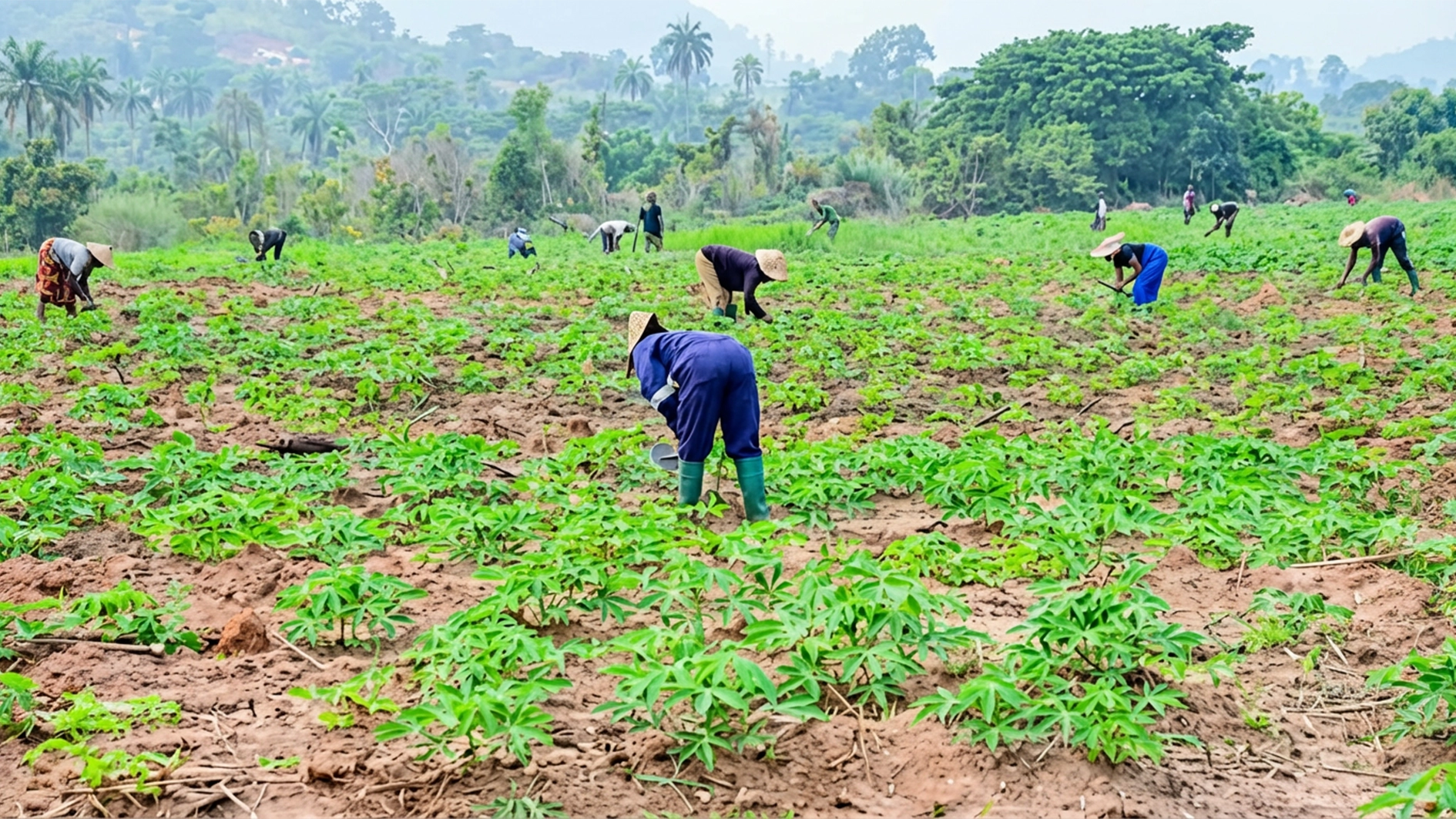
Smallholder women farmers in Oyo State, Nigeria, have urged the government to increase investment in agriculture and improve budget implementation to address food security challenges. The call was made at a recent event organized by the Small-Scale Women Farmers Organisation in Nigeria (SWOFON). Despite the critical role played by women farmers in food production and rural livelihoods, investment in agriculture remains inadequate.
According to the Oyo State Coordinator of SWOFON, Mrs. Tinuke Akinbade, the agricultural sector's share of Oyo State's budgets between 2021 and 2025 never exceeded 4.31 percent. The agricultural capital budget execution averaged 17.5 percent, the weakest among the five states assessed under the programme. Akinbade cited a policy brief by IBP-SWOFON SPARK II, which highlighted the need for increased funding and concrete government support for women farmers.
Women farmers have consistently engaged the government and developed a 10-point Charter of Demands, but their priorities have not translated into corresponding budgetary allocations and implementation. Akinbade emphasized that receiving women farmers' demands is not enough; the government must demonstrate how those demands are reflected in budget lines, allocated, and delivered to farmers. She urged the government to increase and protect agricultural investments and ensure timely and transparent release of approved capital budgets.
The SWOFON coordinator also advocated for the institutionalization of women's participation in state and local government agricultural planning and budgeting. She called for improved access to land, publication of information on agricultural budget allocations, releases, expenditure, procurement, and beneficiaries. Akinbade urged the government to strengthen agricultural services beyond input distribution to include extension services, irrigation, storage, processing, transportation, aggregation, and access to reliable markets.
Mr. Jide Bamgbose, Head of Democracy and Governance Programme at the Justice, Development and Peace Commission (JDPC), decried poor budgetary allocation and performance in the agricultural sector, warning of implications for food security. He advocated for increased agricultural funding, suggesting that governments should allocate between 10 and 12.5 percent of their budgets to agriculture, with 75 to 80 percent directed towards capital investment.
Adebukola Adekola, a farmer, called on governments to support smallholder farmers with land, inputs, credit, and storage facilities to prevent worsening food insecurity. She identified climate change, poor rainfall, land degradation, and unreliable seeds as challenges confronting farmers. Adekola also cited government policies and instability in governance as major challenges affecting agricultural development.
Stakeholders at the event raised concerns over inadequate processing and storage facilities, high input costs, and low prices of farm produce. They called on the government to provide concrete support, including land allocation, subsidized inputs, credit facilities, storage, and processing centers. The event was attended by representatives of the Oyo State Ministry of Agriculture, Ministry of Environment and Natural Resources, and development partners.
Key points
- Women farmers in Oyo State demand increased investment in agriculture and improved budget implementation to address food security challenges.
- The agricultural sector's share of Oyo State's budgets between 2021 and 2025 never exceeded 4.31 percent.
- Stakeholders advocate for increased agricultural funding, suggesting that governments should allocate between 10 and 12.5 percent of their budgets to agriculture.