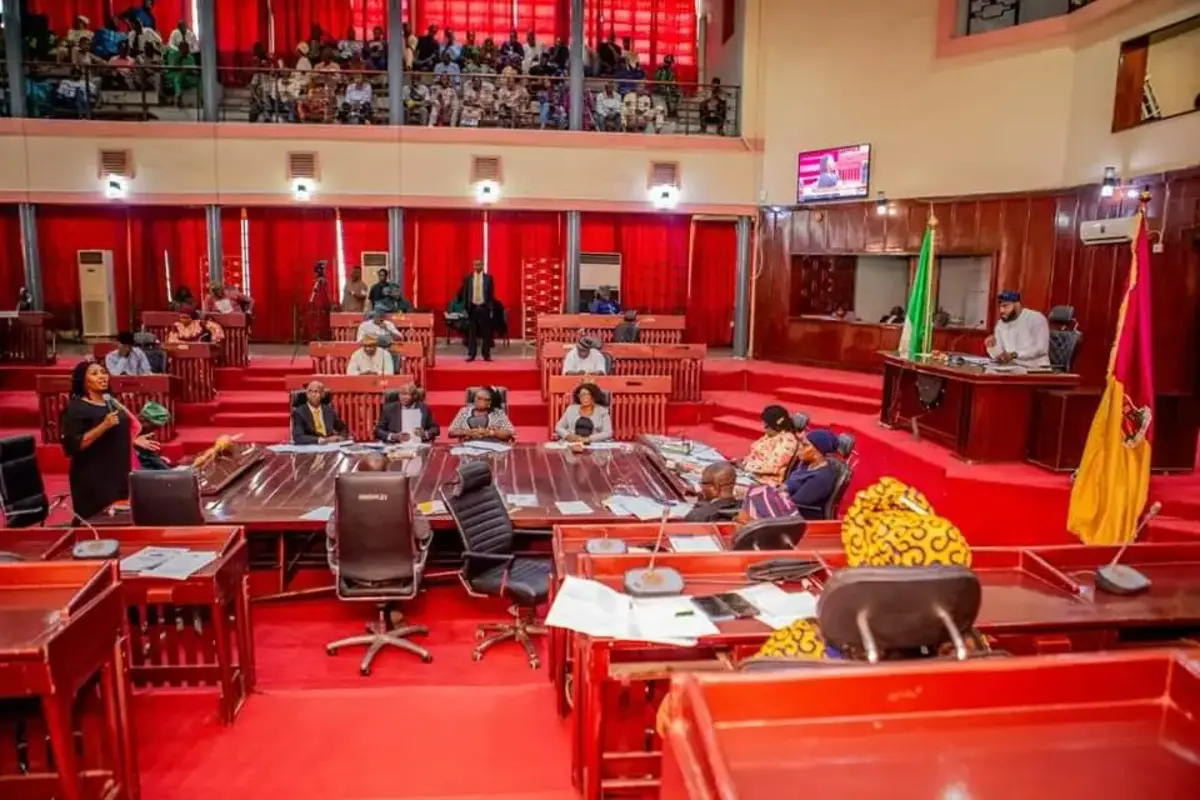
The Oyo State House of Assembly has passed the alteration of the Constitution of the Federal Republic of Nigeria (Sixth Alteration) Bill, 2026. This bill seeks to provide a constitutional framework for the establishment and operation of State Police Services across the country. The bill was passed at plenary after a clause-by-clause consideration by lawmakers, presided over by Speaker Rt Hon Adebo Edward Ogundoyin. The National Assembly had transmitted the bill to the Oyo Assembly for consideration and approval.
The National Assembly passed the bill, with the Senate approving it on 24 June 2026 and the House of Representatives on 23 July 2026. They urged state legislatures to expedite its consideration to facilitate the conclusion of the constitutional alteration process under Section 9 of the 1999 Constitution. The Oyo Assembly's passage of the bill is a significant step towards restructuring Nigeria's policing architecture.
The proposed amendment will fundamentally restructure Nigeria's policing architecture by providing for a Federal Police Service alongside State Police Services. Each state will be empowered to establish its own Police Service through legislation by the State House of Assembly. The bill defines the respective responsibilities of federal and state police authorities, with State Police responsible for enforcing state laws, public safety, and order.
State Police Services will also be responsible for the prevention and detection of offences, protection of life and property, and other local policing functions prescribed by state law. The proposed framework will establish State Police Service Commissions to oversee the appointment, promotion, transfer, discipline, oversight, complaints, and accountability of state police personnel.
The bill provides for a State Commander of Police to head each State Police Service. The Commander will be appointed by the Governor on the recommendation of the National Police Council and subject to confirmation by the State House of Assembly. This move aims to decentralize policing and allow states to address specific security challenges.
The Speaker highlighted provisions empowering the National Assembly to prescribe minimum policing standards for both federal and state police services. States will also be allowed to prescribe higher or additional standards. This flexibility will enable states to tailor their policing needs to their specific requirements.
The passage of the bill has significant legislative implications for the Oyo Assembly. The Assembly will need to develop a comprehensive State Police Law to translate the constitutional framework into an effective operational institution. This will involve outlining the specific responsibilities and powers of the State Police Service and its relationship with the federal police.
Key points
- Oyo State House of Assembly passes alteration of Constitution bill to establish State Police Services
- Bill seeks to provide a constitutional framework for State Police Services across Nigeria
- Passage of bill aims to restructure Nigeria's policing architecture with Federal Police Service and State Police Services