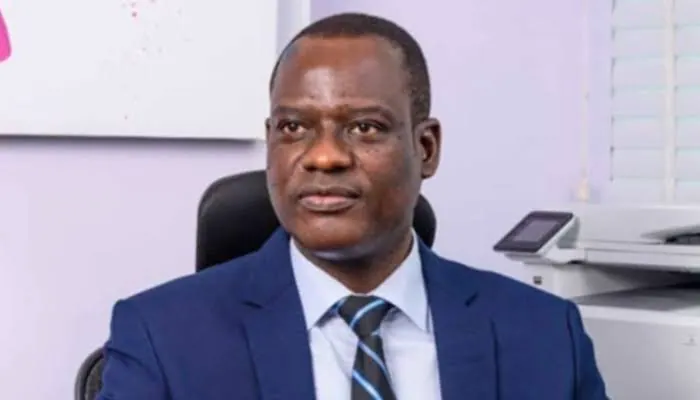
Nigeria's Minister of Finance and Coordinating Minister of the Economy, Taiwo Oyedele, has cautioned against returning petrol to its pre-reform price, citing potential economic instability. Speaking at a High Level Strategic Engagement with Ministries, Departments and Agencies (MDAs) in Abuja, Oyedele emphasized that such a move could worsen prices and have far-reaching consequences for the economy. He noted that the recent rise in petrol prices was largely driven by global conflict and disruptions in international energy supplies.
According to Oyedele, returning to subsidy would transfer the burden to government finances, potentially threatening salaries, pensions, and public services. He estimated that even fixing petrol at N500 per litre would cost the government over N16 trillion annually. The minister highlighted that Brent crude had risen above $100 per barrel, while shipping through the Strait of Hormuz had fallen sharply, contributing to the increase in petrol prices from about N830 to N1,400 per litre.
Oyedele revealed that the removal of subsidy released N15.8 trillion to the Federation Account between June 2023 and December 2025. He stated that N10.4 trillion of the amount went to state and local governments, improving their ability to meet financial obligations. The minister also disclosed that the government had granted tax and duty waivers on petroleum products, saving consumers between N400 and N600 per litre.
The government is promoting local refining, Naira-for-crude transactions, and compressed natural gas (CNG) as alternatives to fuel subsidy. Oyedele announced that over 120,000 vehicles now run on CNG, supported by over 400 conversion centers and 96 refueling stations. Additionally, more than 550 CNG buses have been deployed, with fares falling by 30% to 50% where they operate.
To cushion the effects of the fuel price increase, Oyedele announced a 30-day margin discount on petrol sold at NNPC stations, prioritizing public transport operators nationwide. The minister also disclosed plans to negotiate a N1,350 per litre ceiling on petrol ex-gantry or landing costs, which would be reviewed monthly to reduce price volatility.
Oyedele emphasized that the government's priority is to preserve economic reforms while ensuring their benefits reach Nigerians more quickly and tangibly. He announced plans to consider an excess profit tax on energy operators taking undue advantage of consumers, with proceeds supporting transport assistance or vouchers for vulnerable urban minimum-wage earners.
The government is also working on a National Strategic Fuel Reserve to protect consumers against future supply disruptions. Oyedele assured Nigerians that comprehensive fiscal measures are being developed to reduce inflation to single digits sustainably, adding that the government cannot afford to revisit the previous cycle of scarcity, smuggling, currency weakness, and fiscal crisis.
Key points
- The return of fuel subsidy could cost Nigeria over N20 trillion annually.
- The government is promoting alternatives to fuel subsidy, including local refining and compressed natural gas.
- The government is developing comprehensive fiscal measures to reduce inflation to single digits sustainably.