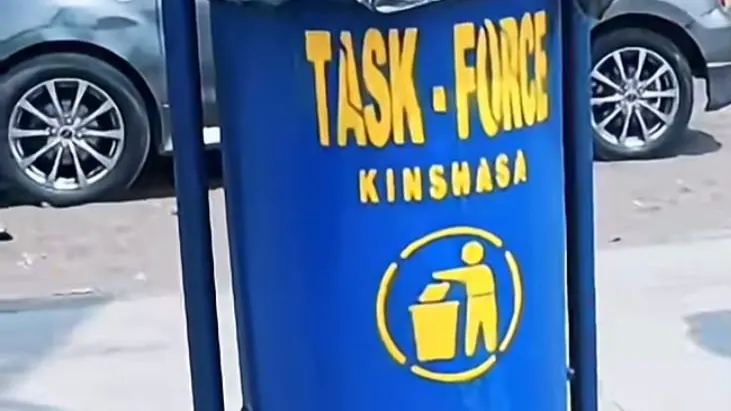
The Service national, a public organization under the direct authority of the President of the Republic, has initiated a project to install over 750,000 public trash cans in Kinshasa. This effort aims to encourage residents to abandon dumping waste in open areas and use designated spaces for waste collection. The program is part of a broader campaign to combat insanitary conditions in the city.
The first phase of the installation has begun in the commune of Nsele, specifically in the Air Force neighborhood, near Ndjili International Airport. The trash cans will be placed along main roads at 15-meter intervals. The Service national is urging residents to use the trash cans and abandon the practice of throwing waste into the open. Those caught dumping waste in public areas will face coercive measures.
The Service national, led by Lieutenant-General Jean-Pierre Kasongo Kabwik, aims to promote new habits in waste management and increase resident responsibility. The organization has stated that it will not tolerate disobedience, and those who refuse to comply will face punishment. The trash can deployment complements ongoing road cleaning and canal excavation work in several neighborhoods.
The program's success relies on resident involvement and adherence to sanitary behavior. The Service national's methods, including the use of whips against those who disobey, have sparked criticism. However, the organization maintains that its goal is to improve the living conditions of residents and restore Kinshasa's environment.
The trash can deployment is part of a larger effort to improve the city's sanitation. The Service national is working with the presidential task force to implement the program. The organization has warned that it will take strict measures against those who continue to dump waste in public areas.
The initiative has sparked debate about the balance between maintaining public order and respecting citizens' rights. Some residents have expressed concerns about the use of coercive measures, while others support the effort to clean up the city. The Service national maintains that its goal is to promote a culture of sanitation and responsibility.
The deployment of over 750,000 public trash cans marks a significant step in the government's efforts to improve Kinshasa's sanitation. The program's impact will depend on the level of resident participation and the effectiveness of the Service national's implementation.
Key points
- The Service national has deployed over 750,000 public trash cans in Kinshasa to combat insanitary conditions.
- The program aims to promote new habits in waste management and increase resident responsibility.
- The initiative has sparked debate about the balance between maintaining public order and respecting citizens' rights.