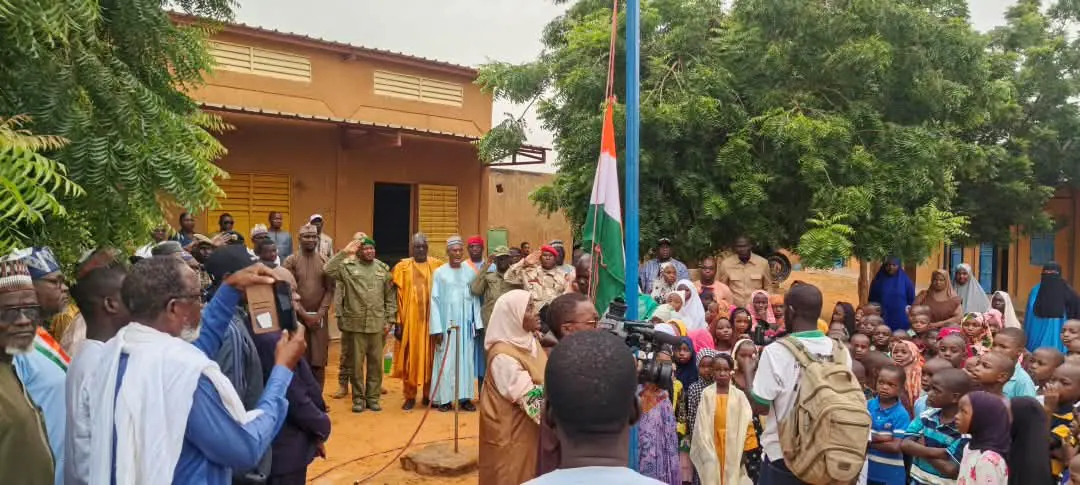
The Governor of Tahoua region, Colonel-major Souleymane Amadou Moussa, officially launched the 2026-2027 academic year on October 1, 2026, at Sabon Gari primary school. A total of 669,592 students and learners from all educational structures have returned to school after a three-month break. The Governor promised to ensure a smooth academic year across the region and emphasized the need for improved results in the upcoming exams.
The Director Regional of National Education, Alhassane Ibounou, stated that the 2026-2027 academic year is themed "Improving academic achievements for quality, inclusive, and performant education." He confirmed that the government has made necessary arrangements for school supplies and textbooks, which will be distributed to students. Ibounou also urged teachers to be punctual and dedicated to their duties.
After the launch, the Governor visited Tahoua's vocational high school to assess the effectiveness of the new academic year. The Director Regional of Technical and Vocational Education and Training, Mounkaila Souleymane Maïguizo, noted that Niger prioritizes technical and vocational education as a driving force for development. He announced that 37,592 young people have been admitted to the regional technical and vocational education system.
The Governor and his delegation distributed school kits, including notebooks and materials, to students during their visits. This initiative aims to support students and provide them with the necessary tools for a successful academic year. The distribution of school kits demonstrates the government's commitment to improving education in the region.
The resumption of classes marks an important milestone in the region's education sector. With over 669,000 students returning to school, the region is expected to make significant progress in the coming months. The government's efforts to provide necessary resources and infrastructure will be crucial in ensuring a productive academic year.
The launch of the 2026-2027 academic year in Tahoua region is part of a broader effort to improve education across Niger. Other regions, including Zinder, Tillabéri, and Dosso, have also reported a smooth start to the new academic year. The government's focus on education is expected to have a positive impact on the country's development and future prospects.
As the academic year progresses, stakeholders will be monitoring progress and assessing the effectiveness of the government's initiatives. The region's education sector faces challenges, but the government's commitment to improving education and providing resources to students and teachers is a positive step towards addressing these challenges.
Key points
- Over 669,000 students have resumed classes in Tahoua region for the 2026-2027 academic year.
- The government has made arrangements for school supplies and textbooks to support students.
- The region prioritizes technical and vocational education as a driving force for development.