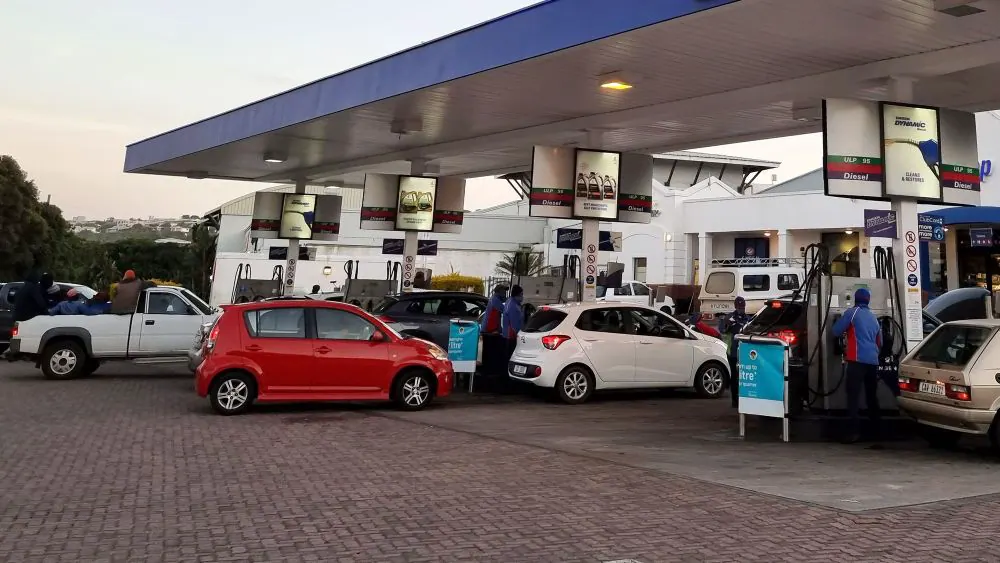
The Motor Industry Staff Association (MISA) is urging the South African government to reinstate a temporary fuel levy reduction as petrol prices have exceeded R30 per litre in Gauteng. As of October 7, 95 Unleaded petrol costs R30.25 per litre inland and R29.38 at the coast. This sharp increase is attributed to rising international oil prices, primarily driven by heightened tensions in the Middle East. MISA's call for relief aims to alleviate the financial strain on households already struggling with increased transport costs.
MISA's chief executive officer: Operations, Martlé Keyter, emphasized that fuel relief is essential for survival, stating that workers cannot afford to pay R30 per litre to commute to work while the state takes more than R4 from every litre. The association is requesting a temporary reduction of at least R3 per litre in the General Fuel Levy on both petrol and diesel. This levy currently stands at R4.10 per litre on petrol and R3.93 on diesel. MISA also seeks targeted relief for households relying on illuminating paraffin.
The impact of these fuel price hikes extends beyond motorists. The South African National Taxi Council (SANTACO) reported that taxi associations have implemented only one fare increase since fuel prices began rising in March. However, decisions on future fare adjustments are left to individual taxi associations following consultations with commuters. The minibus-taxi industry faces pressure from higher fuel and operating costs, which may lead to further fare increases. This situation could exacerbate the financial burden on commuters who have already experienced increases of R3 to R6 on some city routes and R10 to R30 on long-distance journeys this year.
The freight sector is also affected, with diesel accounting for 35% to 55% of operating costs for road-freight companies. MISA cited data from the Pietermaritzburg Economic Justice and Dignity Group, indicating that transport and electricity costs consume 65.8% of a minimum wage before food expenses are considered. The association warned that workers are being severely strained by fuel, electricity, and food costs. MISA urged the government to act before the latest fuel shock further pressures household budgets and transport costs.
Mineral and Petroleum Resources Minister Gwede Mantashe previously stated that there are no immediate plans for another intervention, citing volatility in petroleum product prices. However, his department is reviewing the fuel-pricing structure, with the process expected to be completed by March 2027. MISA pointed out that the government had introduced temporary fuel levy relief in April, which was pushed for by organised labour through the National Economic Development and Labour Council (NEDLAC). This relief included a R3 per litre cut in the General Fuel Levy for two months and a zero diesel levy during that period.
MISA's proposed relief measures aim to cushion the impact of rising fuel costs on vulnerable households. The association believes that government intervention is crucial to mitigate the effects of elevated international oil prices. By reducing the fuel levy, MISA argues that the government can help alleviate some of the financial strain on workers and households. This approach is based on the precedent set in April when temporary relief was provided.
The ongoing fuel price crisis highlights the need for a comprehensive review of the fuel-pricing structure. As international oil prices continue to fluctuate, the South African government faces pressure to find a sustainable solution to mitigate the impact on households and businesses. MISA's call for urgent action underscores the urgency of addressing the issue, particularly for low-income households that are disproportionately affected by rising fuel costs.
Key points
- MISA is calling for a temporary reduction of at least R3 per litre in the General Fuel Levy on both petrol and diesel.
- The fuel price increase has significant implications for the transport sector, including potential fare hikes for taxi commuters and increased operating costs for road-freight companies.
- The South African government had previously provided temporary fuel levy relief in April, which was implemented for two months.