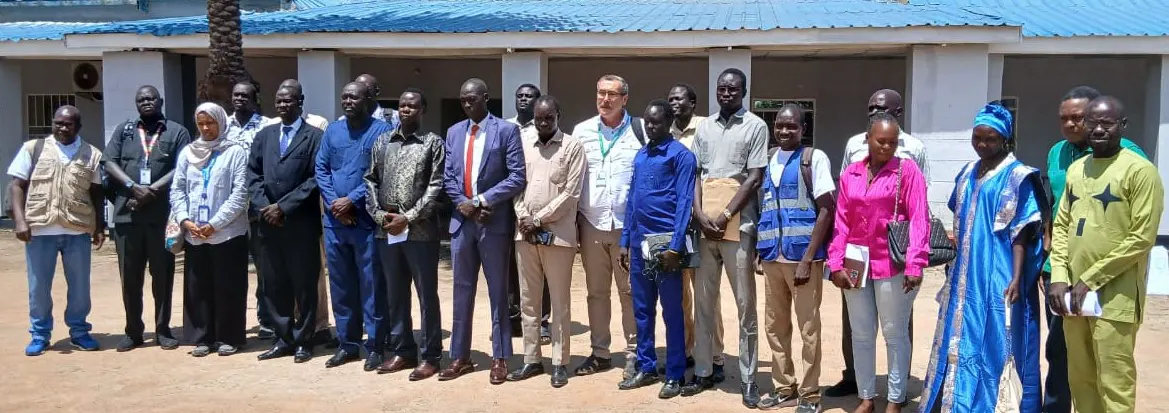
A severe dry spell has impacted 1.1 million people in five counties of Northern Bahr el Ghazal State, South Sudan. The situation has raised concerns over food shortages and worsening hunger in the coming months. State Minister for Agriculture and Forestry, Garang Chan Atak, disclosed the figures after a meeting with government officials and humanitarian partners in Aweil. The meeting reviewed findings from a rapid assessment conducted to assess the impact of the prolonged absence of rainfall.
The assessment was initiated after the dry spell threatened agricultural production and raised fears of increased hunger later this year and into 2027. Minister Chan Atak stated that the situation facing households across the state is serious. The rapid assessment was conducted by the Ministry of Agriculture and food security and livelihood partners. The report has been compiled and presented to the Ministry of Agriculture.
State Minister of Information, Gabriel Deng Yel, emphasized that the assessment came at a critical time as communities face difficulties preparing for the consequences of poor crop and vegetable yields. He urged humanitarian and development partners to strengthen support for affected communities through agricultural assistance and humanitarian interventions. The findings will be shared with the governor and relevant national ministries to support a coordinated response to the situation.
The prolonged lack of rainfall has disrupted agricultural activities in several parts of Northern Bahr el Ghazal, leaving farmers concerned about crop production and household livelihoods. Minister Chan Atak plans to share the assessment report with the national Ministry of Humanitarian Affairs and Disaster Management and other relevant authorities to support efforts to address the growing food security concerns.
The dry spell has affected five counties in Northern Bahr el Ghazal State, with 1.1 million people impacted. The government and local NGOs, including international organizations, are working together to review the findings and provide support to affected communities. The situation is expected to worsen in 2027 if not addressed.
Humanitarian partners, including the World Food Programme (WFP) and World Vision, are involved in the response efforts. The government and partners are working to provide agricultural assistance and humanitarian interventions to affected communities. The response efforts aim to mitigate the impact of the dry spell on food security and household livelihoods.
The dry spell in Northern Bahr el Ghazal State has significant implications for food security and household livelihoods. The government and humanitarian partners are working together to address the situation, but more support is needed to prevent worsening hunger and food shortages in the coming months.
Key points
- 1.1 million people affected by the dry spell in Northern Bahr el Ghazal State.
- The dry spell has disrupted agricultural activities and raised concerns over food shortages and worsening hunger.
- The government and humanitarian partners are working together to provide support to affected communities.