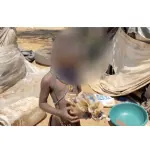
A family of eight, led by 51-year-old Uangandja Tjambiru, has been forced to search for food in rubbish bins in Windhoek, Namibia's capital city. The family, originally from Omaanda village in the Epupa Constituency, Kunene Region, has been struggling with dire hunger due to a persistent drought that has affected livestock and crop production. The drought has had a devastating impact on the community, leaving many families without access to basic necessities.
Tjambiru, who has been living in Windhoek for eight years, claims that some of her relatives have died of hunger, prompting her to bring her six nieces and nephews to the city in search of a better life. The children have been seen eating a fish they found in a rubbish bin at the Katutura Multi-Purpose Youth Complex Stadium. According to Tjambiru, the family wakes up as early as 04h00 to search for food in rubbish bins, as they have a better chance of finding something to eat in the city.
The Ovatjimba community, of which Tjambiru's family is a part, is a marginalised group living in the Epupa Constituency, Kunene Region. Epupa Constituency Councillor Tjimutambo Kuuoko said that the situation in Omaanda needs to be understood in the context of the drought, which has affected livestock and crop production. He noted that over 300 Ovatjimba people live in the area, and many have been impacted by climate change.
Kuuoko added that some relatives who previously supported families in the community are now in Windhoek in search of greener pastures. He mentioned that former Koevoet members, who are waiting for their payments, are also among those who have left the area. Kuuoko expressed willingness to help Tjambiru's family, stating that he needs to establish whether they are registered under the government's structured food assistance programme.
According to the Namibia Statistics Agency's 2023 Population and Housing Census, Ovatjimba account for 4.9 percent of the 75,569 people identified as belonging to marginalised communities. The report notes that marginalised communities continue to face challenges in education, employment, housing, and access to basic services. Tjambiru's situation highlights the struggles faced by many families in Namibia's marginalised communities.
Tjambiru said that she had to find alternative ways to feed her nieces and nephews, as life has become difficult in their village. She expressed concern that the children in her care might face a similar fate to her relatives who died of hunger. The family's situation has sparked concerns about the impact of drought and climate change on marginalised communities in Namibia.
The Namibian government has been working to address the challenges faced by marginalised communities, including providing food assistance. However, the situation faced by Tjambiru's family highlights the need for sustained efforts to address the root causes of hunger and poverty in these communities. The family's story serves as a testament to the resilience of those struggling to survive in the face of adversity.
Key points
- A family of eight in Namibia's Kunene Region has resorted to searching for food in rubbish bins due to severe hunger caused by drought.
- The Ovatjimba community, to which the family belongs, is a marginalised group facing challenges in education, employment, housing, and access to basic services.
- The Namibian government provides structured food assistance to marginalised communities, but more needs to be done to address the root causes of hunger and poverty.