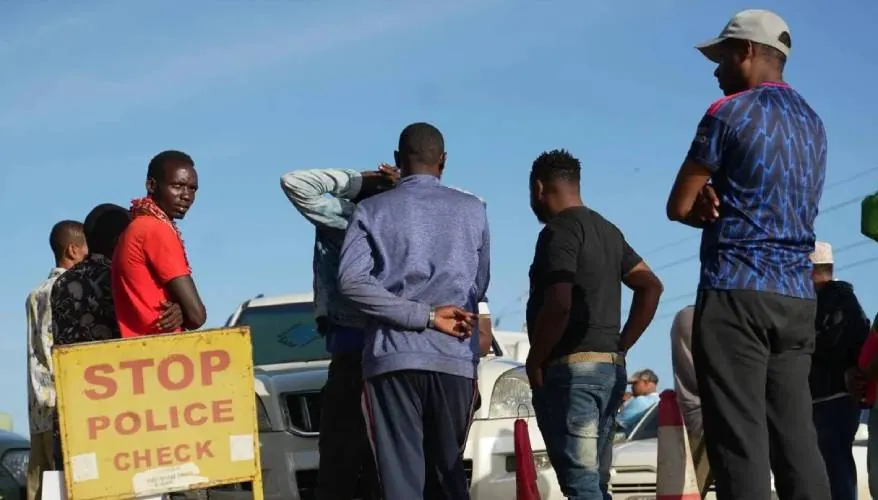
Six members of Muslims for Human Rights, including five staff and a board member, were detained by Kenya Defence Forces officers along the Malindi-Lamu highway on Monday. The team was travelling from Lamu to Mombasa after a field mission when they were intercepted between Gamba and Minjila. The officers detained them for about two hours before releasing them. The incident has sparked widespread condemnation from human rights organisations.
The Kenya Human Rights Commission and Muslims for Human Rights have jointly condemned the actions of the KDF officers. The organisations stated that the officers covered their faces and refused to identify themselves when challenged by the human rights team. This action is in direct contravention of a High Court ruling requiring security personnel to wear clearly visible name tags or identifiable service numbers on their uniforms.
The High Court ruling, made by Justice Bahati Mwamuye, also prohibits security officers from wearing hoods, balaclavas or face masks to conceal their identities. The organisations have called on the KDF and other security agencies to comply with the court order and hold accountable officers who violate the directive. The detained staff members were identified as Francis Auma, Abdulrahman Mwanga, Fredrick Okado, Lathan Yusuf, and Mohamed Abdla, while the board member was identified as Khelef Khalifa.
The human rights organisations have also demanded immediate compliance with a recent court order lifting the dusk-to-dawn curfew imposed along the Minjila-Lamu highway. The curfew had been in place for over a decade and had created conditions for arbitrary stops, harassment, and detention of travellers using the route. The organisations cited the detention of the Muslims for Human Rights team as an example of the curfew's negative impact.
However, a senior Anti-Terror Police officer has provided a different perspective on the incident. The officer, who wished to remain anonymous, stated that officers manning roadblocks and tactical borders in high-risk areas conceal their faces to protect their identities. The officer argued that anonymity is necessary for personal and operational survival in areas prone to insurgent or terrorist retaliation.
The incident has highlighted the challenges faced by human rights organisations in Kenya. The Kenya Human Rights Commission and Muslims for Human Rights have urged security agencies to respect court orders and protect the rights of travellers using the highway. The organisations have also called for accountability and legal consequences for officers who violate the court directive.
The detention of the Muslims for Human Rights team has sparked widespread concern about the relationship between security agencies and human rights organisations in Kenya. The incident has also raised questions about the balance between national security and human rights in the country. The Kenya Human Rights Commission and Muslims for Human Rights have vowed to continue advocating for human rights and pushing for accountability from security agencies.
Key points
- The Kenya Human Rights Commission and Muslims for Human Rights have condemned the actions of the KDF officers and called for compliance with a High Court ruling requiring security personnel to wear clearly visible name tags or identifiable service numbers on their uniforms.
- The incident has highlighted the challenges faced by human rights organisations in Kenya and raised questions about the balance between national security and human rights.
- The detention of the Muslims for Human Rights team has sparked widespread concern about the relationship between security agencies and human rights organisations in Kenya.