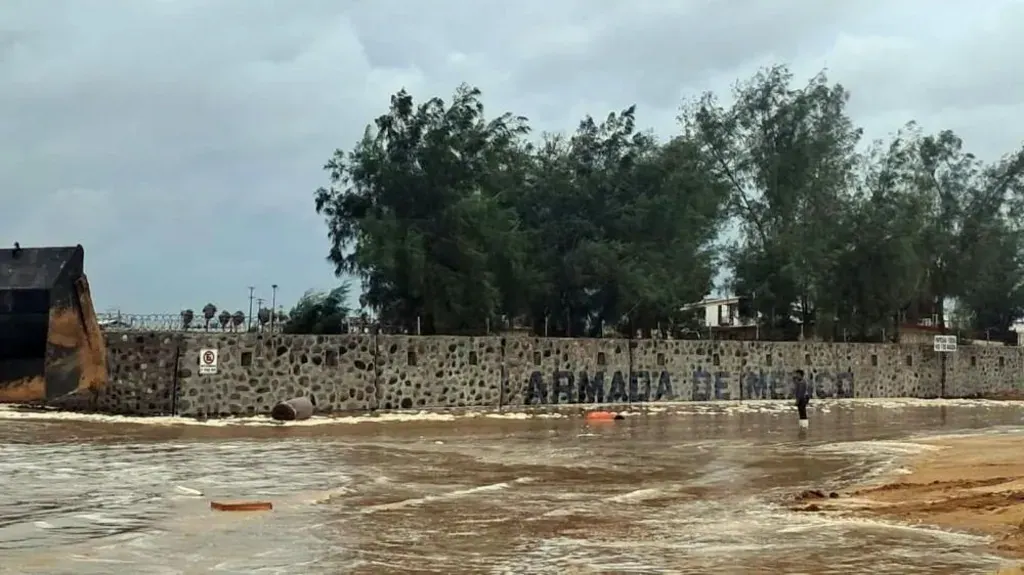
Hurricane Polo made landfall along the northern Pacific coast of Mexico, specifically in the state of Baja California Sur. The storm brought life-threatening winds and heavy rain, causing flooding in some coastal areas. According to Mexican officials, Polo made landfall just south of the surfing and fishing village of Las Barrancas, with maximum sustained winds of 110 mph.
The US-based National Hurricane Center (NHC) reported that Polo was moving northeast and was expected to continue passing over Baja California Sur before moving inland over the southern part of the Mexican state of Sonora. Residents in threatened areas were encouraged to seek shelter. Many residents, including shopkeeper María Palomino, spent the night at a high school turned into a temporary shelter.
The NHC warned that Polo could dump between 6 and 12 inches of rain across parts of Baja California Sur, leading to life-threatening flooding and mudslides, especially in areas of steep terrain. A storm surge was also expected to produce significant coastal flooding in areas of onshore winds. The NHC noted that near the coast, the surge would be accompanied by large and destructive waves.
Before making landfall, residents reported power cuts in Baja California Sur. US media reported flooding in the fishing town of Puerto San Carlos, and the Associated Press said waves crested sea barriers in the area, where many residents had been evacuated. Meteorologists warned that dangerous surf and rip currents would likely continue along portions of the north-western coast of Mexico and Baja California for the next day or so.
The south of the Baja California peninsula is popular with tourists and serves as a base for surfers, sport fishers, and whale watchers. In Cabo San Lucas, famous for its natural rock arch, authorities restricted access to the beaches. Polo had been slowly moving towards Mexico's coastline for days, fueled by extremely warm waters caused by the El Niño climate phenomenon.
As Polo moves northeast, it is expected to affect the US, sending a surge of tropical moisture northwards, leading to excessive rainfall and flash flooding. Rain has already been falling across Arizona and California, and the remains of Polo and another hurricane, Odalys, will become absorbed into that weather system, boosting rainfall. These fronts will push eastwards across the southern plains, with some spots possibly seeing as much as 6 or 7 inches of rainfall by Thursday.
States that will be affected by the surge of tropical moisture include Arizona, New Mexico, Colorado, and Utah. The NHC and other meteorologists continue to monitor the situation, warning residents of the potential dangers posed by Hurricane Polo. The storm's impact will be felt across a wide region, emphasizing the importance of staying informed and following evacuation instructions.
Key points
- Hurricane Polo made landfall in Baja California Sur with maximum sustained winds of 110 mph.
- The storm is expected to bring life-threatening flooding and mudslides to parts of Mexico.
- The US will also be affected, with excessive rainfall and flash flooding possible in several states.