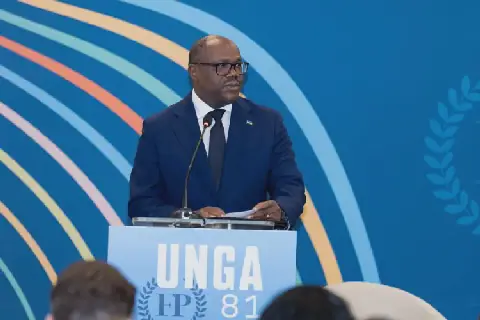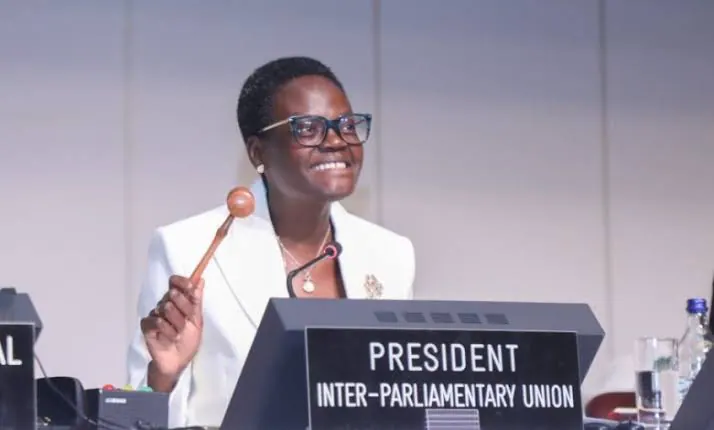
Outgoing Inter-Parliamentary Union (IPU) President Dr. Tulia Ackson has highlighted significant achievements in global conflict resolution and legislative diplomacy as her three-year tenure comes to a close. Ahead of the 153rd IPU Assembly in Arusha, Tanzania, next month, Dr. Ackson outlined her presidency's accomplishments during a televised interview with state broadcaster TBC1. Elected in October 2023 as the 31st IPU president and the first African woman to lead the global legislative body, Dr. Ackson will step down on October 9 when member states elect her successor.
Dr. Ackson's presidency prioritized conflict resolution through diplomatic engagement, parliamentary human rights oversight, and direct international cooperation over military intervention. She emphasized the importance of dialogue in resolving conflicts, stating that people should "talk and understand each other, to find out what the problem is before they start fighting." The IPU has relied on international legal principles and mediated talks in situations where hostilities have already erupted. Dr. Ackson cited the IPU's diplomatic interventions in the Russia-Ukraine conflict as a notable example of practical outcomes.
The IPU's diplomatic efforts in the Russia-Ukraine conflict facilitated the return of several children separated from their families during the war. Dr. Ackson noted that parliamentarians hold a unique position in international peacebuilding, representing citizens directly and leveraging legislative power to push national executive branches toward peaceful dispute resolution. This approach has yielded positive results, demonstrating the effectiveness of parliamentary diplomacy in conflict resolution.
Beyond security, Dr. Ackson's presidency worked to align parliamentary actions across borders on climate change, technology regulation, and institutional human rights representation. The IPU has strengthened operational ties with the United Nations to support these efforts. Dr. Ackson emphasized that while legislative authority over military actions varies under national constitutions, the IPU employs joint resolutions and diplomatic pressure where direct parliamentary veto powers are lacking.
The IPU is set to hold its 153rd Assembly in Arusha, Tanzania, next month, marking the conclusion of Dr. Ackson's mandate as head of the Geneva-headquartered organization. The assembly brings together lawmakers from 180 member states. Three candidates have been confirmed to contest the 2026-2029 presidential term: Sahiba Gafarova of Azerbaijan, Milton Dick of Australia, and Rojo Edwards Silva of Chile.
Dr. Ackson urged African nations to establish cohesive diplomatic blocks to amplify the continent's leverage in global governance. She noted that Africa has over 50 countries but has not yet reached a point where it speaks with one voice. This, she believes, is essential for the continent to have a stronger influence on the global stage.
As Dr. Ackson prepares to step down, she reflected on the progress made during her presidency. The IPU has made significant strides in promoting peace, security, and cooperation among its member states. The organization will continue to play a crucial role in global governance, and Dr. Ackson's legacy will likely have a lasting impact on its future endeavors.
Key points
- Dr. Tulia Ackson prioritized conflict resolution through diplomatic engagement and parliamentary human rights oversight during her tenure as IPU President.
- The IPU has strengthened operational ties with the United Nations to support aligned parliamentary actions across borders on climate change, technology regulation, and institutional human rights representation.
- Dr. Ackson urged African nations to establish cohesive diplomatic blocks to amplify the continent's leverage in global governance.