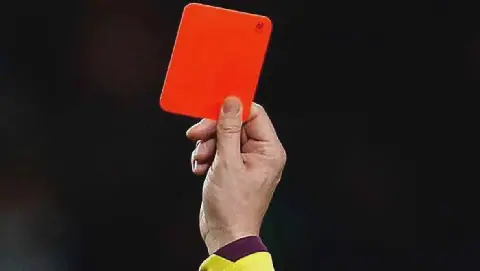
The eighth UN Secretary-General straw poll has marked a positive shift for Otunnu's candidacy as the favorite dark-horse compromise. New entrants from the UAE and Turkey have joined the volatile UN straw polling, but the real battle has narrowed down to Costa Rica's Rebeca Grynspan and Ambassador Otunnu. Otunnu has not received a single color-coded negative ballot to date, unlike Grynspan who received two.
Otunnu's latest result represents a strategic reduction in discouragement votes, while his four encouragement votes remain steady from the previous round. He has built his campaign around consensus-building, institutional reform, human rights, and restoring the UN's moral authority. Otunnu's team recently highlighted his track record in a profile titled "Consensus Builder & Innovative Leader," showcasing his experience in resolving diplomatic deadlocks.
Otunnu's candidacy has gained support from China, a staunch ally of the African cause. China has historically positioned itself as the premier defender of the Global South within the Security Council. Beijing's diplomatic playbook treats African representation as a strategic priority, and Otunnu fits the bill perfectly as a predictable, rules-based institutionalist.
The 1981 deadlock provides insight into Otunnu's ability to break diplomatic deadlocks. As Security Council President at the time, Otunnu engineered a breakthrough by persuading both heavyweights to step aside and invented the informal "straw poll" system still used by the UN today. This experience gives him unique institutional capital in the Chinese capital.
The current polarization closely mirrors the 1996 transition, which was broken by elevating Kofi Annan, a quiet, deeply experienced UN insider. As the P5 faces the looming December 31, 2026 deadline to replace the outgoing Secretary-General, fatigue will inevitably set in. The Council will likely look for a known entity who understands global diplomacy but does not carry political baggage.
Otunnu's deep institutional memory, his status as a legendary UN diplomat, and his historical role as the architect of the selection process make him uniquely positioned. While these straw polls remain informal and non-binding, they are critical milestones in determining who will succeed António Guterres when his second term ends.
With the leading South American candidates already facing color-coded vetoes, the field stands clear for Uganda's Ambassador Olara Otunnu as the dark-horse compromise. The absence of a veto keeps his path entirely viable, and his candidacy will likely continue to gain momentum in the coming rounds.
Key points
- Otunnu's reduction in discouragement votes and steady encouragement votes make him a strong contender.
- China's support for Otunnu's candidacy could play a crucial role in the outcome.
- Otunnu's experience in resolving diplomatic deadlocks and his role in inventing the straw poll system give him an edge in the competition.