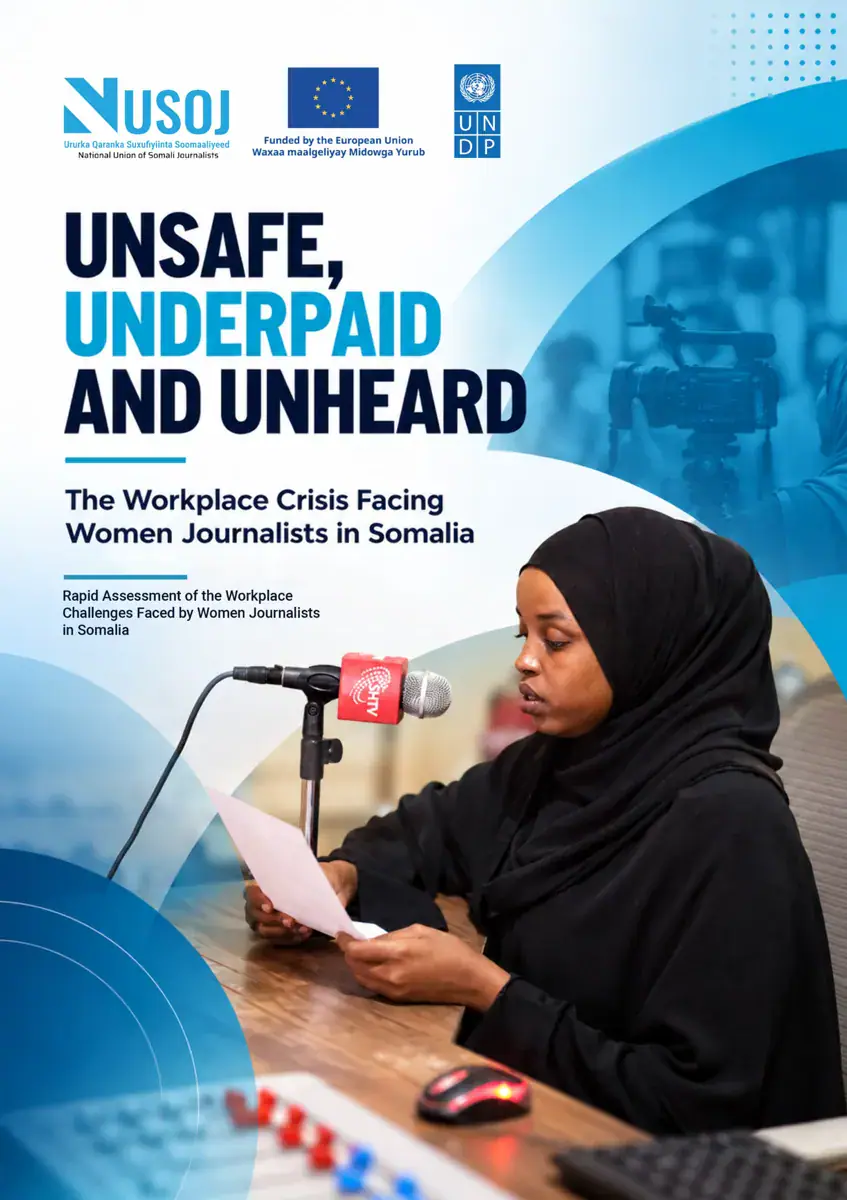
The National Union of Somali Journalists (NUSOJ) launched a report on November 2, 2026, marking the International Day to End Impunity for Crimes against Journalists. The report, "Unsafe, Underpaid and Unheard: The Workplace Crisis Facing Women Journalists in Somalia," surveyed women journalists in Mogadishu and Somalia's six Federal Member States. It found that women journalists face a workplace crisis, with only one in ten feeling safe at work. The report calls for immediate action to end the culture of harassment, exploitation, and discrimination.
The report documents the conditions women face in newsrooms and in the field while carrying out their journalistic duties. More than half of respondents felt unsafe or very unsafe at work. Only 49.6% had a written employment contract, and just 26% had full-time contracts. This lack of security leaves women exposed to arbitrary dismissal and pressure to endure abuse to keep their jobs. The report also found that more than half of respondents reported chronic salary arrears, irregular payments, or working without pay.
Harassment is widespread in the Somali media industry. Nearly half of respondents, 48%, said they had experienced harassment during their careers. A further 45.7% declined to answer. Women reported harassment in newsrooms, during field assignments, and online, including the use of AI-generated sexualized deepfakes. Only one in five respondents was satisfied with the reporting systems in their media house. This suggests that many women journalists do not have a safe or reliable way to report incidents of harassment.
NUSOJ Secretary-General Omar Faruk Osman said that the report lays bare a disgraceful situation. Women journalists endure injustice alongside their male colleagues, yet face greater risks and lack protection in their own workplaces. Harassment, withheld wages, retaliation, and discrimination are not private problems for women to endure; they are gross violations of rights and failures of responsibility. Osman called for written contracts, wages paid on time, the gender pay gap eliminated, independent complaints systems, and real consequences for perpetrators.
The report also found that women journalists face significant barriers to career advancement. Only 11% believed they had the same opportunities as men to advance, while 46.5% said they had been denied a promotion or key assignment because of their gender. In addition, 63.8% said they had received no workplace training, shutting many out of the necessary professional development and leadership opportunities needed to progress. This lack of opportunity and support can push experienced journalists out of the profession.
The report, produced with support from the United Nations Development Programme (UNDP) through the Bilan Project and funded by the European Union (EU), documents working arrangements that penalize women for pregnancy and caring responsibilities. These include long hours, night shifts, and a lack of suitable workplace facilities. NUSOJ says such unfavorable conditions threaten women's health and dignity and can push experienced journalists out of the profession. The union urges news media organizations to negotiate collective agreements that ensure fair pay, safe working conditions, protection from discrimination, and women's meaningful involvement in newsroom policies.
NUSOJ calls on news media organizations to end informal and exploitative employment practices, protect complainants from retaliation, and give women equal access to assignments, training, and leadership. Federal and state authorities must enforce labor protections, investigate sexual harassment and discrimination, and hold perpetrators accountable. The union says the International Day to End Impunity must also confront abuses in newsrooms, where inaction can leave women without a safe or credible path to justice.
Key points
- Only one in ten women journalists in Somalia feels safe at work, according to a new report by the National Union of Somali Journalists (NUSOJ).
- Women journalists in Somalia face widespread harassment, including in newsrooms, during field assignments, and online.
- The report calls for immediate action to end the culture of harassment, exploitation, and discrimination, including written contracts, fair pay, and safe working conditions.