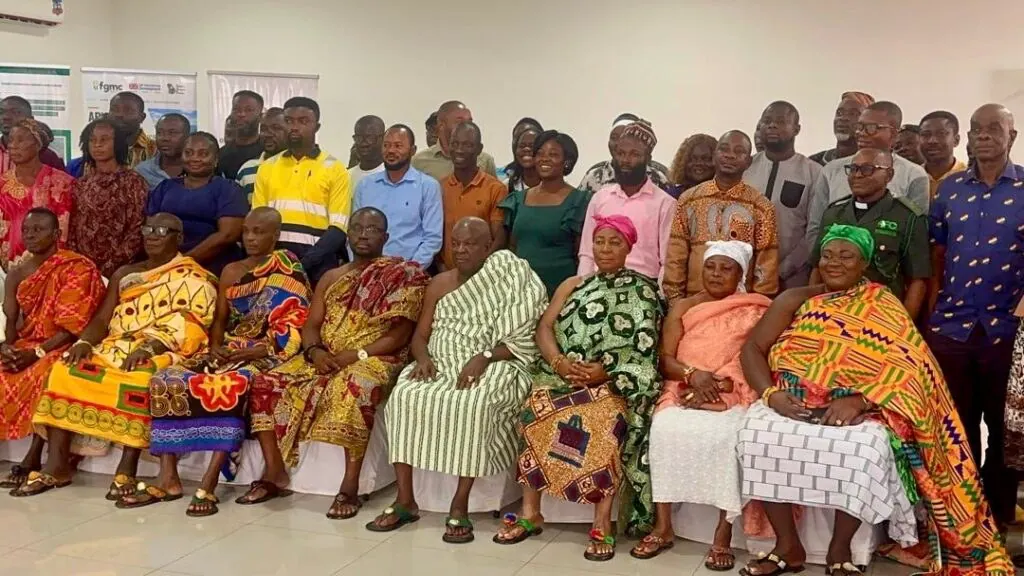
Stakeholders in Ghana's Ahafo Region have revealed that six foreign-owned mining companies, mostly run by Chinese nationals, are operating in the region, but only one has a valid permit. This was disclosed at a regional dialogue in Goaso, where community leaders, chiefs, and civil society groups expressed frustration at the lack of enforcement by police and regulatory bodies. The forum, organised by the Nature and Development Foundation (NDF), the Forestry Commission, the Environmental Protection Agency (EPA), and the Minerals Commission, aimed to address deforestation caused by irresponsible mining.
The Regional Multi-Stakeholder Mining Forum, held on Wednesday, brought together community members, local authorities, and advocacy groups to discuss the issue. Participants noted that most of the companies involved are operated by Chinese nationals, which sharpens the legal violation. Under Ghana's Minerals and Mining Act, 2006 (Act 703), as amended by Act 995 in 2019, small-scale mining is reserved exclusively for Ghanaian citizens. Non-citizens found engaging in small-scale mining commit a serious criminal offence under Section 99 of the law.
Operating without approved Environmental Impact Assessments breaches the Environmental Protection Agency Act, 1994 (Act 490), while discharging chemical waste into rivers violates the Water Resources Commission Act, 1996 (Act 522). The stakeholders' concerns are not limited to the legal violations, as they also highlighted the environmental and health impacts of the illegal mining activities. Land degraded by illegal mining becomes unsuitable for cocoa and food crop farming, threatening the income of farming households and regional food security.
The unregulated runoff of mercury and cyanide has been linked to chronic kidney damage, neurological disorders, and respiratory illness among residents living near mining sites. Heavy siltation is also destroying aquatic life and destabilising river ecosystems that communities depend on for water. The forum organisers framed the destruction as undermining Ghana's commitments under the UN Sustainable Development Goals covering clean water, climate action, and life on land.
The Ahafo disclosures add to a widening national conversation about galamsey enforcement in Ghana. Recently, traditional authorities have stepped into the fight directly, as seen when Togbe Afede XIV warned galamsey gangs to stay out of the Volta Region. The issue has also been subject to political scrutiny, with President Mahama denying ever promising a state of emergency on galamsey.
NDF Regional Coordinator Glen Asomaning said the forum was designed to create practical dialogue among key actors responsible for halting forest destruction and enforcing compliance with existing law. At the close of the forum, stakeholders drew up a unified action plan urging state institutions and security agencies to enforce the law without compromise. The plan aims to bring the illegal operators to justice and prevent further environmental degradation.
While the stakeholders' action plan is a step in the right direction, the sources do not specify a timeline for when police, the Minerals Commission, or the EPA will act against the five unlicensed companies identified at the forum. No date has been given for a follow-up meeting or for when the stakeholders' action plan will be submitted to relevant authorities. The issue remains a pressing concern for the communities in Ahafo Region, and it is hoped that the authorities will take swift action to address the situation.
Key points
- Only one of six foreign-owned mining companies in Ghana's Ahafo Region has a valid permit.
- The illegal mining activities have severe environmental and health impacts on the local communities.
- Stakeholders have drawn up a unified action plan to urge state institutions and security agencies to enforce the law.