Online scams in Algeria have evolved beyond simple suspicious messages or fake advertisements, now employing advanced deception techniques that exploit citizens' trust in official and financial institutions. These scams lure victims with attractive commercial offers and fake electronic links, often resulting in the theft of their savings within minutes. A recent case highlights the severity of the issue, where a taxi driver lost 20 million centimes from his postal account after a phone call that seemed ordinary.
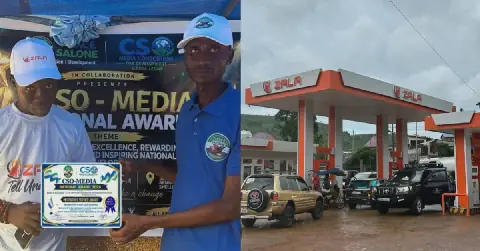
The incident occurred when the taxi driver, Abou Mahfouz, attempted to purchase tires for his car through an online platform bearing the logo of the Algerian oil company, "Naftal." The scammer, who claimed to be handling orders and confirming purchases, convinced Mahfouz to provide verification codes sent to his phone, under the guise of completing the purchase procedures. Despite a warning message indicating potential scam activity, Mahfouz provided the required information, only to discover later that 200,000 Algerian dinars had been deducted from his account.
This case illustrates one of the most dangerous modern scam techniques, where victims are tricked into providing verification codes themselves after being convinced that the process is part of a legitimate commercial transaction. This makes it more challenging for ordinary users to detect the deception. The incident has raised concerns about the effectiveness of protection measures and the responsibility of financial and digital institutions in securing their customers' transactions.
The issue has prompted the launch of a national awareness campaign on the prevention of online scams, which ran from October 25 to 30. The campaign, involving the postal and telecommunications sector, aimed to raise awareness of digital risks and warn citizens against falling victim to evolving scam tactics. The growing scope of the phenomenon raises questions about the readiness of financial institutions and electronic service providers to detect suspicious transactions and intervene quickly to protect accounts.
According to Harzali Mahfouz, head of the National Union for Consumer Protection, online scams have become a growing concern in Algeria, coinciding with the expansion of e-commerce and increased use of social media and digital payment methods. Scammers have moved beyond traditional tactics, using more sophisticated techniques such as creating fake commercial pages offering products at attractive prices and requesting advance payments.
Harzali emphasized that one of the most dangerous practices involves sending text messages pretending to be from official and financial institutions, such as Algeria's postal service and banks, to trick citizens into believing there are issues with their accounts or gold cards. This prompts them to click on fake links and enter their personal and banking information. He stressed that citizens are not solely responsible for protecting themselves against scams, given the evolution of deception methods and the use of personal information and logos of known institutions.
The National Union for Consumer Protection has called for increased responsibility from financial and banking institutions, as well as providers of electronic services, in securing customer accounts by developing early detection systems for suspicious transactions and improving verification methods. The union also advocates for greater coordination between financial institutions, security services, regulatory bodies, and consumer protection associations to combat online scams effectively.
Key points
- Online scams in Algeria have become increasingly sophisticated, exploiting citizens' trust in official institutions.
- A national awareness campaign was launched to educate citizens about the risks of online scams.
- Financial institutions and electronic service providers are urged to enhance their security measures to protect customers' transactions.