Onitsha, situated in the heart of Anambra state, is a commercial city that has grown to become a major epicentre for the defunct Eastern region, comprising the present South-east and South-south geopolitical zones. Founded around 1550 by Ezechima, the city has a rich history, with ties to either Benin or Nri kingdoms. Onitsha is located on the eastern bank of the River Niger, approximately 40 kilometres north of the Niger Delta. The city is bordered by Nkwelle Ezunaka and Nsugbe to the north, Nkpor and Obosi to the east, and Delta state to the west.
Onitsha is noted for its deep-rooted culture, encompassing various institutions, customs, and traditions such as monarchy and chieftaincy system, traditional judicial system, social organisation and hierarchy, traditional religious beliefs, cuisine, and mode of dressing. The city has six festivals that celebrate its rich cultural heritage annually, including Aja Chi, Umato, Owuwa Ji, Ofala, Osisi Ite, and Ifejioku. These festivals showcase the city's rich cultural diversity and attract visitors from across the country.
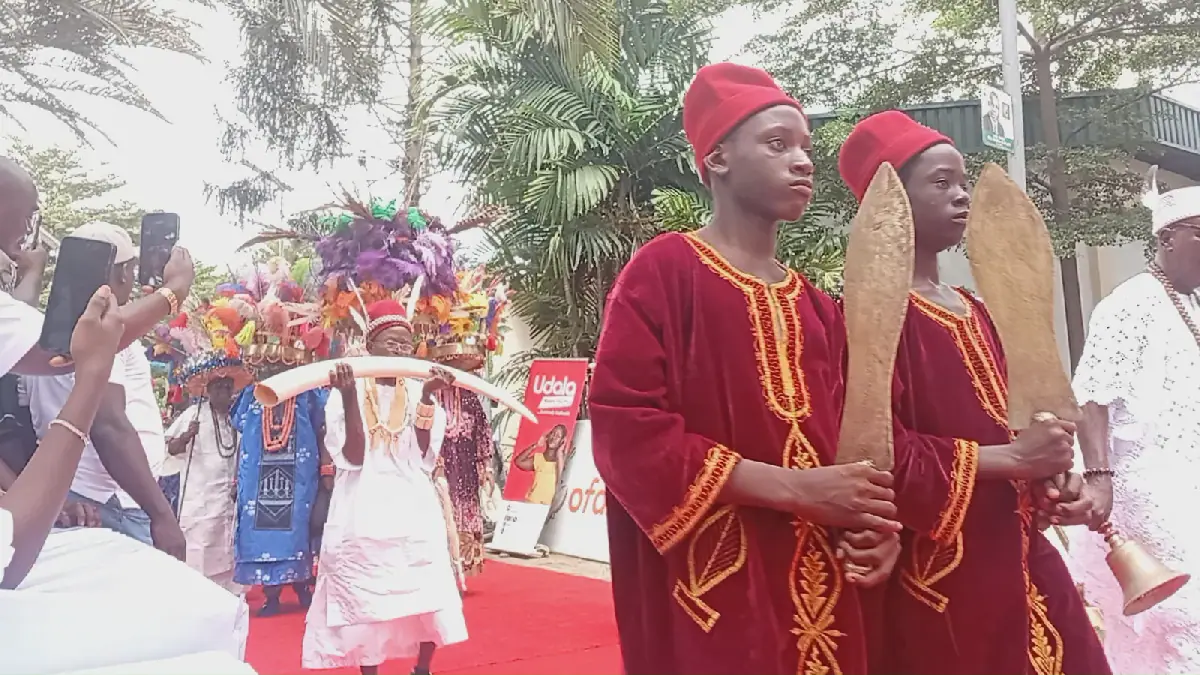
The Ofala festival, officiated by the monarch, the Obi of Onitsha, Alfred Nnaemeka Achebe, has gained international recognition, with sponsorship from prominent companies such as Globacom Nigeria Limited, NigerBev Limited, and Guinness Nigeria Plc. The 2025 Ofala Festival featured royal dances, tributes, parades, and music, and was described as a celebration of the rich heritage of Onicha Ado N’Idu kingdom. The festival's steering committee chairman, Chief Okechukwu Mike, unveiled the 2026 logo, which was tagged: Igba Mbo, Iga N’Iru, meaning 'strive and advance'.
Onitsha's political structure consists of two council areas, Onitsha-north and Onitsha-south, forming a Federal Constituency with four state legislative seats. The city is a detribalised, peaceful, and egalitarian society where anyone can achieve political prominence, regardless of their indigenous status. The current member representing Onitsha-north/south Federal Constituency, Rt Hon Emeka Idu, is originally from Anambra East LGA.
Onitsha has produced notable personalities across various sectors, including the late Dr Nnamdi Azikiwe, first Indigenous governor-general and president of Nigeria; Olisa Agbakoba, a lawyer and activist; Chike Obi, the mathematician; Philip Emeagwali, computer scientist; Chinua Achebe, the foremost novelist; Emmanuel Ifeajuna, first black African to win gold at international sporting competition; and Alex Iwobi, International footballer.
Onitsha is a commercial hub, with over 40 different markets, earning it the reputation as a commercial nerve or epicentre of Africa. The city's strategic location along the River Niger made it an important trading post, even before modern roads and bridges were constructed. Traders from various regions often came to exchange goods, ideas, and cultures in Onitsha through the river. Some of the existing markets in Onitsha include the Main Market, Drugs Market, Ose Market, Ochanja, Bridge-Head Market, and Relief Market.
The Main Market, one of the largest markets in West Africa, is a world of its own, stretching across numerous streets and packed with shops and stalls selling everything from clothing and electronics to books, cosmetics, food items, and building materials. The market represents opportunity, with many successful business people in Nigeria starting from small stalls in Onitsha. The city's commercial activities make it a busy and vibrant metropolis that cannot be ignored.
Key points
- Onitsha's dual image as a land of opportunities and a hub of lawlessness and traffic congestion.
- The city's rich cultural heritage, showcased through its six annual festivals.
- Onitsha's importance as a commercial hub, with over 40 markets and a strategic location along the River Niger.