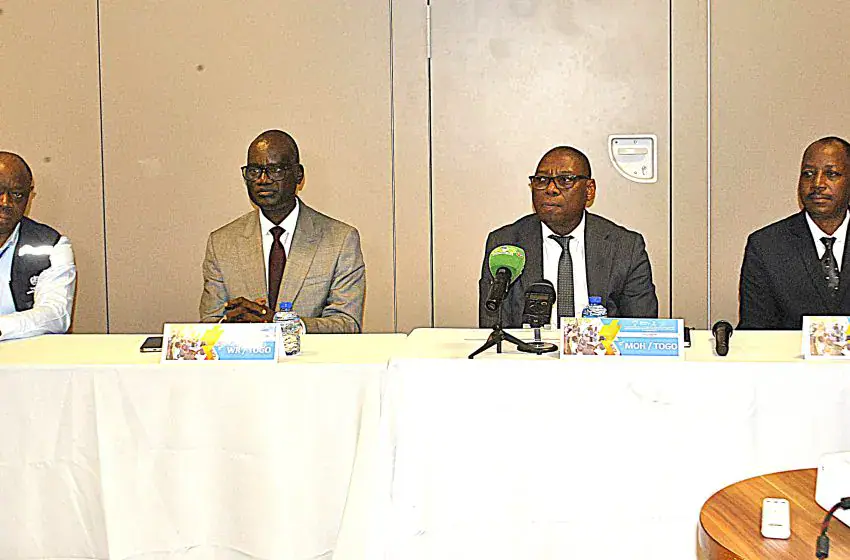
The World Health Organization's (WHO) Regional Office for Africa is conducting a training session in Lomé, Togo, from November 4-6, 2026, for French-speaking healthcare workers on the administration of Acoziborole, a revolutionary new treatment for African trypanosomiasis, or sleeping sickness. An English-speaking session will follow from November 9-11, 2026. The training aims to equip healthcare professionals with the necessary skills to administer this new treatment.
The training session brings together officials, doctors, and nurses from several African countries, including Angola, Guinea, Gabon, Chad, Benin, Mali, Senegal, the Democratic Republic of Congo, Cameroon, and Togo. The WHO aims to strengthen the technical capacities of these actors, enabling them to master the conditions for using the new therapeutic tool and, in turn, train other healthcare professionals in their respective countries.
The Acoziborole treatment represents a significant therapeutic advancement in the fight against sleeping sickness. One of its main innovations is its mode of administration: a single oral dose for eligible patients, unlike previous treatment protocols that could require injections, hospitalizations, lumbar punctures, or several days of oral treatment. Experts believe this new option will simplify patient care and reduce constraints for patients and healthcare teams.
According to Augustin Ebeja Kadima, the focal point for THA at the WHO Regional Office for Africa in Brazzaville, African trypanosomiasis is a parasitic disease transmitted to humans through the bite of an infected tsetse fly. The disease has caused many deaths in the past and can lead to sleep disturbances, behavioral changes, and neurological damage that profoundly disrupt the lives of those affected.
The introduction of Acoziborole has significant implications for patients and communities. Kadima noted that the disease affects not only patients but also their families and communities, reducing the patient's ability to work and requiring caregivers to devote time and resources to their care, resulting in economic and social repercussions. However, with therapeutic progress, most patients can now be treated with a considerable reduction in mortality.
Togo has made significant progress in controlling the disease, having obtained recognition from the WHO on June 22, 2020, for eliminating the disease as a public health problem. The country continues its efforts to verify the interruption of transmission on its territory. The participation of Togolese actors in this training is of particular interest, as it can help maintain national competencies in surveillance, strengthen detection capacities, and prepare health teams to deal with potential imported cases.
The training will enable participants to acquire the necessary skills to administer the Acoziborole treatment, including knowledge of the drug's characteristics, patient eligibility criteria, administration modalities, pharmacovigilance, and follow-up of treated individuals. This approach aims to harmonize practices and ensure the appropriate and secure use of the medication before its deployment in endemic areas.
Key points
- Acoziborole is a one-time oral treatment for sleeping sickness, simplifying patient care and reducing constraints for patients and healthcare teams.