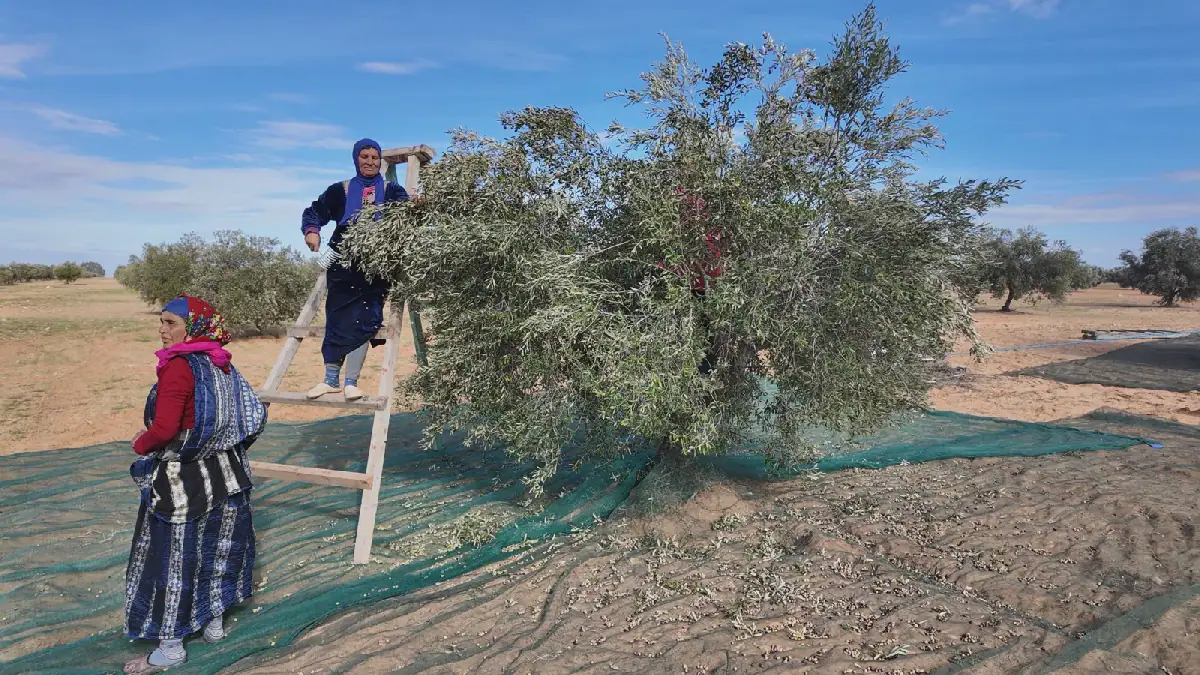
As the olive harvest season begins in Tunisia, workers in the sector are facing significant challenges. In the Sfax region, workers and their families are struggling with low wages, healthcare issues, and social security concerns. Many workers have been employed for over 20 years without formal registration, and their daily wages do not exceed 17 dinars. The workers are demanding a review of their wages and fair compensation for their efforts during the harvest season.
One of the main issues faced by seasonal workers in the olive sector is the withdrawal of their free or low-cost health cards. This has resulted in workers being deprived of essential healthcare services and social benefits. Women workers, in particular, are affected, as many are the sole breadwinners for their families. The workers are also concerned about the lack of social security and health coverage, which leaves them vulnerable to economic and health risks.
The workers' union and management have acknowledged the challenges faced by workers in the olive sector. According to the manager of the Bouzouite agricultural and industrial complex, Mohamed Belqasim, the sector faces several structural issues, including a significant shortage of labor, low wages, and inadequate equipment. The complex covers an area of around 15,000 hectares, with olive trees being the dominant crop.
The governor of Sfax, Mohamed Hajri, has emphasized the crucial role played by agricultural workers in the region's economy, particularly women. He praised the efforts of workers in the olive sector and highlighted the importance of the region, which accounts for around 18% of national olive production. The governor also noted that the region has around 400,000 hectares of olive groves, with approximately 34 million olive trees.
Despite efforts to address the challenges faced by workers, the situation remains difficult. Workers are demanding better wages, improved working conditions, and enhanced social security benefits. The management of the Bouzouite complex has introduced additional equipment, including eight new tractors, to support workers during the harvest season.
The olive harvest season in Tunisia has been affected by harsh weather conditions, which have impacted production. The expected yield is around 3,000 tons of olives, equivalent to approximately 600 tons of olive oil. The workers' union and management are working together to find solutions to the challenges faced by workers and to ensure the long-term sustainability of the sector.
The challenges faced by Tunisian olive harvest workers highlight the need for a comprehensive review of the sector. The government, management, and workers' union must work together to address the issues of low wages, healthcare, and social security. By doing so, they can ensure that workers receive fair compensation and benefits, and that the sector remains a vital part of Tunisia's economy.
Key points
- Low wages and poor working conditions are major concerns for Tunisian olive harvest workers.
- The withdrawal of free or low-cost health cards has left workers without essential healthcare services and social benefits.
- The sector faces structural issues, including a shortage of labor, inadequate equipment, and low wages.
Reporting sources
- روبورتاج عزوف عمال الزيتون بصفاقس: الأسباب والاشكاليات · Assabah News