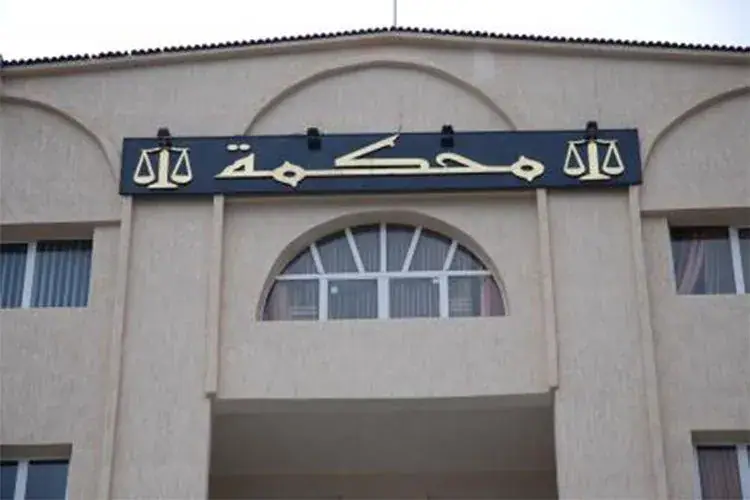
An Algerian court has sentenced writer Kamel Daoud and his wife, Aicha Dahoub, to five years in prison and a fine of 300,000 Algerian dinars. The court also upheld an international arrest warrant against the couple. They were found guilty of breaching medical confidentiality, stealing a medical file, and violating a person's private life. The case was filed by a woman, Soad Arabane, who claimed that Daoud's novel, "Houria", was based on her story without her consent.
The court heard that Daoud and his wife had been accused of leaking confidential medical information and stealing a medical file related to Arabane, who had been treated by a psychiatrist. The prosecution had sought a six-year prison sentence against the couple during the trial on October 13. Daoud's wife, who was not present in court due to family obligations and divorce proceedings, expressed her confidence in the Algerian judiciary and her desire to present her case to the court.
The case revolves around Daoud's novel, "Houria", which won the prestigious Goncourt prize. Arabane claimed that the novel was based on her experiences as a victim of terrorism in the 1990s without her consent. Daoud's wife denied any wrongdoing, stating that she had not leaked any medical information and that her husband had not used her as a source for his novel. She also revealed that Arabane had initially agreed to have her story told in the novel.
According to Daoud's wife, Arabane had met her husband at their home in 2022, at the request of Arabane's adoptive mother. The meeting was meant to facilitate a discussion about Arabane's story being used in a book. Daoud's wife claimed that Arabane had later withdrawn her consent, which was not publicly acknowledged by Arabane. The couple's lawyer, Aicha Derrar, stated that the court's decision was a recognition of the harm suffered by her client.
The case has sparked controversy in Algeria, with many questioning the limits of artistic freedom and the protection of victims' rights. Daoud's wife expressed her disappointment and frustration with the court's decision, stating that she had been unable to return to Algeria since October 2024 due to her family situation.
The medical institution where Arabane was treated had also been involved in the case, with its representatives testifying before the investigating judge. The institution had been recognized as a civil party in the case. Arabane's story has been at the center of a heated debate about the use of real-life events in literature and the protection of individuals' private lives.
The couple's sentence has been seen as a significant development in the case, with many watching to see how it will impact artistic freedom in Algeria. The case raises questions about the balance between protecting victims' rights and allowing writers to tell their stories.
Key points
- The Algerian court sentenced Kamel Daoud and his wife to 5 years in prison for allegedly breaching medical confidentiality.
- The case revolves around Daoud's novel "Houria", which was based on a woman's story without her consent.
- The couple's lawyer stated that the court's decision was a recognition of the harm suffered by her client.
Reporting sources
- إدانة الكاتب كمال داود وزوجته بالسجن النافذ · الجزائر نيوز