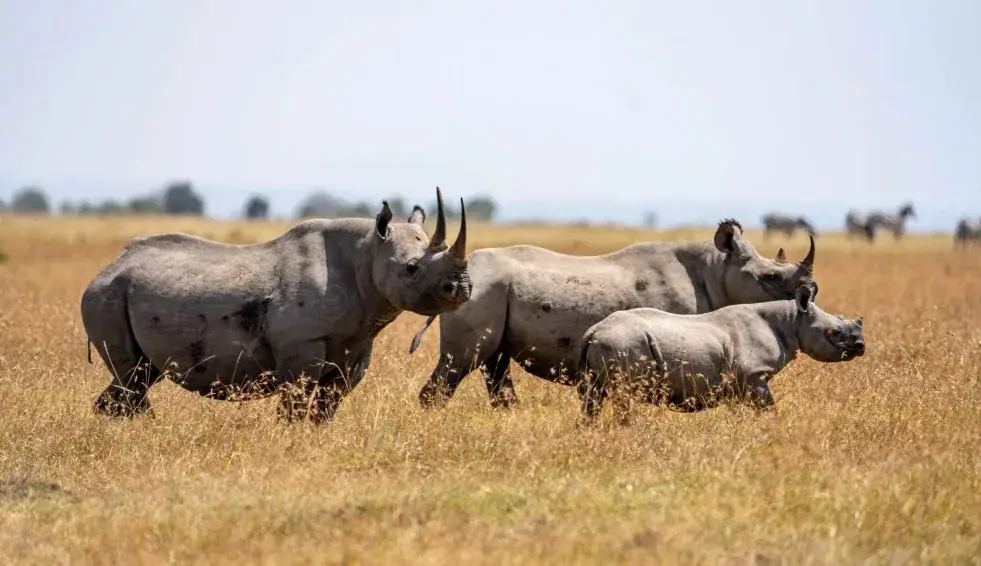
Ol Pejeta Conservancy in Kenya is facing a significant challenge in maintaining the habitat of its 178 black rhinos due to a drastic decline in whistling thorn acacia, a staple food source for the endangered species. The conservancy has reported an 80% loss of whistling thorn acacia across its land, with losses exceeding 90% in the eastern sector. This decline has raised concerns about the long-term sustainability of the black rhino population at the conservancy.
The decline of whistling thorn acacia has been accompanied by the spread of Euclea divinorum, a bush less suitable for rhino browsing, further limiting available forage for the black rhinos. Dry conditions have worsened the situation, with rainfall between April and October 2026 recorded at 298.4 mm – roughly 56% of the long-term average for the same period. These conditions have put additional pressure on the conservancy's efforts to maintain a healthy and sustainable habitat for its black rhinos.
In response to the challenges, the conservancy's board chairman, Philip Coulson, announced that an exclusion zone has been set aside to aid acacia recovery. More than 10,000 seedlings have been planted to restore rhino food sources. Additional measures include supplemental feeding, intensified veterinary care, and close health monitoring of vulnerable animals. These efforts aim to mitigate the impact of the decline in whistling thorn acacia and ensure the well-being of the black rhinos.
The conservancy has secured funding for a study on rhino dietary needs and is collaborating with Kenya Wildlife Service, the Wildlife Research and Training Institute, and other partners to identify relocation sites. This is crucial, as the conservancy's current population of 178 black rhinos surpasses its estimated sustainable carrying capacity of about 120 animals. The study and potential relocation efforts will help ensure the long-term viability of the black rhino population.
Between February 26 and November 12, 2026, the conservancy recorded 17 black rhino deaths, attributed to various causes including lion attacks, old age, disease, downer syndrome, drowning, and three unexplained cases. Joint veterinary examinations with Kenya Wildlife Service found no evidence of poaching in the recent deaths. All recovered horns remain stored with the wildlife agency, ensuring their safety and security.
The Wildlife Research and Training Institute is assessing the land to determine a revised sustainable rhino carrying capacity for the conservancy. This assessment will help inform future conservation efforts and ensure that the habitat can support a healthy and sustainable population of black rhinos. The institute's findings will be crucial in guiding the conservancy's management decisions.
The situation at Ol Pejeta Conservancy highlights the challenges faced by conservation efforts in Kenya. Despite these challenges, the conservancy remains committed to protecting its black rhino population and working towards a sustainable future for these endangered animals. The conservation efforts at Ol Pejeta Conservancy serve as a vital component of Kenya's broader efforts to protect and conserve its wildlife.
Key points
- Ol Pejeta Conservancy reports an 80% loss of whistling thorn acacia, a key food source for its 178 black rhinos.
- The conservancy has implemented measures to restore rhino food sources, including planting over 10,000 seedlings and providing supplemental feeding.
- A study on rhino dietary needs and potential relocation efforts are underway to ensure the long-term viability of the black rhino population.