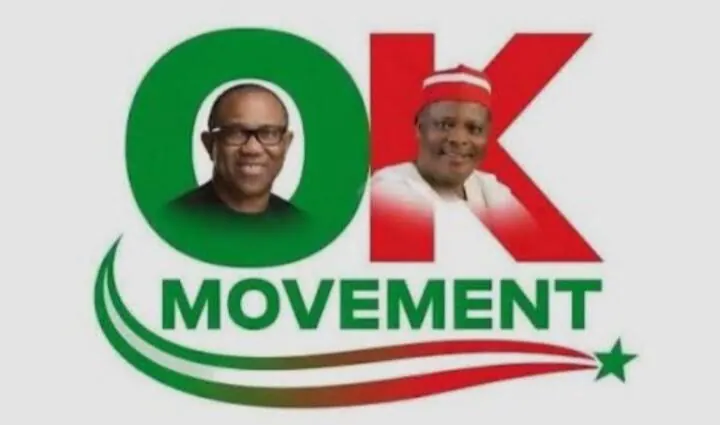
The Obi-Kwankwaso Movement, popularly known as the OK Movement, has rejected the description of the organisation as a mere support group of the Nigeria Democratic Congress (NDC). National Director-General of the movement, Hon. John Ozyl Ughulu, made the position known in a statement on Wednesday. This development comes after Senator Seriake Dickson, National Leader of the NDC, described the OK Movement's activities as "unheard of" and "nonsensical".
Dickson's comments were made during the reception of former Secretary to the Government of the Federation (SGF), Babachir Lawal, into the NDC in Abuja on Tuesday. He warned that support groups should not establish structures that compete with the political party sponsoring their candidates. According to Dickson, support groups should focus on providing grassroots support, mobilisation, and support, rather than competing for supremacy or space.
The OK Movement had recently constituted a 59-member Presidential Campaign Council to mobilise support for NDC presidential candidate Peter Obi and his running mate, Rabiu Kwankwaso. However, the NDC had earlier dissociated itself from the council, saying its formation did not emanate from the party. Ughulu's statement titled 'Statement on the Status, Independence and Structure of the OK Movement' emphasised the movement's independence and organisational structures.
Ughulu agreed that the Obidient Movement is a support movement, but argued that a distinction had to be made between the various political organisations supporting the NDC candidates. He stated that the OK Movement is an independent political organization, not a support group created as an appendage of any political party or another movement. According to Ughulu, the OK Movement is independently organized, managed, and structured through its own established movement mechanisms.
The OK Movement's National Director-General consequently rejected Dickson's characterization of the movement, arguing that political organisation in Nigeria had evolved beyond the conventional party structures. Ughulu believes that the OK Movement's structures and activities are not nonsensical, but rather a reflection of the changing landscape of political organisation in Nigeria.
The development highlights the complexities of Nigeria's political landscape, where various groups and movements are emerging to support different candidates and parties. The OK Movement's insistence on its independence and organisational structures reflects the nuances of these emerging groups and their relationships with traditional political parties.
The situation may have implications for the NDC and other political parties, as they navigate the complex landscape of support groups and movements. The OK Movement's stance may also influence the dynamics of the presidential campaign, as different groups and movements jockey for position and influence.
Key points
- OK Movement asserts its independence from NDC
- Dickson describes OK Movement's activities as "unheard of" and "nonsensical"
- OK Movement constitutes 59-member Presidential Campaign Council