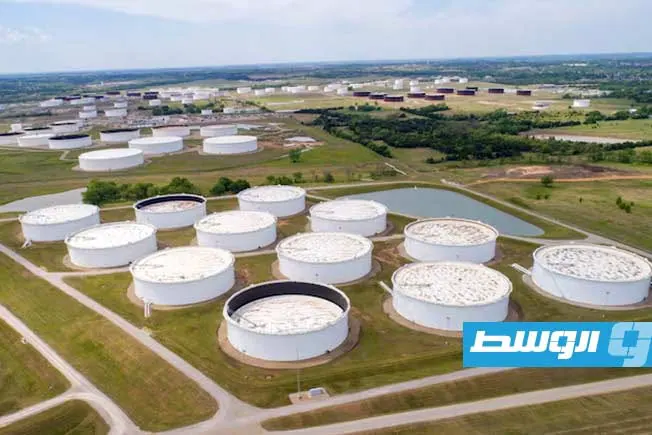
Oil prices jumped more than 3% on Thursday, following reports that the White House had requested the Pentagon to prepare options for potential strikes on Iranian targets. This development has raised concerns about a possible escalation of tensions in the Middle East. The price of Brent crude, a global benchmark, rose 3.6% to $130.80 per barrel, while US West Texas Intermediate crude gained 3.4% to $91.27 per barrel.
The increase in oil prices comes after a decline in the previous session, which was triggered by the International Energy Agency's decision to accelerate the release of oil from its strategic reserves. The agency also announced plans to prioritize diesel supplies as part of its efforts to address rising fuel prices and supply disruptions caused by the conflict with Iran.
The ongoing conflict with Iran has raised concerns about the safety of oil shipments through the Gulf and the Strait of Hormuz, a critical waterway that carries around 20% of global oil and fuel supplies. According to data, attacks on oil tankers passing through the Strait of Hormuz reached their highest level in any week since the start of the conflict with Iran.
In a recent incident, an oil tanker in the north of Qatar was hit by several projectiles, resulting in casualties. This has led to increased concerns about the security of oil shipments and the potential for further escalation. Analysts believe that the conflict with Iran will continue to drive up oil prices, citing restrictions on product flows, higher logistics costs, and fears of Iranian escalation.
The conflict with Iran has also had an impact on global shipping, with countries such as Qatar and the United Arab Emirates increasing their security measures to protect their oil tankers. The situation remains volatile, with many experts warning of a potential wider conflict in the region.
The rise in oil prices has also raised concerns about inflation, with many experts warning that higher energy costs could have a significant impact on the global economy. The situation is being closely monitored by governments and international organizations, which are working to find a solution to the conflict and stabilize the oil market.
The international community remains on high alert, with many countries calling for restraint and diplomacy to resolve the conflict. The situation in the Middle East remains volatile, and any further escalation could have significant consequences for the global economy.
Key points
- The White House has asked the Pentagon to prepare options for potential strikes on Iranian targets.
- Oil prices have risen over 3% amid fears of a US-Iran conflict.
- The conflict with Iran has raised concerns about the safety of oil shipments through the Gulf and the Strait of Hormuz.