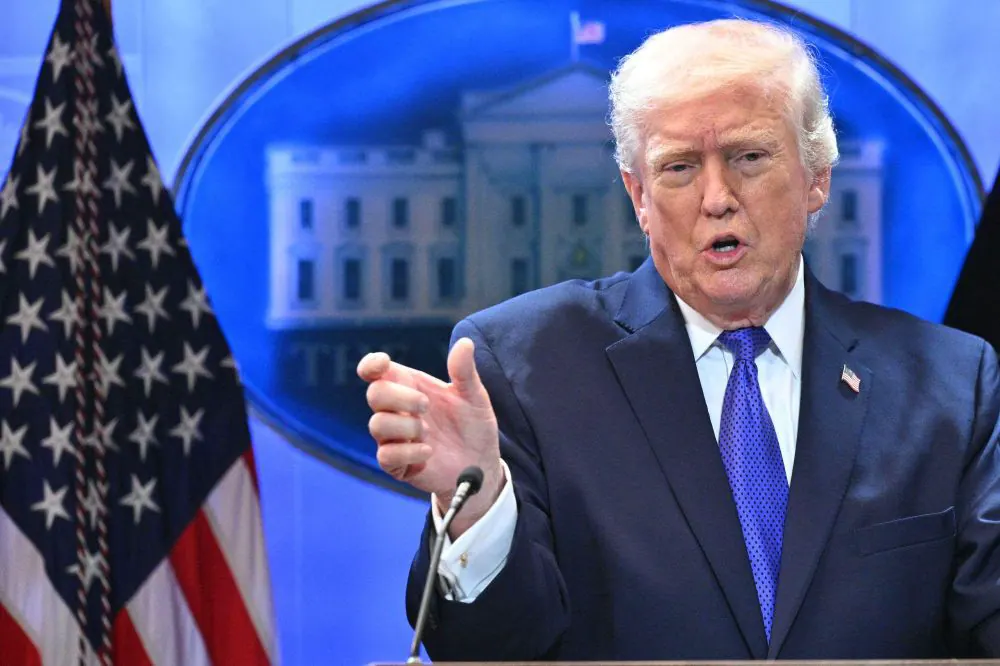
Oil prices experienced a significant surge on Monday, accompanied by rising bond yields, as President Donald Trump's rejection of Iran's proposal for a seven-day truce heightened inflation concerns. This development occurred while stock markets exhibited a mixed performance, with traders eagerly awaiting the release of crucial US data. The situation remains volatile, particularly with the Strait of Hormuz, a vital waterway for the world's energy supply, at the center of the conflict between the US and Iran.
The Iranian proposal, presented at the UN General Assembly, aimed to halt hostilities and reopen the Strait of Hormuz, which would alleviate a severe supply crisis that has driven up costs globally. However, President Trump declined the offer, stating that it was not the deal he was willing to make. Despite this, Trump expressed expectations for resumed negotiations, indicating that Iran seeks to reach an agreement, but on terms different from those he is willing to accept.
According to reports, indirect talks between Washington and Tehran could potentially take place as early as Monday, as cited by sources familiar with the matter. Iran continues to stand by its conditions for reopening the Strait, including the release of frozen assets, the lifting of sanctions on its oil, and an end to the US naval blockade. These demands remain a significant point of contention in the ongoing negotiations.
The rejection of Iran's proposal led to a rebound in oil prices, with Brent crude surging over 3% to exceed $107 per barrel. This increase reignited inflation concerns and had a negative impact on stock markets. Various Asian markets, including Seoul, Tokyo, and Shanghai, experienced declines, while others such as Hong Kong, Sydney, and Singapore posted gains. The fluctuation in market performance reflects the uncertainty and apprehension among investors.
The rise in oil prices and bond yields has redirected attention to the Federal Reserve, particularly ahead of its next policy meeting in October. The CME's FedWatch tool indicates that the likelihood of a second successive interest rate hike is over 65%. Investors are eagerly awaiting the release of the Fed's preferred inflation gauge and a key jobs report, which are expected to play a crucial role in shaping policymakers' decisions.
Market analysts, such as Stephen Innes from Quintex Intel, have noted that the renewed tensions in the Middle East have led to increased oil prices and softer Asian equities. However, Innes also suggests that the market still prices in the probability of eventual negotiations leading to a resolution, despite the ongoing rhetoric. This perspective highlights the complexity and uncertainty of the situation.
At around 0715 GMT, key figures included West Texas Intermediate up 1.8% at $94.07 per barrel and Brent North Sea Crude up 2.8% at $107.26 per barrel. Various stock markets, including Tokyo's Nikkei 225 and Hong Kong's Hang Seng Index, experienced different performances, reflecting the global market's response to the developments in the US-Iran conflict. The situation remains fluid, with investors closely monitoring future events and data releases.
Key points
- Trump's rejection of Iran's truce offer led to a surge in oil prices and heightened inflation concerns.
- The conflict between the US and Iran continues to impact global markets, particularly with regards to the Strait of Hormuz.
- Investors are awaiting key US data releases, including the Federal Reserve's preferred inflation gauge and a jobs report.