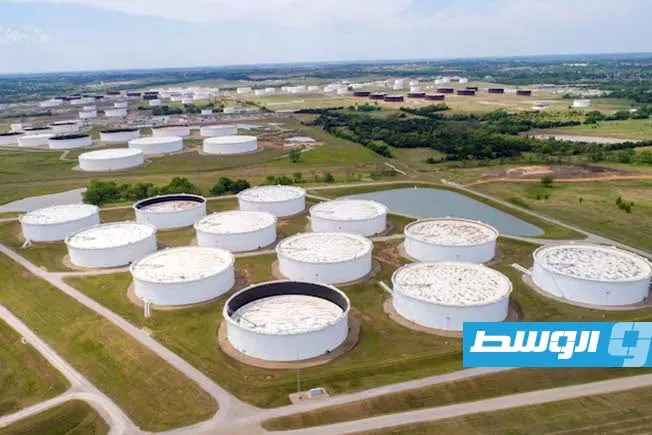
Oil prices experienced a slight increase on Tuesday, October 6, 2026, due to ongoing security concerns in the Middle East. Despite surpassing pre-war levels, the region's crude oil exports have not alleviated fears of a supply shortage. The global market remains cautious, with the possibility of further disruptions to oil production and transportation. According to reports, the continuous flow of oil from the region does not necessarily mean a return to normal supply levels.
The prices of Brent crude and West Texas Intermediate (WTI) rose by 27 cents and 30 cents, respectively, on Tuesday. Brent crude reached $100.59 per barrel, while WTI stood at $89.73 per barrel. These price increases can be attributed to the ongoing tensions in the region, which have resulted in higher transportation and insurance costs. Despite this, oil production and exports continue, albeit with some logistical adjustments.
Data from shipping companies revealed that crude oil exports from the Middle East exceeded pre-war levels in several days in late September. This was made possible by alternative routes and logistical adjustments, allowing producers to maintain their shipments. However, security concerns remain, with attacks on oil tankers near the Strait of Hormuz and an increase in incidents in recent days.
According to Brianka Sachdeva, head of market insights at Phillip Nova, the continuous flow of oil does not mean that supply levels have returned to normal. She noted that renewed attacks on oil tankers and increased incidents have raised concerns about the security of oil production and transportation in the region. As a result, transportation and insurance costs remain high.
The global market is closely monitoring the situation in the Middle East, as any further disruptions to oil production and transportation could have significant impacts on global supply levels. The Group of Seven's decision to release emergency stockpiles has helped alleviate some concerns about supply shortages. However, the ongoing tensions in the region continue to pose a risk to global oil markets.
The situation in the Middle East remains complex, with ongoing security concerns and logistical challenges affecting oil production and transportation. While oil exports from the region have surpassed pre-war levels, the global market remains cautious, and any further disruptions could have significant impacts on global supply levels.
The oil market is expected to continue monitoring the situation in the Middle East, with any developments likely to impact global oil prices. The ongoing tensions in the region have resulted in higher transportation and insurance costs, which are likely to persist until the security situation improves.
Key points
- Oil prices rose slightly on Tuesday due to ongoing security concerns in the Middle East.
- Crude oil exports from the Middle East have surpassed pre-war levels, but security concerns remain.
- The global market is closely monitoring the situation in the Middle East, as any further disruptions could impact global oil supply levels.