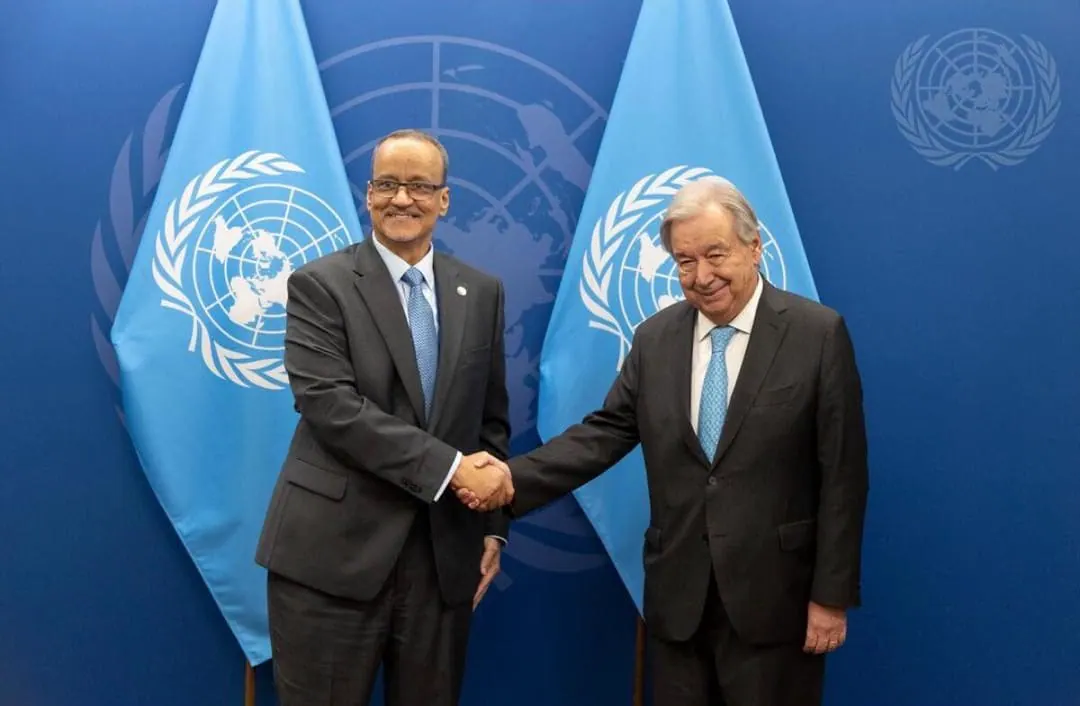
Ismailul Sheikh Ahmed, Secretary-General of the Organization of Islamic Cooperation (OIC), recently participated in the 81st session of the UN General Assembly in New York. This marked his first visit to the United States since his election as OIC Secretary-General. During his stay, he engaged in a series of diplomatic meetings with international officials, foreign ministers, and representatives of regional and international organizations. These discussions centered on several pressing issues, including the war in Gaza, the Palestinian question, and the situations in Sudan, Syria, Libya, the Sahel region, Afghanistan, and Jammu and Kashmir.
The Palestinian issue was a focal point of Sheikh Ahmed's discussions in New York. He emphasized the need for an immediate ceasefire in Gaza and the protection of civilians. The Secretary-General also called for the prevention of any arrangements that could fragment Palestinian territories. Furthermore, he advocated for a transition from political support for a two-state solution to practical steps, including the implementation of the second phase of the peace plan as per UN Security Council Resolution 2803. Sheikh Ahmed also welcomed increasing international recognition of the State of Palestine and reiterated the OIC's stance on Palestine's right to full UN membership.
Sheikh Ahmed's meetings also addressed various crises affecting OIC member states. Discussions with the Sudanese Foreign Minister focused on the country's political and security developments, as well as efforts to halt the conflict and achieve stability. The Secretary-General reaffirmed the OIC's commitment to supporting mediation efforts aimed at securing peace and stability in Sudan. Additionally, he met with the Malian Foreign Minister to discuss the political and security situation in Mali and the Sahel region, emphasizing the OIC's continued support for development and Islamic solidarity in the area.
The OIC Secretary-General participated in several high-level events during his visit. He attended a meeting of the "Friends of Mediation" group, where he highlighted the importance of preventive diplomacy and mediation in addressing conflicts and escalating crises. Sheikh Ahmed also engaged with the International Contact Group on Afghanistan, reaffirming the OIC's support for the Afghan people and efforts to facilitate practical cooperation with the de facto authorities. Moreover, he expressed concern over the humanitarian, human rights, and security situations in Jammu and Kashmir, calling for intensified international efforts to protect human rights and promote transparency.
Sheikh Ahmed's discussions also encompassed the Rohingya crisis, with the Secretary-General reiterating support for the safe, dignified, and voluntary return of Rohingya Muslims to their homes in Myanmar. He commended Gambia's role in filing a lawsuit against Myanmar at the International Court of Justice and acknowledged Bangladesh's efforts in hosting Rohingya refugees. The OIC Secretary-General called for sustained humanitarian and political support for the Rohingya.
Strengthening partnerships with the UN and its agencies was another key aspect of Sheikh Ahmed's visit. He met with the President of the UN General Assembly to explore ways to enhance cooperation between the OIC and the UN on issues such as the Palestinian question, security, and sustainable development goals. The Secretary-General also engaged with Rebecca Greenspan, Secretary-General of the UN Conference on Trade and Development (UNCTAD), discussing global challenges and opportunities for multilateral cooperation.
The OIC and the UN Office for the Coordination of Humanitarian Affairs (OCHA) signed a memorandum of understanding to formalize their cooperation and enhance coordination on humanitarian responses to crises. Sheikh Ahmed also met with the President of the International Committee of the Red Cross to discuss ways to strengthen their partnership in responding to humanitarian emergencies. These engagements reflect the OIC's commitment to expanding its collaboration with international partners to address pressing global challenges.
Key points
- The OIC Secretary-General emphasized the need for an immediate ceasefire in Gaza and the protection of civilians.
- Sheikh Ahmed called for practical steps towards a two-state solution, including the implementation of the second phase of the peace plan as per UN Security Council Resolution 2803.
- The OIC and the UN Office for the Coordination of Humanitarian Affairs (OCHA) signed a memorandum of understanding to formalize their cooperation on humanitarian responses.