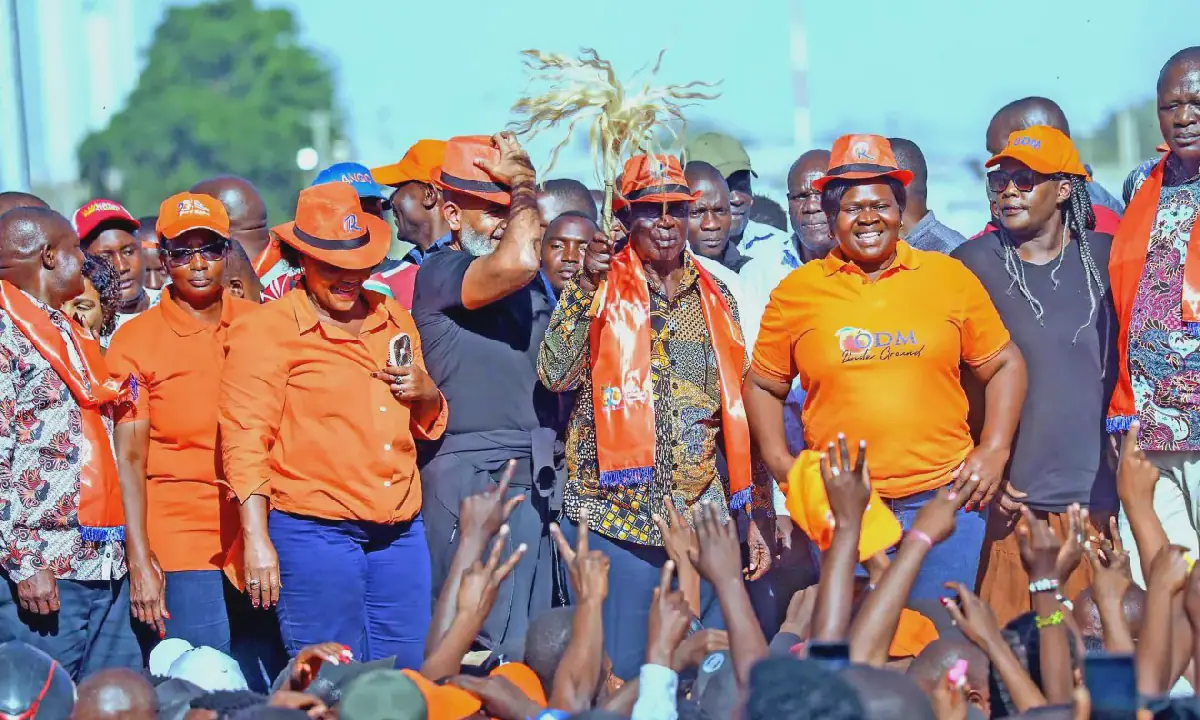
Kenya's Orange Democratic Movement (ODM) party is grappling with internal divisions over whether to sign a formal power-sharing agreement with President William Ruto's United Democratic Alliance (UDA) party. The divisions have emerged as the party prepares for grassroots meetings to showcase its political strength ahead of coalition talks. ODM leaders are sharply divided over the issue, with some advocating for a written agreement and others pushing for unconditional support for Ruto's re-election bid.
ODM leader Oburu Oginga and several ministers who have joined Ruto's government, including John Mbadi, Opiyo Wandayi, Hassan Joho, Wycliffe Oparanya, and Beatrice Askul, have thrown their weight behind Ruto's re-election bid. Wandayi recently met with politicians from Siaya, where they reportedly agreed to continue supporting Ruto for a second term, citing unity and development as key goals. However, the party has not reached a consensus on the terms of a potential coalition with UDA.
ODM has traditionally nominated a presidential candidate since its inception in 2005, but the party is now considering a range of options, including a possible deputy president slot. Names such as Oparanya, Joho, and party chairman Gladys Wanga have been floated as potential contenders. The party's National Secretary, Raymond Omollo, has faced criticism from some ODM leaders for suggesting that Ruto should be supported unconditionally due to his development record.
Some ODM leaders, including Nyando MP Jared Okello, have expressed support for Omollo's stance, arguing that the party should work with Ruto to ensure the continued development of their region. Okello warned that opposition leaders Kalonzo Musyoka and Fred Matiang'i may also join forces with Ruto, potentially weakening ODM's bargaining position. He also questioned the value of political agreements, citing past examples of broken pacts.
However, other ODM leaders, including Homa Bay Senator Moses Kajwang, have called for the party to learn from past experiences and ensure that any agreement with UDA is clear on the responsibilities of each party. Homa Bay Town MP Opondo Kaluma reported that talks between ODM and UDA are progressing well and are likely to result in a written agreement. He urged ODM supporters to register as voters, targeting at least four million votes from the Luo community to boost the party's negotiating power.
Earlier, Governor Wanga suggested that if the ODM-UDA coalition wins the 2027 elections, the government would be divided on a 50:50 basis, with UDA taking the presidency and ODM securing the deputy president position. ODM and UDA have already established a joint team to develop a comprehensive election manifesto outlining the agenda for the next government.
Meanwhile, ODM youth leader Kasmuel McOure expressed concerns that the party's bargaining power has been eroded since the death of Raila Odinga and internal divisions. He urged the party to focus on mobilizing voters rather than pursuing individual interests. The divisions within ODM have sparked memories of the breakdown in relations between Ruto and his former deputy, Rigathi Gachagua, who was removed from office in October 2024.
Key points
- ODM party divisions over power-sharing deal with UDA.
- Potential impact on 2027 general elections.
- Party leaders hold differing views on unconditional support for President Ruto.