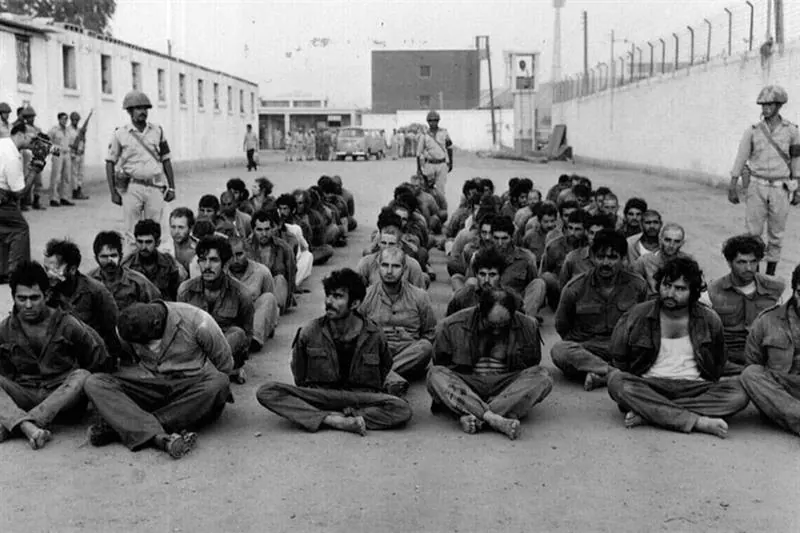
A recent study published in the American Journal of Orthopsychiatry has found that the psychological scars of the 1973 October War continue to affect some Israeli veterans more than 50 years later. The study, which examined 399 male Israeli veterans, discovered that stronger trauma symptoms emerged during renewed conflict than around the war's anniversary. This research adds to decades of Israeli studies documenting varying psychological outcomes after the fighting.
The study, conducted by researchers Michal Levinsky, Amit Shrira, Yuval Palgi, and Lee Greenblatt-Kimron, assessed veterans approximately six months before the war's 50th anniversary in 2023, two weeks before it, and two months after the outbreak of the Israel-Hamas war that October. The findings suggest that wartime experiences can remain psychologically significant decades later, with renewed conflict associated with stronger symptoms than anniversary reminders, particularly among veterans who experienced life-threatening conditions.
The researchers also explored the concept of meaning in life through four dimensions: values, purpose, goals, and reconciliation with the past. A stronger sense of meaning was linked to fewer symptoms, especially among combatants during renewed conflict. Although the study establishes an association between meaning in life and post-traumatic stress symptoms, it does not prove that a sense of purpose prevents post-traumatic stress disorder (PTSD).
The October War, also known as the 1973 Yom Kippur War, began on October 6, 1973, when Egyptian and Syrian forces launched coordinated offensives to recover occupied territory. Egyptian forces crossed the Suez Canal and breached Israeli defenses in Sinai, an operation recalled in Egypt's anniversary commemorative video. Israeli researchers have since examined the psychological consequences of combat and captivity, finding differences between veterans who experienced acute combat stress, those taken prisoner, and other soldiers.
Research on former prisoners provides evidence that psychological difficulties can emerge or worsen long after release. A 2005 study examined 103 former prisoners and 106 comparison veterans assessed in 1991 and again in 2003. Thirty years after the war, 23 percent of the former prisoners met PTSD criteria, with nearly 20 percent who had not met the criteria in 1991 doing so in 2003, compared with nearly one percent of comparison veterans.
For some veterans, more than 30 years passed before they sought psychological assistance. A 2019 study examined records of 195 October War veterans assessed at an Israeli military combat stress unit between 2006 and 2012. By the time they reached the unit, 90.8 percent were experiencing PTSD, with most reporting that earlier, lower-level symptoms had intensified over the years until they developed into clinically significant PTSD.
The research does not reveal a uniform pattern of lasting illness, with some studies indicating that recovery was also part of the aftermath. A 2005 study followed a cohort treated during the war, finding that of 277 veterans initially identified with PTSD, 19, or 6.85 percent, were recorded as still suffering from it 32 years later. The findings highlight the complex and varied psychological outcomes among Israeli veterans of the October War.
Key points
- The study found that renewed conflict was associated with stronger trauma symptoms than anniversary reminders among Israeli veterans of the 1973 October War.
- A stronger sense of meaning in life was linked to fewer post-traumatic stress symptoms among combatants during renewed conflict.
- The research highlights the enduring psychological impact of the October War on Israeli veterans, with some experiencing symptoms decades after the conflict.