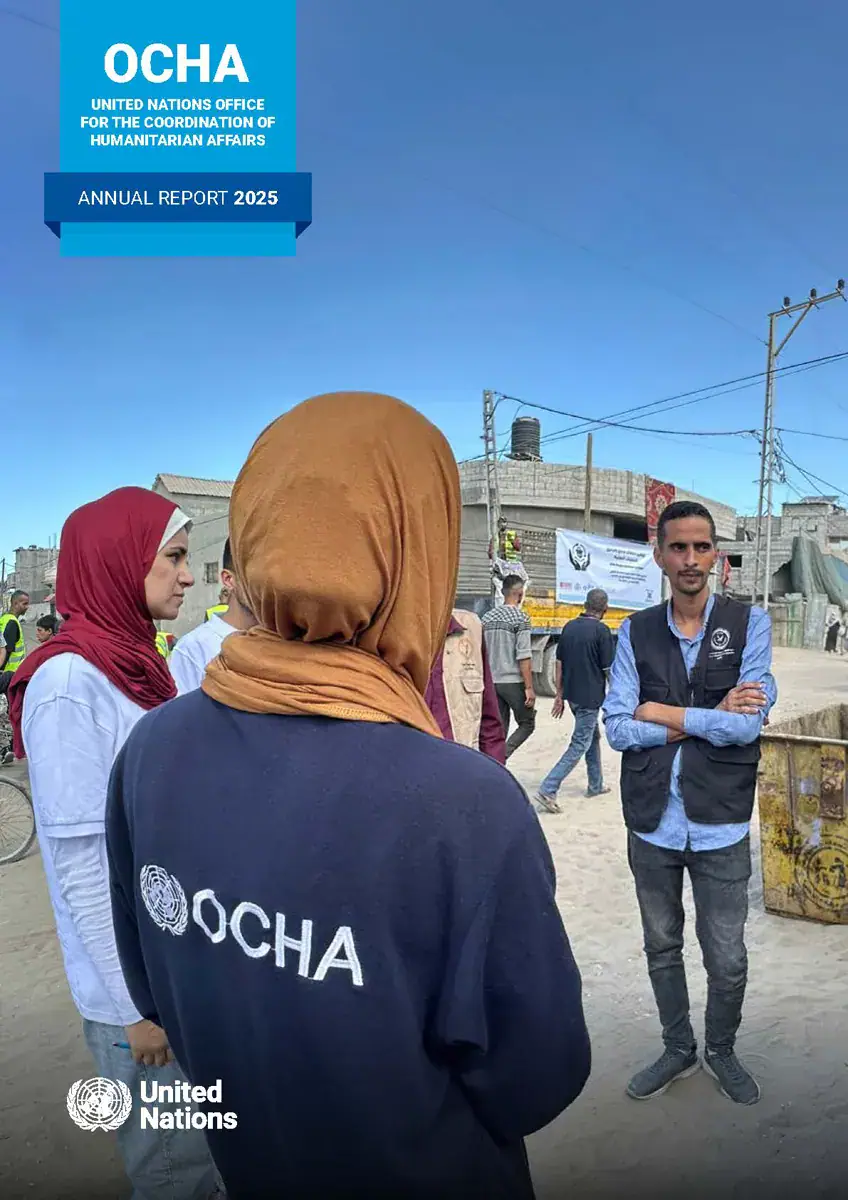
The United Nations Office for the Coordination of Humanitarian Affairs (OCHA) has reported that at least 71 humanitarian workers were killed and 28 injured in Sudan during 2025. This is part of a broader trend of attacks on aid operations, restricted access, and severe funding shortages that undermined the delivery of life-saving assistance. OCHA's Annual Report 2025 identifies Sudan as one of the countries facing the most severe humanitarian challenges.
According to OCHA, attacks on humanitarian personnel continued to rise globally for the third consecutive year, with at least 350 aid workers killed across 23 countries in 2025. National staff accounted for 98 per cent of those killed. The report highlights that insecurity, administrative restrictions, and the politicisation of humanitarian assistance increasingly obstructed operations, making it more difficult and expensive to reach vulnerable communities.
Despite the funding crisis, Sudan received USD 214.47 million in allocations through OCHA-managed humanitarian funding mechanisms during 2025. This included USD 167.47 million through country-based and regional humanitarian pooled funds, USD 25 million through the Central Emergency Response Fund (CERF) for rapid response, and USD 22 million through CERF’s underfunded emergencies mechanism. These funds supported large-scale humanitarian responses to famine conditions in Sudan.
The global humanitarian funding crisis forced organisations to concentrate resources on people facing the most severe and life-threatening needs, leaving millions without planned assistance. Only 98 million people worldwide received some form of humanitarian assistance in 2025, 18 million fewer than in the previous year. Health services were among the sectors hardest hit by the global funding reductions, with more than 180 health facilities in Sudan losing funding support.
The loss of health facilities affected approximately 2.7 million people in Sudan. Across 22 countries, 6,600 health facilities were affected by funding cuts, with one-third forced to suspend operations. An estimated 52 million people worldwide lost access to health services. The report warns that funding reductions have consequences beyond the immediate loss of medical treatment, undermining essential services for communities already affected by conflict, displacement, and hunger.
Humanitarian access remained one of the defining challenges of the Sudan response during 2025. OCHA played a key role in maintaining the use of the Adre crossing, the principal entry point for humanitarian personnel and supplies travelling from Chad into Darfur. The organisation also helped secure access to populations in need, establish humanitarian corridors, reopen cross-border supply routes, and facilitate large-scale aid deliveries in Sudan, the Occupied Palestinian Territory, and Myanmar.
Local and national organisations played a crucial role in delivering humanitarian assistance in areas where international agencies face significant operational constraints. In Sudan, local organisations were frequently at the forefront of humanitarian responses, drawing on their knowledge of communities and established relationships to reach people in volatile conditions. OCHA says 55 per cent of allocations through its humanitarian pooled funds worldwide went to local and national organisations in 2025.
Key points
- 71 aid workers killed in Sudan in 2025
- Humanitarian funding crisis deepens globally
- Local organisations play crucial role in humanitarian responses