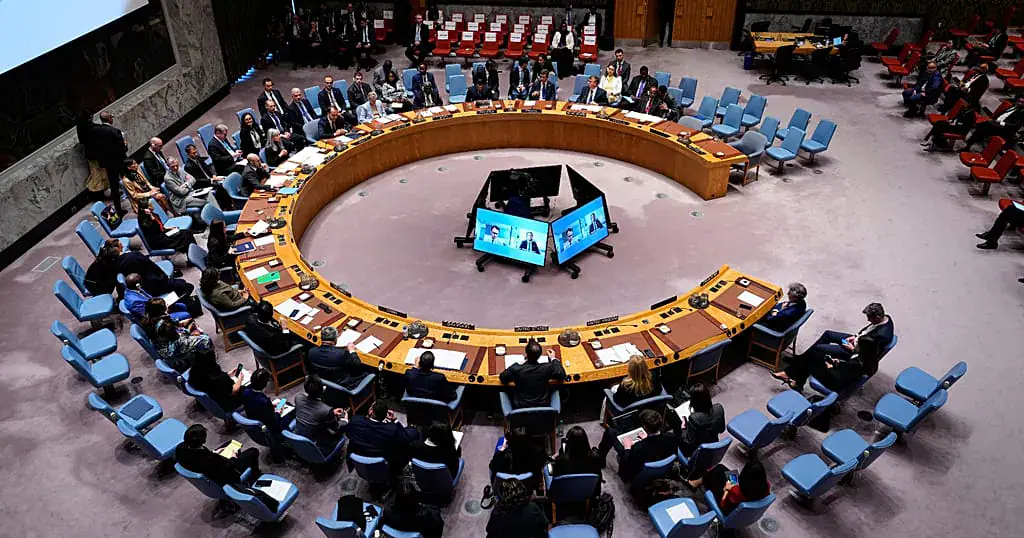
The United Nations Security Council has unanimously voted to extend the mandate of its peacekeeping mission in the Central African Republic, known as MINUSCA, until November 15, 2027. This decision comes as the country continues its efforts to consolidate security and strengthen state institutions. The resolution, drafted by France, adjusts the mission's operational priorities to reflect progress made and the evolving security situation in the country.
The extension of MINUSCA's mandate includes supporting the deployment of national security forces, such as a pilot project for a garrison army, alongside efforts to promote disarmament, demobilization, and reintegration, combat impunity, and uphold human rights. France's Ambassador to the UN, Jérôme Bonnafont, stated that the resolution provides a framework for MINUSCA to consolidate its achievements, adjust its troop levels, and continue supporting the Central African government, particularly in border areas.
Following the vote, Liberia's Permanent Representative to the United Nations, Lewis Garseedah Brown II, speaking on behalf of Liberia, the Democratic Republic of the Congo, and Somalia, emphasized the need for proper resources to ensure a smooth transition of responsibilities from the UN mission to national institutions. He warned that the UN's ongoing liquidity crisis must not undermine the implementation of MINUSCA's mandate and urged member states to pay their assessed contributions in full and on time.
The Central African Republic's Permanent Representative to the United Nations, Marius Aristide Hoja Nzessioue, welcomed the mission's contribution, describing MINUSCA as an example of the tangible value of UN peacekeeping. He expressed hope that the CAR experience will become a textbook case of a successful transition, where the mission adapts its presence, passes on its responsibilities, and leaves behind institutions capable of preserving peace.
Established in 2014, MINUSCA has played a central role in supporting peace and stability in the Central African Republic, including protecting civilians, assisting the extension of state authority, and supporting political and security reforms. The mission has been instrumental in helping to stabilize the country, which has faced significant challenges, including conflict and humanitarian crises.
The latest mandate extension underscores the Security Council's continued commitment to the country, while highlighting the importance of a carefully managed transition that ensures national institutions can sustain the gains made. As the mission prepares for another year of operations, the challenge will be to ensure that the transfer of responsibilities does not create security gaps, but instead leaves behind stronger institutions capable of preserving lasting peace.
The extension represents an important opportunity for the Central African Republic to sustain international support while gradually strengthening its own capacity to maintain peace and security. The country's experience with MINUSCA could serve as a model for future UN peacekeeping missions, demonstrating the effectiveness of a well-adapted and well-resourced mission in achieving lasting peace and stability.
Key points
- The UN Security Council has extended the mandate of MINUSCA until November 15, 2027.
- The mission will support the deployment of national security forces and promote disarmament, demobilization, and reintegration.
- A smooth transition of responsibilities from MINUSCA to national institutions will require proper resources and a carefully managed process.